
Blog

All New Inventory Social Buying Guides New Vehicle Reviews Financing & Insurance News Community Events Finance Model Comparisons Green Service Technology Maintenance & Service Video Used Vehicle Guides Technology & Innovation Vehicle Ownership & Protection Automotive News Dover Ford Dealer Parts Fleet Pre-Owned Inventory Safety Features Vehicle Inventory Updates Warranty & Extended Coverage Parts & Repairs Powertrain Care & Repair Seasonal Driving Tips Service Center Tips Vehicle Trade-In Tips Automotive Technology & Innovation Certified Pre-Owned Program Dealership Sales & Inventory Electric Vehicle Maintenance Engine Maintenance Financing OEM Parts & Accessories Off-Road & 4WD Features Pre-Owned Vehicle Sales Repair & Diagnostics Safety and Emissions Testing Used Car Inspection Used Car Pricing Vehicle History Vehicle Inspection & Certification Vehicle Ownership Care Winner Ford Service
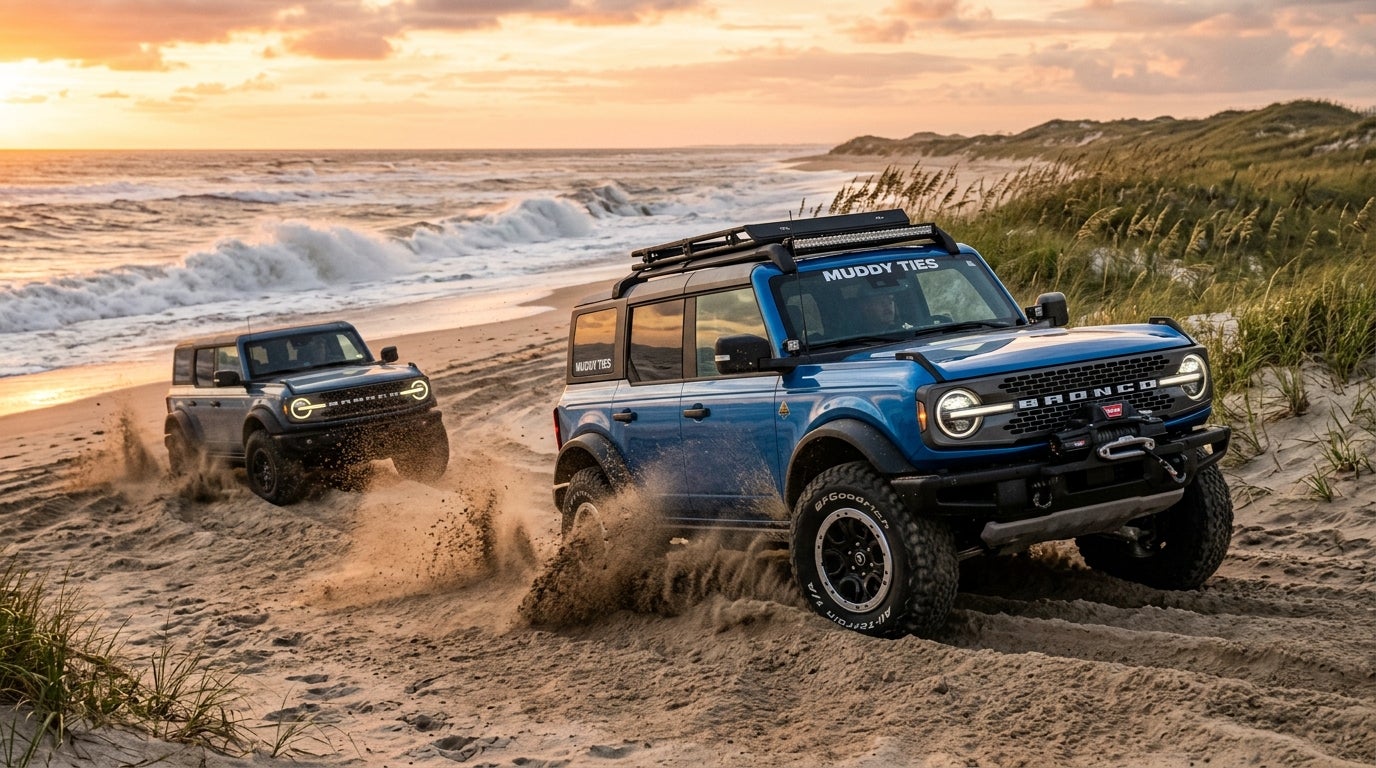
Blue Ford Bronco driving through sandy beach dunes near ocean waves at sunset with another Bronco following. (Representative image for illustration purposes only. Actual vehicle may vary based on trim and configuration.)

Conquer Coastal Adventures: How the 2027 Ford Bronco Masters Sand and Surf

The 2027 Ford Bronco is expected to be an exceptional choice for beach driving, combining standard four-wheel drive, generous ground clearance, and specialized sand traction modes. Featuring up to seven available G.O.A.T. Modes (Goes Over Any Type of Terrain), washable interior materials, and available 35-inch factory tires, it easily navigates deep sand while keeping gear clean and secure. Built for Your Family, Ready for Every Adventure, the upcoming 2027 model year builds upon a proven body-on-frame setup engineered to handle challenging coastal environments. For drivers exploring coastal access points around Milford, where tidal sand and loose shoreline tracks require constant momentum, standard four-wheel drive provides low-range gearing that prevents tires from digging into soft spots. Under the hood, buyers can anticipate dependable EcoBoost power, starting with the baseline 2.3L EcoBoost I-4 producing approximately 275 hp and extending up to the high-output 3.0L twin-turbo V6 rated at 418 hp on specialized off-road variants. This gives drivers exact throttle control across loose surfaces, keeping momentum steady without straining the powertrain. Beyond raw mechanical capability, the cabin design makes beach outings stress-free. Available marine-grade vinyl seating resists water saturation, while integrated floor drain plugs allow sand and saltwater residue to be rinsed away with a hose. Features like Pre-Collision Assist with Automatic Emergency Braking help keep your family safe during highway transitions to the beach entrance. If you are planning your next coastal trip, visit our Dover showroom or give our sales team a quick call to learn how the latest Bronco lineup fits your outdoor lifestyle. Table of Contents Is the Ford Bronco or Jeep Wrangler Better for Beach Driving? Which Bronco Off-Road Features Matter Most for Sand Adventures? Which Bronco Trim Level Has the Right Features, Seats, and Floors for the Shore? How Do Rubberized Floor Drain Plugs and Rust Protection Handle Coastal Salt and Sand? Where Can You Get a Delaware State Parks Surf Fishing Permit for Beach Driving? Common Questions About Driving the Ford Bronco on the Beach Is the Ford Bronco or Jeep Wrangler Better for Beach Driving? When comparing beach driving capabilities, the Bronco's independent front suspension and wider stance offer distinct advantages over the Jeep Wrangler. While both off-roaders feature body-on-frame construction and removable tops, the Bronco provides superior highway stability on the way to the coast alongside higher maximum available horsepower. When comparing sand-driving capability, broad footprint and smooth power delivery are essential for maintaining momentum across shifting dunes. The Bronco offers an available 10-speed automatic transmission paired with high-performance engine choices that deliver seamless gear shifts, avoiding the sudden wheel spin that often bogs down vehicles in deep sand. Across volume configurations, EPA fuel economy stays around 18–21 mpg on the highway, giving drivers plenty of range between fill-ups during weekend shoreline trips. Front Suspension: The Bronco features an independent front suspension that absorbs surface ripples on packed sand without wheel hop, whereas the Wrangler uses a traditional solid front axle. Trail Control Technology: Ford includes electronic systems like Trail Turn Assist to tighten turning radiuses around tight beach tracks and sand dunes. Towing Capability: Maximum towing capacity reaches up to 4,500 lbs on top Bronco configurations, enabling smooth transport of small boats or camper trailers down to the water line. Interior Space: Offering roughly 38 cubic feet of cargo room behind the second row, the Bronco leaves ample space for beach chairs, umbrellas, and coolers. For local drivers cross-shopping these two legendary off-roaders, taking a test drive reveals how modern chassis engineering refines daily road trips without compromising trail toughness. Explore our inventory of new Ford vehicles to compare available configurations side by side. ​ Which Bronco Off-Road Features Matter Most for Sand Adventures? The off-road features that matter most for sand driving are electronic-locking differentials, wider all-terrain tires, high-clearance suspension systems, and dedicated sand drive modes. Equipped with these tools, a vehicle stays on top of loose sand grains rather than digging downwards. The available Sasquatch package stands out as the ultimate beach upgrade for the Bronco lineup. By fitting 35-inch mud-terrain tires onto 17-inch beadlock-capable wheels, it broadens the tire footprint significantly when air pressures are lowered for sand travel. Combined with front and rear electronic-locking axles, torque distributes evenly across all four wheels to push through deep beach ruts. The High-Performance Off-Road Stability Suspension (HOSS) system increases ground clearance and wheel articulation, ensuring the underbody stays well clear of sand drifts. | Sand-Driving Feature | Functional Beach Benefit | | --- | --- | | G.O.A.T. Sand Mode | Adjusts throttle mapping & holds lower gears | | Electronic Front/Rear Locks | Keeps all four wheels turning at equal speeds | | Beadlock-Capable Wheels | Prevents tire bead separation at lower PSI | | HOSS Clearance Suspension | Protects components from drag in deep sand ruts | When navigating sand dunes and unpaved coastal tracks, predictable power transfer is vital. Dependable Performance Meets Modern Technology throughout the Bronco off-road system, allowing drivers to select Sand or Baja mode on the drive dial with confidence. If you prefer a pre-owned vehicle that is already trail-ready, check out our pre-owned vehicle selection for great value on equipped 4x4 models. ​ Which Bronco Trim Level Has the Right Features, Seats, and Floors for the Shore? For buyers focused on effortless beach cleanup, the Black Diamond and Badlands trims provide the most practical cabin setups with standard marine-grade vinyl seats and washable rubberized flooring. Buyers who prefer upgraded interior comfort can opt for the Outer Banks trim, which adds premium features while maintaining rugged utility. Selecting the right trim depends on how you balance rugged shoreline utility with daily luxury: Big Bend: Serves as an approachable entry point, offering standard four-wheel drive, basic G.O.A.T. Modes, and cloth seating suitable for casual weekend outings. Outer Banks: Adds standard 18-inch bright machined aluminum wheels, body-color painted fender flares and door handles, powder-coated side steps, dual-zone automatic climate control, and a 12-inch SYNC 4 touchscreen system. Black Diamond & Badlands: Step up to heavy-duty off-road capability, adding rubberized flooring with drain plugs and marine-grade vinyl seats that resist mold, mildew, and water intrusion. Raptor: Represents the pinnacle of sand performance, combining a 418-hp 3.0L twin-turbo V6, FOX Live Valve dampers, and massive 37-inch tires for high-speed beach dune driving. When walking buyers through trim choices, our team usually points out the washable interior sequence first for anyone planning regular surf fishing trips from Smyrna down to the coast. Maintaining your vehicle's interior and exterior after exposure to sand and sea spray is essential for long-term reliability. Be sure to schedule a service appointment with our certified technicians to keep your vehicle running smoothly year-round. ​ How Do Rubberized Floor Drain Plugs and Rust Protection Handle Coastal Salt and Sand? The Ford Bronco utilizes integrated rubberized floor drain plugs and factory anti-corrosion treatments to protect the floorboards and underbody against harsh salt air and ocean moisture. After a day on the shore, owners can pull out the drain plugs by hand and rinse away sand and saltwater using a low-pressure garden hose. Operating drain plugs is straightforward and requires no tools: Lift or remove the heavy-duty floor mats to access the floor pan. Locate the round rubber plugs embedded in the floor recesses. Twist the rubber plug counterclockwise and pull upward to open the drain hole. Rinse the floorboards thoroughly, letting dirty water flow directly out underneath the vehicle body. Wipe down the interior surfaces and push the plug firmly back into place until it seals flush. | Protection Area | Factory Defense Mechanism | | --- | --- | | Cabin Floorboards | Molded rubber floor pans with removable plugs | | Seating Surfaces | Hydrophobic marine-grade vinyl upholstery | | Body & Frame Panels | 5-year/unlimited-mile perforation corrosion cover | | Underbody Components | Powder-coated steel bash plates & sealed joints | Salt air can accelerate frame corrosion if left unattended, which is why Ford backs the Bronco generation with a 5-year/unlimited-mile perforation warranty covering metal panel rust-through. Rinsing the undercarriage after every beach excursion helps maintain frame integrity for years to come. If you are thinking about upgrading to a new beach-ready SUV, you can value your trade online to see what your current vehicle is worth toward a purchase. ​ Where Can You Get a Delaware State Parks Surf Fishing Permit for Beach Driving? You can purchase a Delaware State Parks Surf Fishing Vehicle Permit online through the official Delaware State Parks website or in person at designated state park offices. Local anglers often pick up their permits at nearby office locations like Killens Pond State Park or Cape Henlopen State Park before heading out to the oceanfront. Driving on state park beaches requires strict adherence to safety rules and vehicle requirements: Permit Display: The official surf fishing plate and current calendar-year sticker must be affixed to the front of your vehicle before driving onto designated beach access lanes. Required Safety Gear: State park regulations require every vehicle to carry a low-pressure tire gauge, a tow rope or recovery chain, a jack, a sturdy wooden board to support the jack on soft sand, and a shovel. Active Fishing Rule: Vehicles on drive-on beaches must be actively engaged in surf fishing, with gear set up and anglers within 50 feet of their rods. Speed & Dune Rules: Driving over sand dunes is strictly illegal except at authorized dune crossings. Vehicle speed must never exceed 15 mph on beach areas. Peak Reservations: Summer weekend and holiday drive-on access at popular locations like Cape Henlopen (Gordons Pond, Herring Point, Navy Crossing, Point Crossing) and Delaware Seashore (3Rs) requires an advance daily reservation in addition to an annual permit. Non-reservation access remains available at locations like Beach Plum Island and Fenwick Island. Preparing your vehicle and paperwork in advance makes shore trips seamless and enjoyable. Flexible Financing, Designed for Dover Families simplifies getting behind the wheel of an equipped 4x4. Contact us for current financing information by choosing to submit an online credit application from the comfort of home. ​ Common Questions About Driving the Ford Bronco on the Beach Q: Is lower tire pressure necessary when driving the Ford Bronco on loose beach sand? Airings down your tires to roughly 15 to 20 PSI is highly recommended when driving on soft beach sand. Lowering the air pressure expands the tire's contact patch, allowing the Bronco to float over loose sand instead of digging deep ruts. Always carry a tire pressure gauge and re-inflate your tires to normal highway levels before driving on paved roads. Q: What is the maximum towing capacity of the Ford Bronco for hauling boat trailers? Standard 2026 and 2027 Bronco models offer a maximum towing capacity of up to 3,500 lbs when properly equipped with the factory towing package. High-performance Raptor variants increase maximum towing capacity up to 4,500 lbs, providing plenty of strength to haul small boat trailers, jet skis, or camper rigs down to coastal launch ramps. Q: How does Sand Mode in the G.O.A.T. Modes system assist beach drivers? Sand Mode optimizes the 4x4 system by holding lower transmission gears longer, softening throttle response for smooth torque delivery, and adjusting traction control intervention. This prevents sudden wheel spin that causes tires to sink while maintaining the steady forward momentum needed to traverse soft dunes and wet shoreline tracks safely. Q: Can you spray down the interior of all Ford Bronco trim levels with a hose? Hose-out interiors with rubberized floor drain plugs and marine-grade vinyl seats are standard on specific off-road trims like the Black Diamond and Badlands. Luxury trims featuring cloth upholstery or leather-trimmed seating should not be washed out with a hose; instead, use all-weather rubber floor mats to collect sand and moisture for easy cleaning. Q: What standard safety tech helps during highway drives to coastal beaches? Features like Pre-Collision Assist with Automatic Emergency Braking and blind-spot monitoring help keep your family safe on busy highway routes. Combined with adaptive cruise control and lane-keeping systems, the Bronco provides driver assistance features that reduce highway fatigue during long family road trips to oceanfront destinations. Your Local Ford Experts – Here When You Need Us. If you have additional questions about outfitting a Bronco with factory accessories, beach gear, or heavy-duty floor liners, contact our genuine Ford parts department for expert advice. To experience the Bronco in person, visit our dealership location at 591 S Dupont Hwy, Dover, DE 19901 or call our sales team at (302) 734-0444 to schedule a personal test drive. © 2026 Winner Ford. All rights reserved.
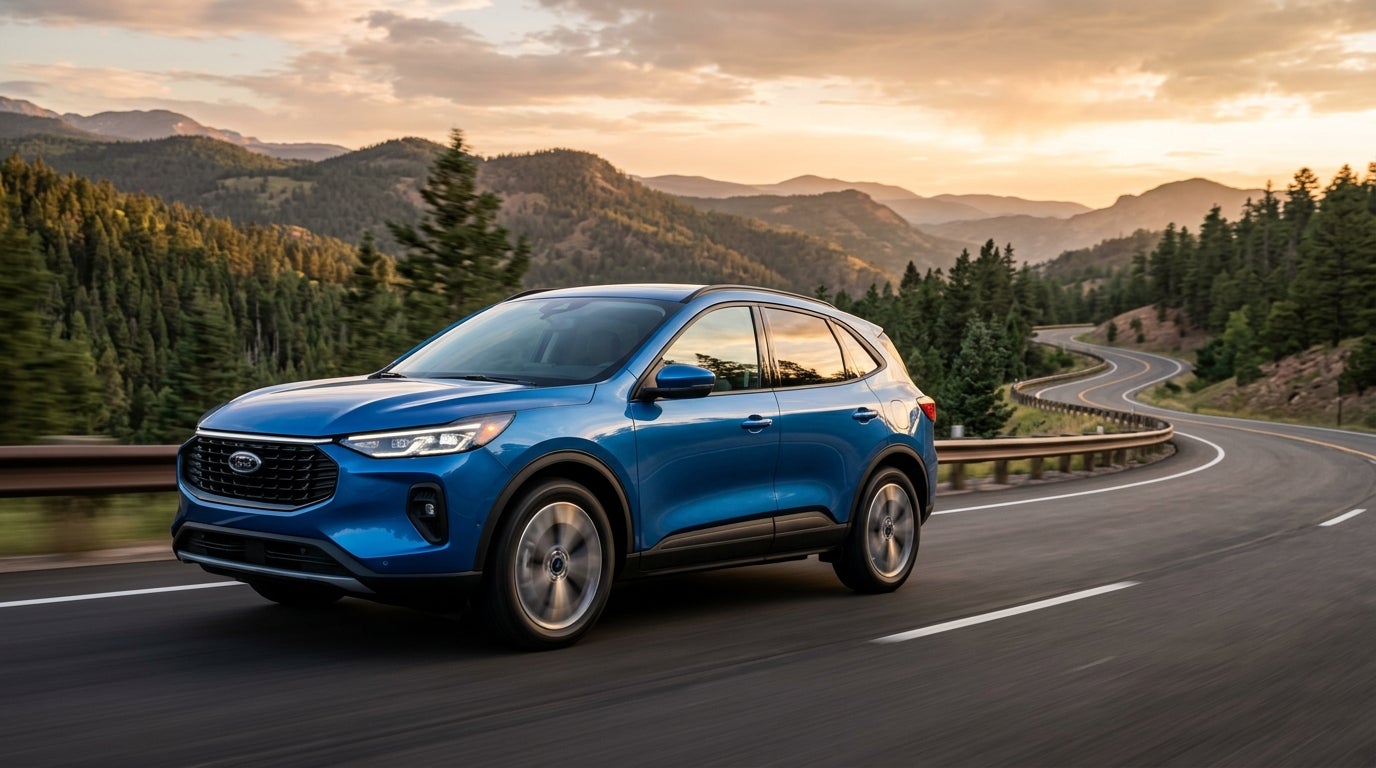
A blue Ford SUV drives along a curving mountain road framed by evergreen trees at sunset. (Representative image for illustration purposes only. Actual vehicle may vary based on trim and configuration.)

Unlock Family Adventure and Efficiency: Why the 2026 Ford Escape Stands Out

Yes, the 2026 Ford Escape is worth buying for drivers seeking a dependable, fuel-efficient crossover that seamlessly balances family utility with modern technology. Featuring up to 39 mpg combined on hybrid variants, an available 250 hp turbocharged engine, sliding second-row seating with up to 40 inches of legroom, and standard Ford Co-Pilot360 safety tech, the Escape provides exceptional value across daily drives and weekend outings. Our Ford Escape combines fuel-efficient EcoBoost technology with spacious seating and intuitive smartphone connectivity, ideal for busy Millennial families balancing school runs and outdoor weekends. Built for Your Family, Ready for Every Adventure, this crossover provides up to 34 cubic feet of rear cargo space, expanding to 65 cubic feet when the second row is folded flat. The intuitive SYNC 4 infotainment system keeps everyone connected, featuring standard wireless Apple CarPlay and wireless Android Auto displayed on an 8-inch screen or an available 13.2-inch touchscreen. Safety remains a top priority for every journey. Features like blind-spot monitoring and adaptive cruise control help keep your family safe on every commute, backed by standard automated emergency braking, lane-keeping assist, and automatic high beams. Grounded in structural integrity, the vehicle earns a 5-star overall NHTSA safety rating, giving you total peace of mind on the open road. Whether you prefer a turbocharged gas model or an ultra-efficient hybrid, experience comfort and reliability with the Ford Escape. To start your purchase journey, consider submitting an online credit application from the comfort of home. You can also explore options by giving our sales team a call or finding route directions to our Dover showroom. Table of Contents What Trim Levels Are Available on the 2026 Ford Escape? What Engine Options, MPG, and Drivetrains Does the 2026 Ford Escape Offer? How Do Prices Vary Across 2026 Ford Escape Trims and Compare to Other Compact SUVs? Can the 2026 Ford Escape Handle Weekend Trips with Light Towing and Gear? Common Questions About the 2026 Ford Escape Lineup and Pricing Drive Home Your 2026 Ford Escape What Trim Levels Are Available on the 2026 Ford Escape? The 2026 Ford Escape offers six trim levels tailored to different priorities: Active, ST-Line, ST-Line Select, ST-Line Elite, Platinum, and the Plug-In Hybrid. Each trim builds on a foundation of driver confidence and practical design, making it simple to pick the ideal match for your driving habits: Active: The value-packed gateway trim features the efficient 1.5L EcoBoost engine, standard SYNC 4, a power liftgate, and comprehensive driver-assist systems. ST-Line: Adds a sporty exterior edge with a black mesh grille, rear spoiler, flat-bottom steering wheel, and standard 18-inch wheels. ST-Line Select: Enhances performance with standard all-wheel drive, offering the choice of the 2.0L EcoBoost engine or the 2.5L Hybrid powertrain. ST-Line Elite: Combines aggressive styling with upscale tech, including a 13.2-inch touchscreen, a 12.3-inch digital cluster, and a 360-degree camera system. Platinum: Positions luxury front and center, featuring standard all-wheel drive, premium ActiveX seating, available B&O 10-speaker premium audio, and refined interior accents. Plug-In Hybrid (PHEV): The ultimate efficiency model, combining a 210 hp hybrid system with an estimated 37-mile all-electric range. When walking through our showroom floor, families usually want to see how the sliding second-row seats operate before choosing between the sporty ST-Line and the luxury-focused Platinum. If you are considering pre-owned alternatives alongside our newest lineup, take a moment to look over our selection of pre-owned vehicles to compare feature packages across model years. ​ What Engine Options, MPG, and Drivetrains Does the 2026 Ford Escape Offer? The 2026 Ford Escape lineup features four distinct powertrains engineered to deliver flexible performance and outstanding efficiency. Dependable Performance Meets Modern Technology throughout the entire mechanical architecture: 1.5L EcoBoost I-3: Generates 180 hp and 199 lb-ft of torque, paired with an 8-speed automatic. Available in front-wheel drive (EPA-rated 27 city / 34 hwy / 30 combined mpg) or all-wheel drive ( 26 city / 32 hwy / 28 combined mpg). 2.0L EcoBoost I-4: Delivers 250 hp and 280 lb-ft of torque, teamed exclusively with an 8-speed automatic and all-wheel drive. Achieves an EPA-estimated 23 city / 31 hwy / 26 combined mpg on regular fuel. 2.5L Hybrid: Combines a 2.5-liter four-cylinder engine with an electric motor and eCVT for a system total of 192 hp. Comes standard with all-wheel drive, delivering up to 42 city / 36 hwy / 39 combined mpg. This continuous fuel economy is ideal for smoothing out the daily highway commute down Route 13 from Smyrna. 2.5L Plug-In Hybrid: Pairs the 2.5-liter engine with a larger battery pack to generate 210 hp. Operates in front-wheel drive with an eCVT, delivering up to 101 MPGe, a 37-mile all-electric range, and 40 combined mpg in gas-hybrid mode. Whatever powertrain you select, the Escape delivers smooth ride quality and precise steering control. If you plan to upgrade from your current ride, you can begin by valuing your trade-in online to see how much equity you can apply toward your new crossover purchase. ​ How Do Prices Vary Across 2026 Ford Escape Trims and Compare to Other Compact SUVs? Pricing for the 2026 Ford Escape starts at an accessible baseline around $30,350 for the entry Active trim and progresses up to roughly $38,935 for a fully equipped ST-Line Elite or Platinum model. The trim walk allows buyers to balance feature desires with budget requirements: Active: Starts at approximately $30,350 (FWD) or $31,750 (AWD). ST-Line: Starts at roughly $31,195 (FWD) or $32,595 (AWD). ST-Line Select: Starts around $33,890 for the hybrid model and $35,015 for the 2.0L EcoBoost. Plug-In Hybrid: Kicks off at roughly $35,400. Platinum: Starts around $36,215 for the hybrid variant and $37,940 for the 2.0L EcoBoost. ST-Line Elite: Top-tier trim starts at approximately $37,210 (Hybrid) and $38,935 (2.0L EcoBoost). When placed alongside segment competitors like the Honda CR-V and Toyota RAV4, the Ford Escape stands out by making key tech and performance choices widely available across its lineup. While some competitors lock all-wheel drive or high-output engines behind their highest price tiers, the Escape lets buyers spec all-wheel drive across gas and hybrid models without steep markups. Contact us for current financing information to make stepping into an upper-tier trim simple and transparent. ​ Can the 2026 Ford Escape Handle Weekend Trips with Light Towing and Gear? Equipped with the 2.0L EcoBoost engine and Class II Trailer Tow Package, the 2026 Ford Escape can tow up to 3,500 pounds, making it suitable for weekend adventures. Models equipped with the standard 1.5L EcoBoost, 2.5L Hybrid, or 2.5L Plug-In Hybrid carry a maximum towing rating of 2,000-lb towing capacity. This capability comfortably handles utility trailers, small pop-up campers, or personal watercraft. Inside the cabin, cargo versatility shines. The sliding 60/40 split-fold rear bench adjusts forward by up to six inches, expanding rear cargo volume while preserving rear passenger comfort. Packing fishing rods, coolers, and beach canopies for weekend family excursions to Milford is effortless thanks to the low cargo load floor and wide rear opening. ​ Common Questions About the 2026 Ford Escape Lineup and Pricing Q: Is all-wheel drive standard on the 2026 Ford Escape? All-wheel drive comes standard on every 2026 Escape model equipped with the 2.0L EcoBoost engine or the 2.5L Hybrid powertrain. The entry-level 1.5L EcoBoost engine offers all-wheel drive as an option over standard front-wheel drive, while the Plug-In Hybrid model operates exclusively in front-wheel drive. Q: What is the all-electric driving range of the Escape Plug-In Hybrid? The 2026 Ford Escape Plug-In Hybrid offers an EPA-estimated 37-mile all-electric range on a full charge. Once the battery charge depletes, the system automatically transitions into standard hybrid mode, returning an EPA-estimated 40 combined mpg. Q: How much total cargo space is inside the 2026 Ford Escape? Gas-powered Escape models offer 34 cubic feet of cargo space behind the second row, which expands to 65 cubic feet when the rear seats are folded flat. Hybrid models retain nearly identical room, offering up to 34 cubic feet behind the second row and 60 cubic feet total capacity. Q: What driver-assist safety technology is included standard? Every 2026 Ford Escape comes equipped with standard Ford Co-Pilot360, which includes pre-collision assist with automatic emergency braking, blind-spot monitoring with cross-traffic alert, lane-keeping assist, and automatic high-beam headlamps. Advanced features like adaptive cruise control and a 360-degree camera system are available on higher trims. Q: What warranty coverage protects a new 2026 Ford Escape? Every new Escape is covered by a 3-year/36,000-mile basic limited warranty and a 5-year/60,000-mile powertrain warranty with complimentary roadside assistance. Electrified models also receive an 8-year/100,000-mile warranty covering unique hybrid components. To explore current availability and reserve your vehicle, start by browsing our current new Ford inventory online. ​ Drive Home Your 2026 Ford Escape Drive Confidently with Ford’s Advanced Safety Features and experience how effortless your daily commute can be in a new crossover. Your Local Ford Experts – Here When You Need Us are ready to walk you through trim choices, compare powertrain benefits, and discuss financing options tailored to your needs. Schedule your test drive today and see why Dover families trust Winner Ford. Stop by our Dover dealership address at 591 S Dupont Hwy to explore our showroom in person, or reach out directly by calling our sales department at (302) 734-0444 to get started today. Keep Your Vehicle Running Strong Keep your vehicle performing at its best with our service team: Schedule Service Parts Department © 2026 Winner Ford. All rights reserved.
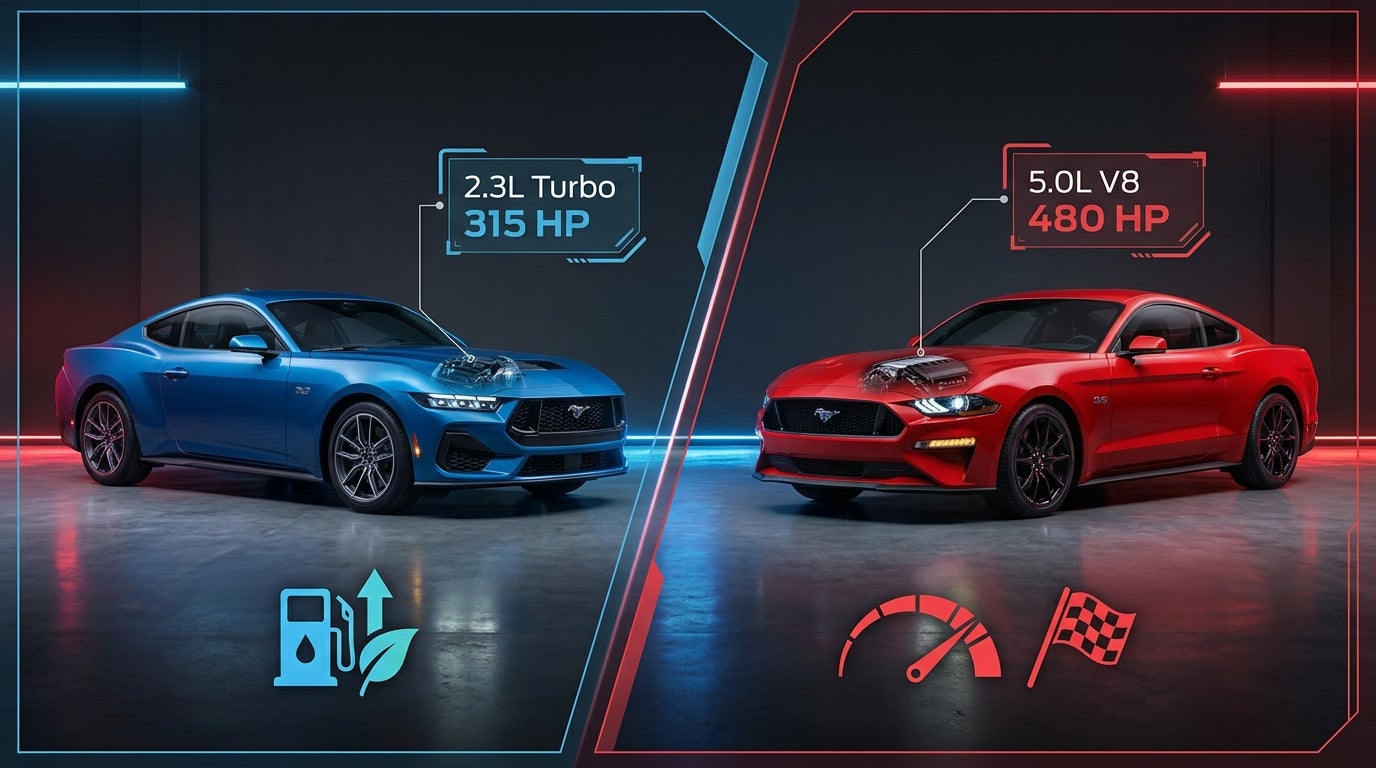
Comparison graphic featuring a blue 2.3L Turbo Mustang and a red 5.0L V8 Mustang with performance specs. (Representative image for illustration purposes only. Actual vehicle may vary based on trim and configuration.)

How Does the 2026 Ford Mustang EcoBoost Compare to the GT?

The 2026 Ford Mustang EcoBoost balances turbocharged efficiency with sharp modern performance, featuring a 2.3L EcoBoost turbocharged four-cylinder engine generating 315 hp and achieving an EPA-estimated 33 mpg highway. By comparison, the Mustang GT delivers traditional American muscle through a 5.0L Coyote V8 engine producing 480 hp. Choosing between them comes down to whether you prioritize efficient daily driving dynamics or maximum V8 acceleration. Evaluating these two pony cars reveals distinct engineering philosophies tailored to different driving preferences. The Mustang EcoBoost serves as an agile, tech-forward sports coupe with lighter front-end steering weight, making it a responsive companion for highway cruising and coastal drives near Milford. Its twin-scroll turbocharger delivers prompt low-end torque, ensuring energetic throttle response during everyday acceleration. Conversely, the Mustang GT caters to performance purists seeking atmospheric V8 power and legendary engine acoustics. Along with its increased horsepower, the GT offers an optional manual transmission and upgraded cooling systems designed for sustained performance. Both models share the iconic Seventh-Generation exterior design, ergonomic digital cockpits, and modern driver-assistance features, ensuring dependable performance meets modern technology regardless of the trim you select. If you are ready to evaluate both configurations in person, drop by our showroom or get directions to Winner Ford to explore our full vehicle display. You can also give our staff a quick call to check current showroom availability. Table of Contents What Is the Difference in Horsepower and 0-60 Acceleration Between the Mustang EcoBoost and GT? What Performance Packages Are Available for the 2026 Mustang EcoBoost and GT? What Is the Starting Price Difference, Fuel Economy, and Ownership Cost Between Trims? How Do the EcoBoost and GT Handle Winter Weather and Daily Driving? Common Questions About Choosing a 2026 Ford Mustang EcoBoost or GT How to Custom Order Your 2026 Mustang at Winner Ford This Summer What Is the Difference in Horsepower and 0-60 Acceleration Between the Mustang EcoBoost and GT? The 2026 Ford Mustang GT produces 480 hp and 415 lb-ft of torque from its naturally aspirated 5.0L V8, outpowering the Mustang EcoBoost’s 315 hp and 350 lb-ft of torque from its 2.3L turbocharged engine by 165 hp. Consequently, the Mustang GT equipped with the 10-speed automatic reaches 0 to 60 mph in approximately 3.8 seconds, whereas the Mustang EcoBoost Fastback equipped with the optional High Performance Package completes the same sprint in roughly 4.5 seconds. Transmission options significantly influence how both powertrains deliver power to the rear wheels. The Mustang EcoBoost comes exclusively with an advanced 10-speed automatic transmission featuring tuned shift logic and steering-wheel-mounted paddle shifters. This automatic setup keeps the turbocharger spooling efficiently within its optimal power band. The Mustang GT comes standard with a classic 6-speed manual transmission equipped with rev-matching capabilities, reaching 0 to 60 mph in about 4.2 seconds, while offering the 10-speed automatic as an available upgrade. When drivers take a first walk-around on our showroom floor, they frequently ask to hear the distinct sound of the GT's active valve performance exhaust compared to the EcoBoost's refined twin-scroll turbo spool before taking a test drive. For drivers wanting track-ready performance capabilities beyond the standard GT, Ford offers specialized variants within the lineup. The naturally aspirated 500 hp Mustang Dark Horse delivers 418 lb-ft of torque through a track-focused chassis, while the extreme Dark Horse SC supercharges a 5.2-liter V8 engine to produce 796 hp and 660 lb-ft of torque through an automatic 7-speed dual-clutch transmission. You can compare available powertrains and explore our current selection of new Ford inventory online to find the performance level that fits your driving style. Engine & Performance Powertrain specs by trim Feature Dark Horse Dark Horse SC EcoBoost Convertible EcoBoost Fastback EcoBoost Premium Convertible EcoBoost Premium Fastback GT Fastback GT Premium Convertible GT Premium Fastback Engine 5L 5L 2.3L 2.3L 2.3L 2.3L 5L 5L 5L Horsepower 500 hp 796 hp 315 hp 315 hp 315 hp 315 hp 480 hp 480 hp 480 hp Torque 418 lb-ft 660 lb-ft 350 lb-ft 350 lb-ft 350 lb-ft 350 lb-ft 415 lb-ft 415 lb-ft 415 lb-ft Transmission automatic 10-speed automatic 7-speed automatic 10-speed automatic 10-speed automatic 10-speed automatic 10-speed manual 6-speed manual 6-speed manual 6-speed Drivetrain Rear-wheel drive Rear-wheel drive Rear-wheel drive Rear-wheel drive Rear-wheel drive Rear-wheel drive Rear-wheel drive Rear-wheel drive Rear-wheel drive ​ What Performance Packages Are Available for the 2026 Mustang EcoBoost and GT? Factory equipment upgrades include the High Performance Package available on the Mustang EcoBoost and the GT Performance Package tailored for the Mustang GT. Both packages equip the vehicle with upgraded heavy-duty Brembo brakes, stiffer sway bars, model-specific chassis tuning, wider wheels wrapped in summer performance tires, and a Torsen limited-slip rear differential to maximize cornering traction. The EcoBoost High Performance Package enhances handling agility through heavy-duty front springs, an open-grid front grille for improved cooling, an electric drift brake, and a strut tower brace that increases front-end rigidity. It also installs 19-inch carbonized gray-painted aluminum wheels and recalibrated electronic stability control, steering, and anti-lock braking systems. The GT Performance Package equips the V8 coupe with 19x9-inch front and 19x9.5-inch rear aluminum wheels, a front-towed hook, a larger radiator, and aggressive front aero splitters. Buyers selecting this package can also add the adaptive MagneRide dampening suspension system, which monitors road conditions hundreds of times per second to continually adjust shock absorber stiffness for optimum tire contact. If you are open to previous model years or pre-owned sports cars, you can also browse our pre-owned vehicle inventory to see performance-equipped options currently available on our lot. ​ What Is the Starting Price Difference, Fuel Economy, and Ownership Cost Between Trims? The entry-level 2026 Mustang EcoBoost Fastback carries a base MSRP of $32,995, while the base Mustang GT Fastback starts at $46,800, creating a starting price difference of $13,805 (both subject to a mandatory $1,995 destination charge). In addition, the Mustang EcoBoost delivers EPA fuel economy ratings of 22 mpg city / 33 mpg highway, compared to the manual Mustang GT ratings of 15 mpg city / 23 mpg highway, which can help reduce routine fuel expenses compared with the GT. Trim selection spans coupe and convertible body styles across both powertrains: EcoBoost Fastback: $32,995 Base MSRP EcoBoost Premium Fastback: $36,345 Base MSRP EcoBoost Convertible: $40,440 Base MSRP EcoBoost Premium Convertible: $41,845 Base MSRP GT Fastback: $46,800 Base MSRP GT Premium Fastback: $51,080 Base MSRP GT Premium Convertible: $56,580 Base MSRP Dark Horse: $63,080 Base MSRP Dark Horse SC: $103,490 Base MSRP Long-term ownership benefits from proven build quality. The 2026 Mustang holds a score of 85 out of 100 for quality and reliability from J.D. Power, placing it in their "Great" category. Furthermore, safety testing from NHTSA awards the 2026 Mustang a five-star overall crash rating, supported by five stars in frontal, side, and rollover impact evaluations. Regular vehicle maintenance costs remain straightforward for both models. To keep your vehicle operating cleanly, you can easily schedule a service appointment with our factory-certified technicians. Pricing Pricing by trim Feature Dark Horse Dark Horse SC EcoBoost Convertible EcoBoost Fastback EcoBoost Premium Convertible EcoBoost Premium Fastback GT Fastback GT Premium Convertible GT Premium Fastback Base MSRP $63,080 $103,490 $40,440 $32,995 $41,845 $36,345 $46,800 $56,580 $51,080 Destination charge $1,995 $1,995 $1,995 $1,995 $1,995 $1,995 $1,995 $1,995 $1,995 Fuel Economy Fuel economy and range by trim Feature Dark Horse Dark Horse SC EcoBoost Convertible EcoBoost Fastback EcoBoost Premium Convertible EcoBoost Premium Fastback GT Fastback GT Premium Convertible GT Premium Fastback MPG 14 city / 22 hwy / 17 combined 14 city / 22 hwy / 17 combined 22 city / 33 hwy / 26 combined 22 city / 33 hwy / 26 combined 22 city / 33 hwy / 26 combined 22 city / 33 hwy / 26 combined 15 city / 23 hwy / 18 combined 15 city / 23 hwy / 18 combined 15 city / 23 hwy / 18 combined ​ How Do the EcoBoost and GT Handle Winter Weather and Daily Driving? Rear-wheel-drive architecture requires driver attention during cold months, but standard selectable drive modes—including a dedicated Slippery mode—adjust engine throttle mapping and traction control parameters to assist stability on slick surfaces. The lighter weight of the 2.3L EcoBoost four-cylinder engine over the front axle provides slightly easier low-speed throttle control during rain or light slush, although proper winter tire fitment remains the critical factor for cold-weather traction on either vehicle. Daily drivability shines across both trim lines thanks to comfortable cabin layouts and driver-assist safety technology. Standard Ford Co-Pilot360 features such as blind-spot monitoring and adaptive cruise control help keep your family safe on busy highway corridors like the suburban routes around Smyrna. Inside, a magnesium-framed 12.4-inch digital cluster seamlessly joins a 13.2-inch touchscreen running Sync 4 software, offering easy smartphone integration and clear navigation. Whether running daily errands or heading out on weekend road trips, both coupe models provide about 13 cubic feet of trunk cargo capacity to accommodate luggage, groceries, or sports equipment. If you plan to upgrade to a new sports car, our team can evaluate your current vehicle and help you value your trade-in quickly toward your new purchase. ​ Common Questions About Choosing a 2026 Ford Mustang EcoBoost or GT Q: Which 2026 Mustang trim offers the best balance of premium features and value? The EcoBoost Premium Fastback offers an exceptional blend of modern technology, comfort, and performance value. It upgrades the interior with leather-trimmed seating, heated and cooled front seats, dual-zone automatic climate control, and ambient lighting while retaining the high fuel efficiency of the 2.3L EcoBoost engine. Q: Does the 2026 Mustang offer hands-free highway driving capabilities? Select 2026 Mustang configurations offer available Ford BlueCruise technology. This system enables hands-free driver assistance on qualified pre-mapped controlled-access highways, managing vehicle acceleration, braking, and lane steering while the driver maintains visual focus on the road ahead. Q: What is the trunk cargo space in the 2026 Ford Mustang coupe? The 2026 Mustang Fastback coupe offers about 13 cubic feet of trunk cargo space, providing sufficient room for luggage, gear bags, or everyday items. Convertible models feature a slightly smaller trunk enclosure to accommodate the power-folding soft top mechanism. Q: Can I get a manual transmission on the Mustang EcoBoost? The 2026 Mustang EcoBoost is produced exclusively with a 10-speed automatic transmission. Buyers who prefer a 6-speed manual transmission with rev-matching must choose the 5.0L V8 engine available in the Mustang GT or Dark Horse models. Q: How long does a factory custom order take to arrive at the dealership? Factory custom orders generally take a current estimated timeframe from order submission to delivery, depending on plant scheduling and specific feature selections. Our team tracks your build progress and provides updates as your vehicle moves from production to transport. When you are ready to review purchase steps, you can begin the process online by completing our online credit application for current financing options available from our team. ​ How to Custom Order Your 2026 Mustang at Winner Ford This Summer Placing a custom factory order through Winner Ford allows you to choose your exact exterior color, interior package, axle ratio, and performance equipment directly from the factory line. Our team walks you through every option screen on the builder, ensuring your new sports car is built exactly to your preference without unwanted compromises. Whether you choose the efficient 315 hp EcoBoost or the roaring 480 hp V8 GT, our local experts are here when you need us. Stop by our dealership at 591 S Dupont Hwy in Dover, DE 19901 to meet our staff and discuss order timing. To start your purchase or custom order process today, visit our Dover showroom location or give our team a direct call. You can also consult our parts department for authentic Ford performance accessories to personalize your vehicle upon delivery. © 2026 Winner Ford. All rights reserved. Vehicle specification data © JATO Dynamics Limited. 2026 Ford Mustang Models in Dover DE | Winner Ford
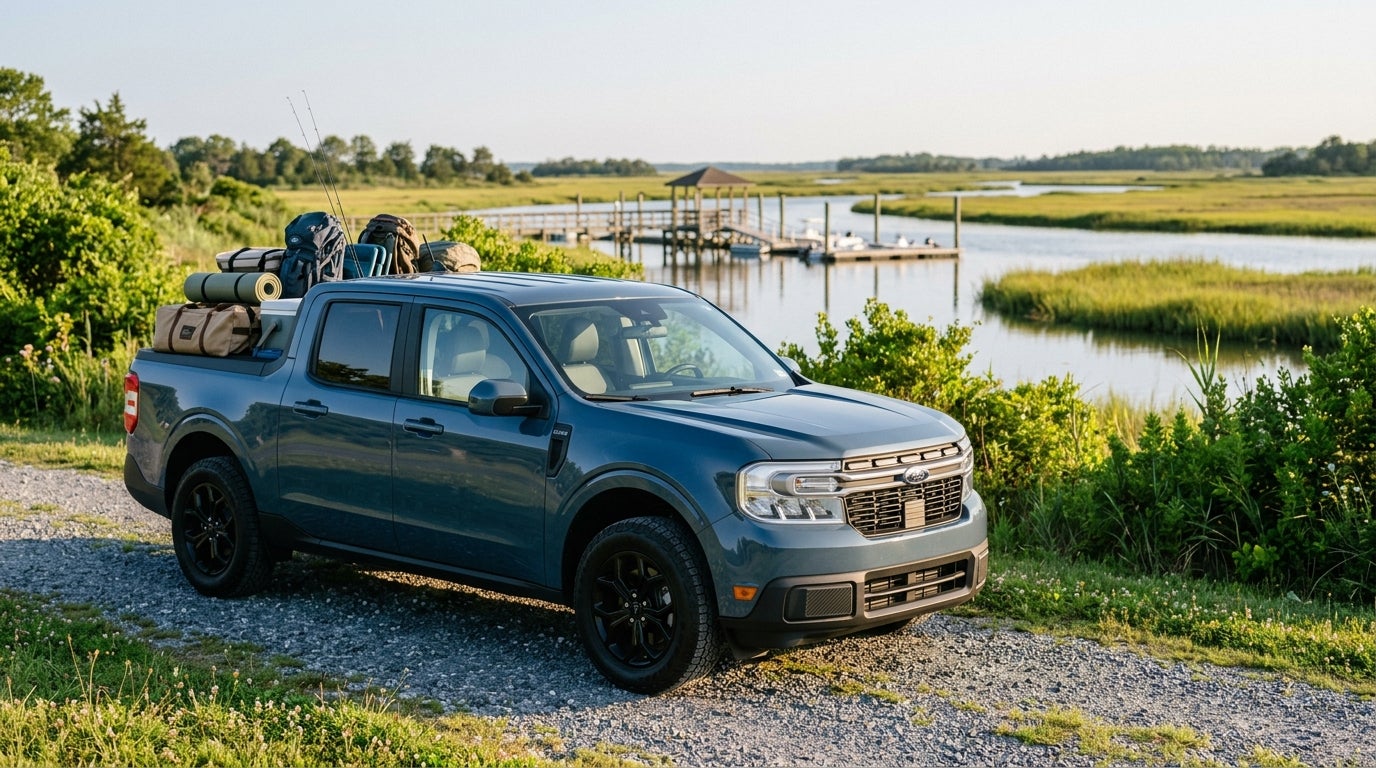
Blue Ford Maverick pickup truck packed with outdoor camping and fishing gear parked along a scenic river. (Representative image for illustration purposes only. Actual vehicle may vary based on trim and configuration.)

2026 Ford Maverick vs 2026 Hyundai Santa Cruz Comparison

The 2026 Ford Maverick is a strong choice in this compact pickup comparison, delivering superior fuel economy, larger bed cargo volume, and versatile everyday utility at a lower price point than the 2026 Hyundai Santa Cruz. Achieving up to 39 city MPG in its Lariat AWD trim and offering about 33 cu ft of bed space, the Maverick provides unbeatable practical value for commuters and active families alike. Table of Contents Which Truck Fits Milford Lifestyles Better: 2026 Ford Maverick or 2026 Hyundai Santa Cruz? Pricing and Trim Value for Families: Comparing the 2026 Ford Maverick and Hyundai Santa Cruz Cargo and Passenger Space Tailored to Active, Coastal Living Performance and Driving Experience: 2026 Ford Maverick vs Hyundai Santa Cruz Fuel Efficiency That Supports Commutes and Weekend Adventures Tech Features That Simplify Daily Life and Outdoor Fun Safety Systems Designed for Families and Coastal Driving Conditions Warranty, Maintenance, and Local Service Options for Owners Answering Top Buyer Questions on Capability, Comfort, and Cost Which Compact Truck Belongs in Your Driveway? Which Truck Fits Milford Lifestyles Better: 2026 Ford Maverick or 2026 Hyundai Santa Cruz? When evaluating which compact pickup best meets daily driving and weekend recreation demands, the 2026 Ford Maverick emerges as the superior choice over the 2026 Hyundai Santa Cruz. Engineered on an approachable unibody platform, the Ford Maverick blends smooth maneuverability with genuine truck bed capability, making it uniquely suited for both daily traffic and outdoor adventures. While the Hyundai Santa Cruz positions itself as an urban adventure vehicle, its smaller about 27 cu ft cargo bed and lower fuel economy limit its practical versatility. Whether loading kayaks for a morning on the water near Milford or carrying supplies for home projects, the Maverick provides an extra about 6 cu ft of cargo volume compared to the Santa Cruz. Its lower bed loading floor height of 29.4 in makes loading heavy cooler boxes or sporting equipment simple and stress-free. In addition, the Maverick's 121.1 in wheelbase and 8.6 in unladen ground clearance in the Lariat AWD configuration allow it to handle rough gravel access roads or unpaved boat launches with total confidence. Drivers looking for a dependable vehicle that handles school drop-offs and weekend trips with equal ease will appreciate how the Maverick maximizes cabin comfort for 5 passengers. Inside, smart storage solutions like rear below-seat storage bins keep wet gear or tools tucked out of sight. To explore our full selection of new trucks, browse our new Ford inventory to find the trim and color that best matches your lifestyle. Pricing and Trim Value for Families: Comparing the 2026 Ford Maverick and Hyundai Santa Cruz The 2026 Ford Maverick offers greater long-term value and flexible capability across its trim lineup compared to the competitively priced 2026 Hyundai Santa Cruz. With starting MSRPs spanning from $35,930 for the Lobo Standard 4WD to $38,090 for the feature-packed Lariat AWD, the Maverick delivers premium technology and efficient power without forcing buyers into expensive luxury pricing. In contrast, top-tier competitors like the Santa Cruz Limited 2.5 AWD reach a base MSRP of $43,700, representing a significant price premium for less bed space and lower gas mileage. Value-conscious shoppers will note that every Maverick model comes standard with essential equipment that elevates daily driving. For instance, the Maverick Lariat AWD ($38,090 base MSRP) includes standard all-wheel drive, a 2.5L hybrid engine, a CVT transmission, an 8-speaker Bang & Olufsen audio system with a subwoofer, ambient lighting, and a 13.2 in touchscreen display screen. Upgrading to the street-tuned Lobo Premium 4WD ($41,425 base MSRP) brings a 250 hp 2.0L EcoBoost engine with a 7-speed automatic transmission, while maintaining full passenger space and bed utility. For families planning their budget, Winner Ford makes upgrading easy with current valuation tools. You can quickly value your trade-in online to see how much equity you can apply toward a new Maverick. If you are exploring additional options across various price points, you can also check our pre-owned inventory for quality pre-owned trucks and crossovers. Pricing Manufacturer-listed pricing per trim, across compared vehicles. 2026 Ford Maverick Trim MSRP 2026 Hyundai Santa Cruz Trim MSRP Lobo Standard 4WD $35,930 SE 2.5 $29,750 Lariat AWD $38,090 SE 2.5 AWD $31,250 Lobo Premium 4WD $41,425 Limited 2.5 AWD $43,700 Cargo and Passenger Space Tailored to Active, Coastal Living The 2026 Ford Maverick provides superior cargo bed space and clever interior storage efficiency compared to the 2026 Hyundai Santa Cruz. In the truck bed, where utility matters most, the Maverick delivers about 33 cu ft of cargo volume with a cargo bed length of 54.4 in and a width of 53.3 in. The Santa Cruz trails behind with just about 27 cu ft of cargo space, restricting your ability to haul larger equipment like beach chairs, bicycles, or lumber. Interior roominess is another area where the Maverick shines for 5 passengers. Front row passengers enjoy 40.2 in of headroom and 42.8 in of legroom, while rear passengers benefit from 39.6 in of headroom and 36.9 in of legroom. The Maverick also features 57.3 in of front shoulder room and 55.6 in of rear shoulder room, ensuring adults and children have plenty of elbow room during long highway trips. The Maverick's bed architecture is purposefully built with 42.6 in of width between the wheelhouses, allowing standard 4x8 building sheets to lay flat when using the adjustable tailgate. Integrated load restraint hooks and available sliding anchorage points allow you to secure gear safely. If you are ready to secure a versatile compact pickup built for your lifestyle, you can complete our secure online credit application to start the approval process before visiting our showroom. Dimensions & Capacity Capacity and dimensions by trim Specification 2026 Ford Maverick 2026 Hyundai Santa Cruz Seating 5 5 Cargo 33.3 cu ft 27.0 cu ft Towing 2,000 lbs 5,000 lbs Curb weight 3,685 lbs 4,191 lbs Payload 1,545 lbs 1,607 lbs Performance and Driving Experience: 2026 Ford Maverick vs Hyundai Santa Cruz While the 2026 Hyundai Santa Cruz delivers higher engine output numbers, the 2026 Ford Maverick provides a more balanced, nimble, and practical driving experience for daily commutes and light towing. The Maverick Lariat AWD utilizes a sophisticated 2.5L 4-cylinder hybrid powertrain generating 191 hp total system output and 173 lb-ft of torque, paired with a smooth-shifting CVT. This setup delivers crisp off-the-line acceleration thanks to its 126 hp electric motor while maintaining whisper-quiet operation in stop-and-go driving. For drivers seeking maximum power, Ford offers the available 2.0L EcoBoost 4-cylinder engine on the Lariat AWD (option 502A) or standard on Lobo trims, producing 250 hp and 277 lb-ft of torque mated to an 8-speed or 7-speed automatic transmission. The Hyundai Santa Cruz Limited 2.5 AWD features a 2.5L turbocharged engine generating 281 hp and 311 lb-ft of torque via a SHIFTRONIC transmission. However, the Santa Cruz's heavier curb weight of 4,191 lbs dulls its handling agility compared to the Maverick Lariat AWD's lighter 3,685 lbs curb weight. The Maverick's suspension design employs independent front struts with a stabilizer bar and an independent multi-link rear suspension with coil springs, providing sharp turn-in and minimal body roll through tight corners. The Maverick Lariat AWD features a published payload capacity of 1,545 lbs and a standard towing capacity of 2,000 lbs. When equipped with the available 4K Tow Package (code 53Q), which includes a trailer brake controller and upgraded cooling, the EcoBoost Maverick increases its towing power to 4,000 lbs. To customize your pickup with OEM bed accessories or towing equipment, contact our genuine Ford parts department for expert advice. Engine & Performance Powertrain specs by trim Specification 2026 Ford Maverick 2026 Hyundai Santa Cruz Drivetrain All-wheel drive All-wheel drive Engine 2.5L 2.5L Horsepower 191 hp 281 hp Torque 173 lb-ft 311 lb-ft Transmission CVT SHIFTRONIC Fuel Efficiency That Supports Commutes and Weekend Adventures The 2026 Ford Maverick Lariat AWD achieves an impressive EPA-estimated 39 MPG city, 32 MPG highway, and 36 MPG combined, easily outclassing the 2026 Hyundai Santa Cruz Limited 2.5 AWD across every efficiency metric. With an EPA calculated vehicle range of 497 miles on its 13.8 gal fuel tank, the Maverick Lariat AWD lets you travel further between fill-ups, saving both time and money on long road trips. During daily weekday driving, a 30-mile commute around Smyrna highlights the immense cost advantage of Ford's hybrid technology. The Maverick Lariat AWD consumes significantly less fuel in urban congestion compared to non-hybrid trucks. By contrast, the Hyundai Santa Cruz Limited 2.5 AWD registers a low 18 MPG city, 25 MPG highway, and 20 MPG combined, with a calculated cruising range of just 396 miles from its 16.5 gal tank. Even when selecting the high-output EcoBoost engine on the Maverick Lobo Standard 4WD, fuel economy remains impressive at 22 MPG city, 32 MPG highway, and 25 MPG combined. By choosing the Maverick, you enjoy dependable performance meets modern technology without sacrificing the outstanding fuel economy necessary for modern household budgets. Fuel Economy Fuel economy and range by trim Specification 2026 Ford Maverick 2026 Hyundai Santa Cruz MPG 39 city / 32 hwy / 36 combined 18 city / 25 hwy / 20 combined Tech Features That Simplify Daily Life and Outdoor Fun Equipped with an intuitive 13.2 in central touchscreen and wireless Apple CarPlay and Android Auto, the 2026 Ford Maverick makes daily connectivity effortless for tech-savvy drivers. Standard across the Lariat AWD and Lobo Premium trims, the large high-definition display center runs Ford's latest infotainment software with voice-activating controls, integrated 3D navigation, and 12 months of included traffic information. Audiophiles will appreciate the Bang & Olufsen 8-speaker sound system with a dedicated subwoofer standard on the Lariat AWD and Lobo Premium 4WD, delivering rich, immersive audio throughout the cabin. Passengers can keep devices charged using 2 front USB ports and 2 rear USB charging ports, alongside a 12V front power outlet and a standard mains power supply for running small appliances or tailgating tools. Convenience technology in the Maverick extends far beyond entertainment. A reconfigurable 8 in TFT digital instrument cluster provides driver information at a glance, while the standard 360 Degree Camera system assists when parking in tight spaces. Innovative trailer assist features include trailer hitch assist, automatic steering, trailer reversing aid, and 360 camera extension, taking the stress out of backing up a trailer. Safety Systems Designed for Families and Coastal Driving Conditions Featuring 7 standard airbags and advanced collision mitigation system technologies, the 2026 Ford Maverick helps keep your family safe on every drive. Standard driver-assist systems include Automatic Emergency Braking (AEB) with Pedestrian Detection, which activates at speeds as low as 3 mph and operates across low and high speed thresholds to prevent front collisions. Safety equipment standard across the Maverick lineup includes: Dual front airbags, driver knee airbag, front side airbags, and side curtain airbags for front and rear passengers AdvanceTrac with RSC (Roll Stability Control) and Electronic Traction Control Blind Spot Information System (BLIS) with Cross Traffic Alert Lane-Keeping System with active steering intervention Active Cruise Control with Stop & Go functionality Multi-collision braking and rear cross traffic collision avoidance with radar sensors ISOFIX child seat anchor preparation and 3-point seat belts for all 5 seating positions In crash testing, the Ford Maverick achieved top-tier ratings, including an NHTSA 5-star frontal crash rating and IIHS "Good" ratings in side impact and small overlap front driver tests. Whether driving through rainy weather or navigating dark rural roads, automatic LED projector headlights with auto high-beam control enhance visibility to protect what matters most. Warranty, Maintenance, and Local Service Options for Owners Ford backs every 2026 Maverick with a robust factory warranty suite, including a 36-month/36,000-mile bumper-to-bumper warranty, a 60-month/60,000-mile powertrain warranty, and 60 months/60,000 miles of Ford roadside assistance coverage. Hybrid components on the Lariat AWD receive an extended 96-month/100,000-mile warranty for complete peace of mind. Should you ever require towing support or emergency service, Ford Roadside Assistance at (302) 734-0444 provides 24/7 coverage connecting you directly to certified Ford technicians who use original equipment parts. At Winner Ford, your local Ford experts are here when you need us for all routine oil changes, brake inspections, and tire rotations. You can easily schedule your service appointment online at your convenience. When you are ready to visit our dealership located at 591 S Dupont Hwy, Dover, DE 19901, click here to get directions to Winner Ford and experience our easygoing, family-friendly customer service firsthand. Answering Top Buyer Questions on Capability, Comfort, and Cost Q: Is the 2026 Ford Maverick more fuel-efficient than the Hyundai Santa Cruz? Yes, the 2026 Ford Maverick is significantly more fuel-efficient than the Hyundai Santa Cruz. The Maverick Lariat AWD hybrid achieves an EPA-estimated 39 MPG city, 32 MPG highway, and 36 MPG combined, compared to the Hyundai Santa Cruz Limited 2.5 AWD's 18 MPG city, 25 MPG highway, and 20 MPG combined. Even non-hybrid Maverick models like the Lobo Standard 4WD achieve 25 MPG combined, outperforming the Santa Cruz across all driving conditions. Q: Which compact pickup offers more truck bed cargo space? The 2026 Ford Maverick offers more truck bed cargo space than the Hyundai Santa Cruz. The Maverick features about 33 cu ft of bed volume with a length of 54.4 in and a width of 53.3 in. The Santa Cruz provides about 27 cu ft of bed volume. The Maverick's bed is also wide enough (42.6 in between wheelhouses) to carry 4x8 sheet materials flat using its multi-position tailgate. Q: How does the towing capacity compare between the Maverick and Santa Cruz? The 2026 Ford Maverick comes standard with a 2,000 lbs towing capacity across Lariat AWD and Lobo trims. When equipped with the available 4K Tow Package on EcoBoost models, the Maverick's towing capacity increases to 4,000 lbs. The Hyundai Santa Cruz Limited 2.5 AWD offers a 5,000 lbs towing capacity. For buyers towing lightweight utility trailers, jet skis, or small pop-up campers, the Maverick's 2,000 to 4,000 lbs rating provides ample capability while delivering far superior fuel economy. Q: What technology features come standard on the 2026 Ford Maverick? The 2026 Ford Maverick Lariat AWD comes standard with a 13.2 in touchscreen display, an 8 in digital instrument cluster, wireless Apple CarPlay and Android Auto, 3D navigation with 12 months of traffic data, an 8-speaker Bang & Olufsen sound system with subwoofer, a 360 Degree Camera, and advanced trailer assist controls including trailer hitch assist and reversing aid. Q: Is all-wheel drive available on the 2026 Ford Maverick hybrid? Yes, for the 2026 model year, All-wheel drive is fully integrated with the 2.5L hybrid powertrain on the Maverick Lariat AWD trim. This combination provides all-weather traction and stability on slippery roads while maintaining an outstanding 36 MPG combined fuel economy rating. Which Compact Truck Belongs in Your Driveway? The 2026 Ford Maverick clearly stands as the smarter, more versatile choice for buyers seeking a compact pickup that excels in daily usability, fuel economy, and practical cargo design. While the Hyundai Santa Cruz offers higher towing figures on select trims, its significantly higher price tag, smaller about 27 cu ft cargo bed, and fuel-thirsty 20 MPG combined rating make it less practical for everyday family living and commuting. From its standard 13.2 in touchscreen and 36 MPG combined hybrid efficiency to its spacious about 33 cu ft bed and advanced collision mitigation systems, the Maverick is built for your family, ready for every adventure. Schedule your test drive today and see why local families trust Winner Ford for honest advice and friendly service. Stop by our Dover showroom or contact our team online to experience the award-winning Ford Maverick today! © 2026 Winner Ford. All rights reserved. Vehicle specification data © JATO Dynamics Limited.
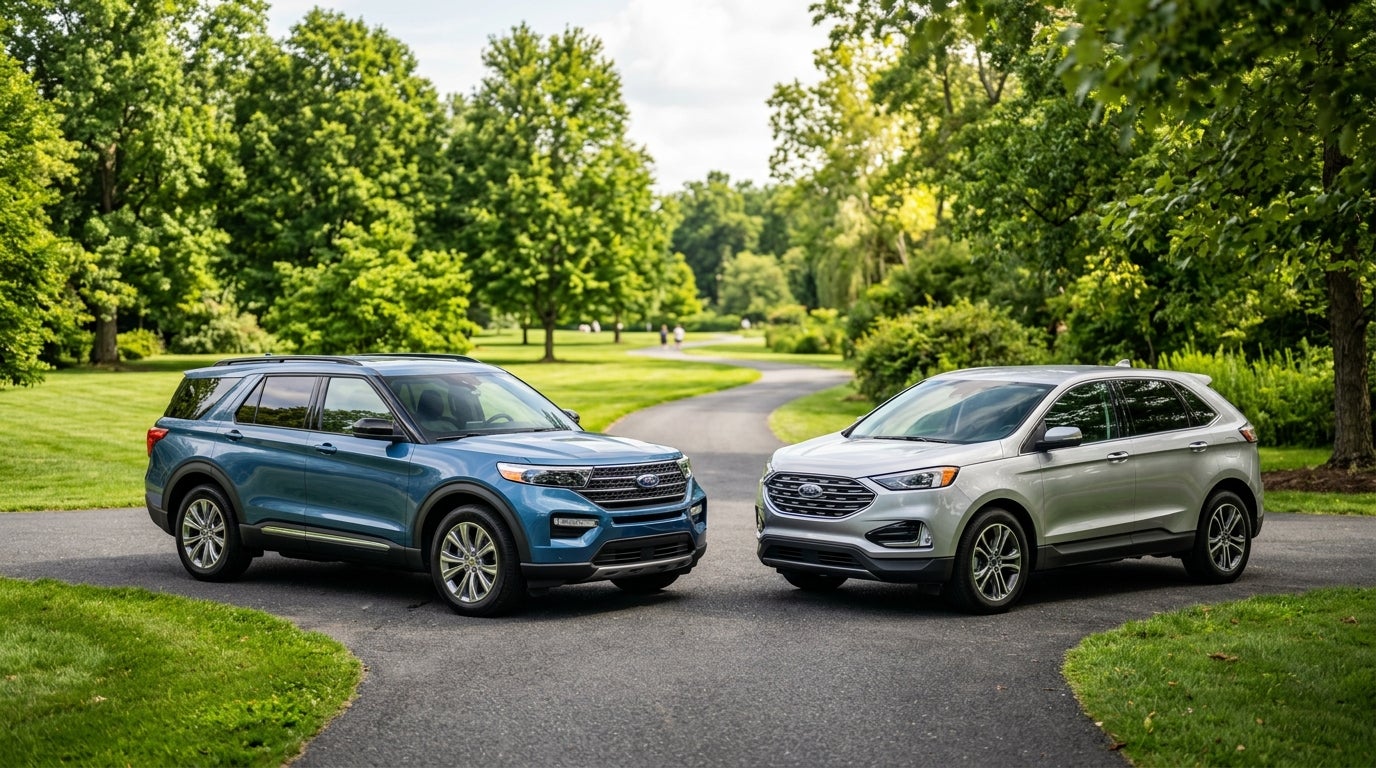
Blue Ford Explorer and silver Ford Edge parked side by side on a paved path in a grassy park setting. (Representative image for illustration purposes only. Actual vehicle may vary based on trim and configuration.)

Should You Buy the 2026 Ford Explorer or the Ford Edge?

Choosing between the Ford Explorer and Ford Edge comes down to seating needs, drivetrain architecture, and whether you prefer a new factory vehicle or a quality pre-owned model. Buyers needing three rows, seating for up to seven, standard rear-wheel drive, and towing capacities up to 5,000 pounds should choose the 2026 Ford Explorer. Drivers who prefer a maneuverable two-row layout for five passengers, standard Intelligent AWD, and generous second-row legroom will find the Ford Edge to be an ideal pre-owned choice since its North American production ended after the 2024 model year. The 2026 Explorer represents Ford's latest engineering, offering versatile family transportation that helps keep your family safe with updated driver-assist systems and modern cabin tech. Built on a rear-wheel-drive platform with available Intelligent 4WD, the Explorer provides truck-like capability for heavy family hauling and trail driving. On the other hand, the Edge sits on a car-based front-wheel-drive architecture that prioritizes a smooth highway ride and easy urban handling. Our team at Winner Ford helps drivers compare these midsize crossovers side-by-side to find the right fit for their lifestyle. You can browse our broad selection of new vehicles online or reach out directly by dialing (302) 734-0444 to check current vehicle availability. When you are ready for a hands-on vehicle tour, stop by our Dover showroom location to explore both models in person. Table of Contents What Are the Main Powertrain and Towing Differences Between the Explorer and Edge? How Do the Dimensions, Seating Capacities, and Cargo Space Compare? Why Would Someone Choose the Edge Over the Explorer for Daily Driving? Does the Ford Explorer Feature SYNC 4A or the Ford Digital Experience? What Is the Price Range Across Trims for the Ford Explorer? Frequently Asked Questions About the Ford Explorer and Ford Edge What Are the Main Powertrain and Towing Differences Between the Explorer and Edge? The Ford Explorer delivers higher horsepower ratings and a significantly greater towing capacity than the Ford Edge due to its rear-wheel-drive platform and stronger engine options. A standard 2026 Ford Explorer features a 2.3L EcoBoost four-cylinder engine generating 300 horsepower, while higher trims feature a 3.0L EcoBoost V6 producing up to 400 horsepower, both mated to a 10-speed automatic. In comparison, the final-generation Ford Edge came equipped with a standard 2.0L EcoBoost four-cylinder producing 250 horsepower or a 2.7L twin-turbo V6 with 335 horsepower on the performance-focused ST trim, paired with an 8-speed automatic. Towing performance highlights one of the clearest operational differences between these two utility vehicles. When equipped with the standard Class III Trailer Tow Package, the 2026 Explorer easily pulls up to 5,000 pounds. This capacity makes it the superior vehicle for hauling recreational trailers, camper setups, or watercraft down to coastal launch ramps near Milford. The Ford Edge relies on a lighter Class II setup, capping maximum towing at lower limits better suited for small utility trailers or bike racks. Drivetrain configurations also serve different driving preferences. Every 2022 to 2024 Ford Edge came standard with Intelligent AWD, making it a secure choice for rainy weather and slick winter roads. The Explorer comes standard with rear-wheel drive for balanced weight distribution, while offering optional Intelligent 4WD and specialized off-road hardware like a TORSEN limited-slip differential on rugged trims such as the Tremor. For buyers considering pre-owned options, evaluating our pre-owned vehicle lineup provides a great opportunity to explore well-maintained Edge models alongside late-model Explorer options. ​ How Do the Dimensions, Seating Capacities, and Cargo Space Compare? The Ford Explorer is roughly 10 inches longer overall than the Ford Edge, allowing it to house a third row of seating and expanded total cargo volume. Measuring 199 inches in total length with a 119-inch wheelbase, the Explorer accommodates six or seven passengers across three rows depending on whether you choose second-row captain's chairs or a full bench. The Ford Edge measures 189 inches in length with a 112-inch wheelbase, dedicated entirely to a spacious two-row, five-passenger cabin layout. When comparing cargo flexibility, both SUVs offer impressive utility but distribute space differently: Ford Explorer Maximum Cargo: Offers up to 86 cubic feet of space with both the second and third rows folded flat, along with about 18 cubic feet behind the upright third row. Ford Edge Maximum Cargo: Provides up to 73 cubic feet of overall cargo area with the second row folded down, and roughly 39 cubic feet behind the rear seats. Passenger Space Allocation: The Edge provides roughly 41 inches of rear legroom, giving back-seat passengers slightly more stretch-out space than the second row of the Explorer. When walk-around shoppers look at SUVs on our showroom floor, they usually ask whether the extra exterior length of the Explorer makes a noticeable difference when parallel parking before they ask about interior cargo measurements. That extra body length gives the Explorer its third-row capability, whereas the Edge keeps its footprint compact for effortless parking. If you are thinking about upgrading your current vehicle to gain extra seating or space, starting by evaluating your trade-in online can give you a clear picture of your purchasing power. ​ Why Would Someone Choose the Edge Over the Explorer for Daily Driving? In suburban neighborhoods, the Ford Edge's compact size and quiet cabin make it a preferred choice for daily commuting and errands. Without the extra weight and length required for a third-row seat, the Edge offers an agile driving experience that excels during daily traffic commutes. Its standard Intelligent AWD system, combined with standard Ford Co-Pilot360 safety features, provides dependable performance meets modern technology for worry-free driving in all weather conditions. For commuters traveling the 20-mile highway stretch through Smyrna each day, the Edge provides exceptional ride comfort and noise insulation. Rear-seat passengers benefit from expansive legroom, making it a favorite for adult passengers and growing teenagers. Furthermore, the lower step-in height makes loading groceries or securing child seats quick and effortless. Choosing a late-model pre-owned Edge allows buyers to enjoy modern amenities—such as dual-zone automatic climate control and advanced smartphone integration—at an attractive value point. If you want to streamline your purchase process before visiting us, taking a moment to complete an online credit application helps our team provide current financing options for your situation. ​ Does the Ford Explorer Feature SYNC 4A or the Ford Digital Experience? The updated Ford Explorer features the Ford Digital Experience infotainment system, whereas the Ford Edge relies on the SYNC 4A platform. Introduced on recent Explorer model updates, the Ford Digital Experience centers on a high-definition touchscreen paired with a digital cluster display. This software integration brings native Google Built-in capabilities, including Google Maps navigation, Google Assistant voice controls, and direct access to downloadable apps from the Google Play store alongside wireless Apple CarPlay and Android Auto. The Ford Edge comes equipped with the SYNC 4A system on models from 2021 through 2024, centered around a vertically oriented 12-inch center touchscreen. SYNC 4A offers intuitive cloud-connected navigation, conversational voice recognition, and wireless smartphone mirroring, along with additional USB ports for device charging. While both systems deliver seamless connectivity and over-the-air software updates, the Explorer's newer digital interface provides expanded app streaming and faster graphic processing. ​ What Is the Price Range Across Trims for the Ford Explorer? The 2026 Ford Explorer features a diverse trim lineup that ranges from accessible entry-level models to fully loaded luxury and performance variants. Pricing begins around $39,000 for the well-equipped base trim and extends past $55,000 for top-tier models like the performance-tuned ST and premium Platinum. Key trims in the lineup offer tailored feature packages for different drivers: Active: Serves as the accessible entry point with the 2.3L EcoBoost engine, standard safety tech, and modern digital screens. ST-Line: Adds sporty ST exterior accents, darker trim elements, and sport interior stitching while retaining efficient powertrain tuning. ST: Features the high-output 3.0L EcoBoost V6, sport-tuned suspension, paddle shifters, and aggressive performance styling. Platinum: Delivers luxury amenities including upgraded leather seating, premium audio, and unique exterior chrome detailing. Because the Ford Edge concluded its production run with the 2024 model year, it presents an strong option in the pre-owned market. Pre-owned Edge trims—spanning SE, SEL, ST-Line, Titanium, and the twin-turbo ST —allow buyers to access premium features like leather upholstery and all-wheel drive at various price points compared to new three-row models. ​ Frequently Asked Questions About the Ford Explorer and Ford Edge Q: Does the Ford Edge offer a three-row seating option? No, the Ford Edge is strictly a two-row midsize crossover designed for five passengers. If your family requires seating for six or seven people, the three-row Ford Explorer is the correct choice within the Ford crossover lineup. Q: Is the Ford Explorer significantly harder to park than the Ford Edge? The Ford Explorer is roughly 10 inches longer than the Edge, but advanced driver-assist technology minimizes parking difficulty. With standard backup cameras, available 360-degree camera systems, and front and rear parking sensors, maneuvering the Explorer in crowded parking lots remains straightforward. Q: Which SUV has better crash-test ratings and safety awards? The Ford Explorer has earned an IIHS Top Safety Pick+ designation due to its reinforced structure, advanced collision mitigation system features, and top-rated headlight performance. Late-model Ford Edge vehicles also earned high safety marks, including five-star overall ratings from the NHTSA. Q: Can I still get factory warranty coverage on a pre-owned Ford Edge? Yes, late-model pre-owned Ford Edge vehicles often carry remaining transferrable factory powertrain coverage, or qualify for Gold Certified pre-owned warranty protection. You can speak with Your Local Ford Experts – Here When You Need Us at our dealership in Dover or call us at (302) 734-0444 to check warranty status on specific inventory. Q: How do the fuel tank capacities and highway cruising ranges compare between these SUVs? The Ford Explorer features a fuel tank capacity of roughly 18 gallons on standard models, providing an estimated highway cruising range of over 400 miles on a full tank. The Ford Edge carries an 18.5-gallon fuel tank, giving its efficient four-cylinder models similar or slightly greater long-distance range during highway travel. Keep Your Vehicle Running Strong Keep your vehicle performing at its best with our service team: Schedule Service Parts Department © 2026 Winner Ford. All rights reserved. 2026 Ford Explorer & Edge in Dover DE | Winner Ford
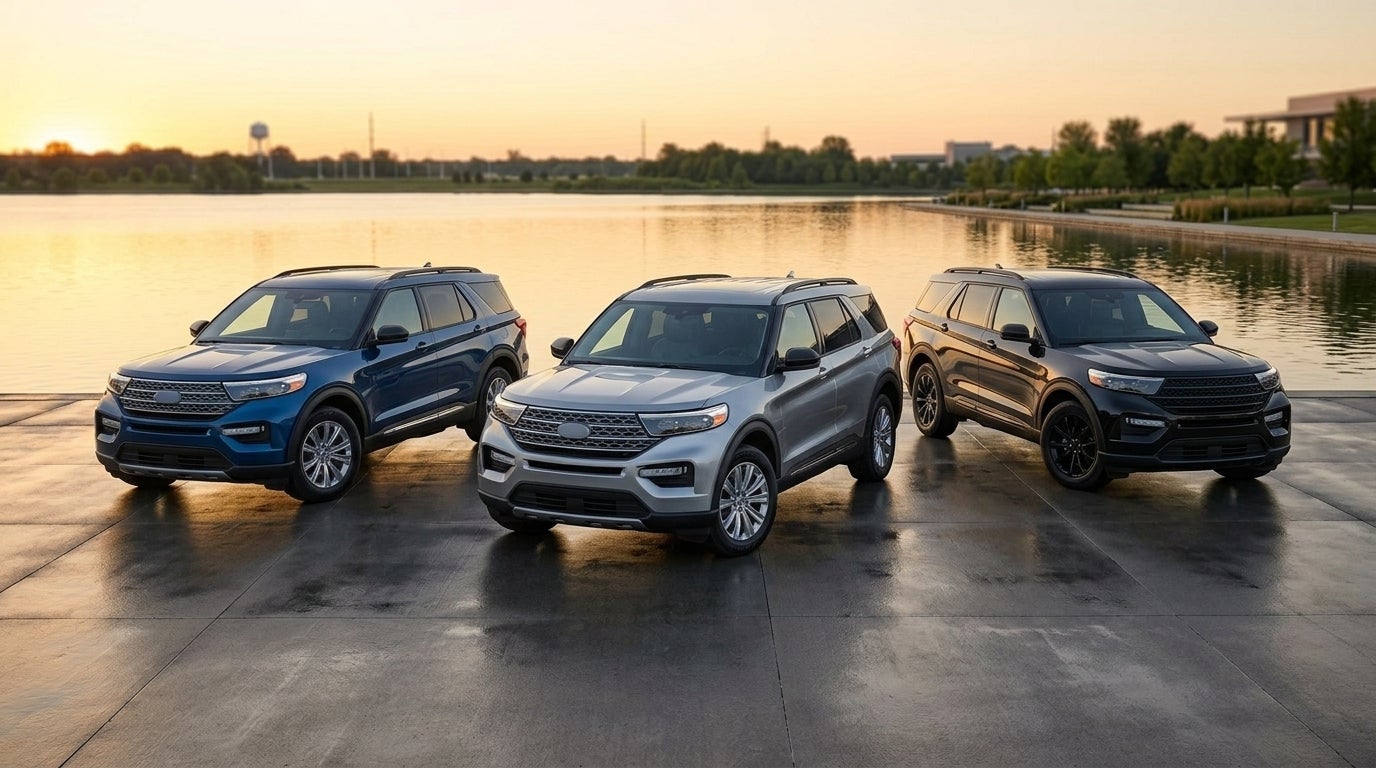
Three Ford Explorer SUVs in blue, silver, and black parked side-by-side near a lake at sunset. (Representative image for illustration purposes only. Actual vehicle may vary based on trim and configuration.)

2026 Ford Explorer Trim Comparison: Platinum, ST, and Tremor 4WD

The 2026 Ford Explorer Platinum, ST, and Tremor 4WD trims deliver a substantial upgrade in performance, cabin luxury, and capability over standard Explorer models. Featuring an available 400 hp 3.0L EcoBoost® V6 engine, available Intelligent 4WD, advanced Ford Co-Pilot360 Assist 2.0 technology, and a maximum towing capacity of 5,000 lbs, these top-tier configurations represent the overall recommended choice for active families seeking maximum driver engagement and interior refinement. Table of Contents Which 2026 Ford Explorer Trim Best Fits Family Needs? Choosing the Right 2026 Ford Explorer Trim for Milford Budget and Lifestyle Family-Friendly Space and Cargo Capacity for Active Weekends Power and Handling of the 2026 Ford Explorer Trims on Smyrna Streets Tech Features That Keep Professionals and Parents Connected and Safe Confidence and Protection: Safety Systems Tailored for Family Commutes Maintaining Your 2026 Ford Explorer: Warranty, Service, and Local Dealer Resources Frequently Asked Questions About the 2026 Ford Explorer for Families Which 2026 Ford Explorer Trim Best Fits Family Needs? Selecting the ideal configuration among the 2026 Ford Explorer lineup comes down to how your family balances daily convenience, interior luxury, and raw performance. While standard Explorer models provide exceptional core utility, moving up to specialized trims like the Tremor 4WD, Platinum, or ST unlocks distinct driving characteristics and enhanced equipment packages tailored to specific driver preferences. The 2026 Ford Explorer Platinum is crafted for those who prioritize cabin comfort and sophisticated styling. Offered in both Rear-wheel drive ($50,965 MSRP) and All-wheel drive ($52,965 MSRP) configurations, the Platinum trim comes equipped with the responsive 2.3L EcoBoost® I-4 engine producing 300 hp and 310 lb-ft of torque. Inside, the cabin features 6-passenger seating with Mojave Dusk/Onyx ActiveX® trimmed seats with leather interlaced diamond perforated inserts, a 14-speaker Bang & Olufsen sound system with subwoofer, and leather trim on the instrument panel, doors, and center floor console. For drivers seeking maximum athletic performance, the 2026 Ford Explorer ST ($54,905 MSRP RWD / $56,905 MSRP 4WD) introduces a high-output 3.0L EcoBoost® V6 engine delivering 400 hp and 415 lb-ft of torque. Matched with a sport-tuned suspension, steering wheel-mounted gearchange paddles, Onyx ActiveX™ seating material with Miko inserts and ST logo, and 21-inch alloy wheels, the ST trim transforms family transportation into an engaging driving experience. Meanwhile, the 2026 Ford Explorer Tremor 4WD ($48,965 MSRP) caters directly to outdoor enthusiasts who require off-road readiness paired with everyday suburban practicality. To explore current trim availability and feature options, view our selection of new Ford Explorer models at Winner Ford. Pricing Manufacturer-listed pricing per trim, across compared vehicles. 2026 Ford Explorer Trim MSRP 2026 Ford Explorer Trim MSRP Tremor 4WD $48,965 Active 4WD 100A $40,465 Platinum $50,965 Active RWD $40,585 Platinum 4WD $52,965 Active 4WD $42,585 ​ Choosing the Right 2026 Ford Explorer Trim for Milford Budget and Lifestyle When evaluating the financial investment across the Explorer model lineup, comparing baseline trims against higher-tier editions reveals clear value increments for every price point. Starting with the entry Active RWD at $40,585 MSRP and Active 4WD at $42,585 MSRP, step-up models offer progressive upgrades in engine output, wheel sizing, audio fidelity, and interior upholstery materials. In coastal communities like Milford, where weekend outings often involve trips toward waterfront parks or towing watercraft down to local ramps, choosing between rear-wheel drive efficiency and Intelligent 4WD traction is a central consideration. The Platinum RWD trim achieves an EPA-estimated fuel economy rating of 20 city / 29 hwy / 24 combined MPG with a calculated driving range of 430 miles on its 17.9-gallon fuel tank. Selecting the Platinum 4WD model yields 20 city / 27 hwy / 23 combined MPG and a 412-mile driving range, providing added all-weather confidence on wet roads during seasonal storm events. For budget-conscious shoppers comparing initial acquisition costs against long-term vehicle utility, trading in a current vehicle can offset the upgrade to a upper-tier Platinum or ST trim. To estimate your current vehicle's worth, you can value your trade-in online before browsing quality pre-owned vehicles and new vehicle options at our dealership. ​ Family-Friendly Space and Cargo Capacity for Active Weekends Interior spatial design across every 2026 Ford Explorer trim is engineered to accommodate family travel, carpooling duties, and recreational cargo without compromise. Featuring standard 3-row seating configurations, the Explorer offers generous passenger dimensions across all rows, including 40.7 inches of front headroom, 43 inches of front legroom, 39 inches of second-row legroom, and 32.2 inches of third-row legroom. When loading luggage, sports equipment, or camping gear, the 2026 Ford Explorer provides about 16 cu ft of cargo volume with all six seats in place. Folding down the symmetrical split-folding third-row bench expands cargo room significantly, offering up to about 85 cu ft of flat load floor storage behind the front seats. A cargo area floor length of 77.8 inches on Platinum trims (70.7 inches on ST trims) and a load floor width between wheelhouses of 48.1 inches easily accommodate bulky items. Furthermore, every 2026 Ford Explorer trim boasts a maximum braked towing capacity of 5,000 lbs paired with a 1,500 lbs unbraked trailer rating and standard trailer towing preparation. Gross vehicle weight ratings (GVWR) are set at 5,770 lbs across trims, with published curb weights of 4,303 lbs for 2.3L models and 4,631 lbs for 3.0L ST models. Payload capacities range from 1,139 lbs on ST models up to 1,467 lbs on Platinum configurations. To start your purchase journey, shoppers can contact us for current financing information today. Dimensions & Capacity Capacity and dimensions by trim Specification 2026 Ford Explorer 2026 Ford Explorer Seating 6 6 Cargo 16.3 cu ft 16.3 cu ft Towing 5,000 lbs 5,000 lbs Curb weight 4,303 lbs 4,303 lbs Payload 1,467 lbs 1,467 lbs ​ Power and Handling of the 2026 Ford Explorer Trims on Smyrna Streets Dynamic driving capability remains a defining attribute of the 2026 Ford Explorer lineup. The foundational 2.3L EcoBoost® I-4 engine utilizes a single turbocharger to generate 300 hp at 5,500 rpm and 310 lb-ft of torque at 3,500 rpm. This responsive powertrain provides eager acceleration and effortless passing power for daily driving throughout suburban Smyrna neighborhoods. For enthusiasts seeking sports-car acceleration in a three-row SUV layout, the ST trim’s 3.0L EcoBoost® V6 engine employs twin turbochargers to deliver an impressive 400 hp at 5,500 rpm and 415 lb-ft of torque at 3,500 rpm. Both engine options are paired with a 10-speed SelectShift® automatic transmission, offering smooth gear transitions and optimized ratio stepping. On ST models, paddle shifters allow drivers to take manual control over shift points. Underneath the chassis, an independent front strut suspension with stabilizer bar and independent rear multi-link suspension with coil springs keep body roll in check around tight curves. ST models feature a specially tuned sport suspension that firms up dampening for precise cornering control. Electric power-assisted speed-proportional steering delivers light low-speed maneuverability during parking procedures and communicative weight on highway stretches. To maintain your vehicle's performance components, our team supplies genuine Ford parts and accessories designed specifically for your model. Engine & Performance Powertrain specs by trim Specification 2026 Ford Explorer 2026 Ford Explorer Transmission SelectShift® SelectShift® Engine 2.3L 2.3L Horsepower 300 hp 300 hp Torque 310 lb-ft 310 lb-ft Drivetrain Rear-wheel drive All-wheel drive ​ Tech Features That Keep Professionals and Parents Connected and Safe The cabin architecture of the 2026 Ford Explorer integrates cutting-edge digital interfaces engineered for intuitive control and minimal driver distraction. Anchoring the center dashboard is a standard 13.2-inch central LCD touchscreen display running the Ford Digital Experience. This screen is seamlessly paired with a 12.3-inch fully digital reconfigurable TFT instrument cluster display that presents speedometer readings, navigation maps, and safety alerts directly in the driver's line of sight. Wireless Apple CarPlay® and Android Auto™ mobile integration come standard, allowing seamless smartphone mirroring for streaming music, accessing contacts, and running navigation apps. The integrated voice-activating system features Google Assistant virtual assistant integration, enabling hands-free climate adjustments and address entries. Embedded Wi-Fi hotspot capability via embedded SIM card technology keeps passengers connected across multiple devices simultaneously. Device charging is convenient throughout the interior, featuring 4 USB charging ports in the front row, 2 USB ports in the second row, and 2 USB ports in the third row, alongside front and rear 12V power outlets. Platinum and ST models come equipped with a 14-speaker Bang & Olufsen sound system that delivers clear audio reproduction across all three seating rows. ​ Confidence and Protection: Safety Systems Tailored for Family Commutes Family safety is a paramount priority in the design of the 2026 Ford Explorer, which features standard Ford Co-Pilot360 Assist 2.0 driver-assist technology. Active collision mitigation equipment includes Pre-Collision Assist with Automatic Emergency Braking, visual and acoustic collision warnings, junction turning detection, and oncoming collision avoidance. The standard BLIS® (Blind Spot Information System) continuously monitors adjacent lanes and alerts drivers to hidden vehicles, while Rear Cross Traffic Braking automatically applies stopping power if an object approaches while reversing out of driveways or parking spaces. The Lane-Keeping System actively assists with steering inputs to prevent unintentional lane drifting on multi-lane highways. Park assistance is effortless thanks to standard Rear Parking Sensors and a 360-Degree Camera with Split View that displays a bird's-eye perimeter graphic on the 13.2-inch center screen. Passive safety features include 7 standard airbags—comprising dual front airbags, front seat-mounted side airbags, driver knee airbag, and Safety Canopy® side curtain airbags protecting passengers in all three rows. Crash test credentials include a 5-Star Overall Safety Rating from the NHTSA and "Good" scores across key crash test categories evaluated by the IIHS. ​ Maintaining Your 2026 Ford Explorer: Warranty, Service, and Local Dealer Resources Long-term ownership peace of mind comes standard with every 2026 Ford Explorer sold at Winner Ford. Every new vehicle is backed by a comprehensive factory warranty coverage package that includes: 3-year / 36,000-mile Bumper-to-Bumper OEM Whole Vehicle Warranty 5-year / 60,000-mile Powertrain OEM Warranty 5-year / 60,000-mile Safety Restraint System Coverage 5-year / Unlimited-mile Corrosion Perforation Warranty 5-year / 60,000-mile Roadside Assistance Program For official emergency roadside support during flat tire incidents or unexpected mechanical issues, owners can contact Ford Roadside Assistance at 1-800-241-3673 for manufacturer-backed towing to authorized service centers. Maintaining scheduled maintenance intervals—such as routine engine oil changes, tire rotations, and brake inspections—ensures optimal fuel efficiency over the vehicle's lifespan. Fuel economy figures remain strong across the powertrain lineup, with 2.3L EcoBoost® RWD models delivering 20 city / 29 hwy / 24 combined MPG and 3.0L EcoBoost® V6 RWD models delivering 18 city / 25 hwy / 21 combined MPG. When it comes time for routine maintenance, schedule your service appointment online with our certified technicians at Winner Ford. Fuel Economy Fuel economy and range by trim Specification 2026 Ford Explorer 2026 Ford Explorer MPG 20 city / 29 hwy / 24 combined 20 city / 27 hwy / 23 combined ​ Frequently Asked Questions About the 2026 Ford Explorer for Families Q: Which 2026 Ford Explorer trim offers the most horsepower? The 2026 Ford Explorer ST and ST 4WD trims deliver the highest performance output in the lineup, powered by a 3.0L EcoBoost® V6 engine that generates 400 hp and 415 lb-ft of torque. Platinum and Tremor 4WD models feature the 2.3L EcoBoost® I-4 engine producing 300 hp and 310 lb-ft of torque. Q: What is the standard towing capacity across 2026 Ford Explorer models? When properly equipped, all 2026 Ford Explorer trims—including Platinum, ST, and Tremor 4WD—feature a maximum braked towing capacity of 5,000 lbs and a 1,500 lbs unbraked trailer rating, making it easy to tow boat trailers, campers, or utility equipment. Q: What safety ratings has the 2026 Ford Explorer earned? The 2026 Ford Explorer holds a 5-Star Overall Safety Rating from the NHTSA, including 5-star ratings in frontal and side impact crash testing. It also earned top "Good" ratings from the IIHS in small overlap front, moderate overlap front, and side impact evaluations. Q: How much cargo space is available inside the 2026 Ford Explorer? The 2026 Explorer provides about 16 cu ft of cargo capacity behind the third row with all seats in upright positions. Folding down the second and third rows expands overall cargo storage up to about 85 cu ft flat load space. Q: Where is Winner Ford located, and how can I contact the team for a test drive? Winner Ford is located at our Dover showroom location at 591 S Dupont Hwy, Dover, DE 19901. You can arrange a test drive or speak with our sales staff by calling (302) 734-0444. © 2026 Winner Ford. All rights reserved. Vehicle specification data © JATO Dynamics Limited. 2026 Ford Explorer Trims in Dover DE | Winner Ford
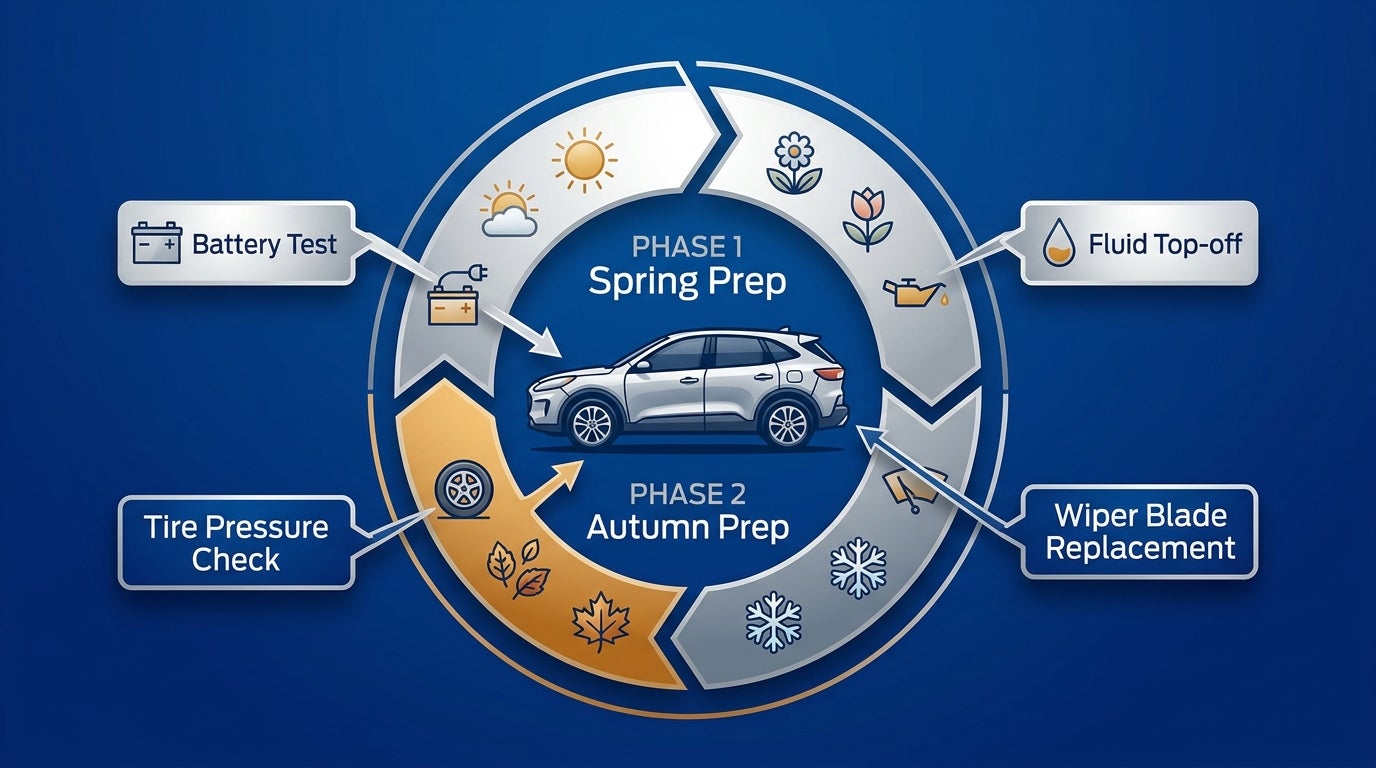
A circular diagram illustrating seasonal car maintenance steps for Spring Prep and Autumn Prep around an SUV. (Representative image for illustration purposes only. Actual vehicle may vary based on trim and configuration.)

When Should You Schedule Seasonal Maintenance for Your Ford?

Ford owners should schedule seasonal maintenance twice a year or every 7,500 to 10,000 miles, ideally in spring and autumn before extreme weather arrives. This timing aligns with standard oil change intervals and allows technicians to address fluid degradation, battery stress, and tire pressure shifts before winter cold or summer heat strains your engine. Booking service twice annually prevents minor environmental wear from developing into costly mechanical repairs. Seasonal maintenance centers on protecting mechanical and electrical components against localized weather demands. Mid-Atlantic temperature swings alter tire pressure by roughly 1 PSI for every 10-degree change in ambient air, while humidity and road grime degrade rubber wiper blades and clog air filtration systems. Drivers navigating the tidal roads and coastal air around Milford benefit from timing these visits every six months, as atmospheric salt and high moisture accelerate undercarriage oxidation and breakdown of exposed rubber seals. Ford equips modern vehicles with the onboard Intelligent Oil-Life Monitor, which continuously tracks engine temperatures, total load, idling hours, and ambient conditions to signal when service is required. Operating under severe conditions—such as frequent towing, commercial hauling, or extended idling—breaks down oil viscosity faster and shortens your maintenance window to roughly 3,000 to 5,000 miles. Following these dynamic notifications helps preserve factory warranty coverage while maintaining long-term engine performance. To maintain continuous vehicle health, plan your appointment ahead of peak seasonal transitions in early spring and early autumn. Pre-booking service ensures you secure a convenient time slot before weather shifts create high shop demand. You can reach our advisors at (302) 734-0444 or drop by our Dover service center address at 591 S Dupont Hwy for personalized maintenance guidance. Table of Contents Why Is Summer Maintenance Essential and Which Motor Oil Does Ford Recommend? Does The Works Service Package Include Fluid Top-Offs and What Services Pair Best with It? What Is Included in a Comprehensive Ford Brake Inspection? What Seasonal Ford Checks Can You Perform at Home Before Visiting the Dealer? How Can Dover Ford Owners Schedule a Seasonal Service Appointment Online? Common Questions About Ford Seasonal Service Protect Your Ford with Expert Seasonal Care at Winner Ford Why Is Summer Maintenance Essential and Which Motor Oil Does Ford Recommend? Summer maintenance is vital because extreme heat accelerates battery fluid evaporation, thins engine oil, and increases cooling system pressure under heavy air conditioning loads. High ambient temperatures degrade protective oil additives faster than winter driving, making a fresh lubricant oil service critical before warm-weather road trips. For optimal seasonal protection, Ford recommends Motorcraft synthetic blend or full synthetic oil specifications, such as Motorcraft SAE 5W-20 or Motorcraft SAE 5W-30, which meet rigorous Ford engineering standards WSS-M2C960-A1 or WSS-M2C961-A1. Using factory-certified motor oil ensures proper viscosity across fluctuating engine temperatures. Modern engines rely on tight tolerances and precise hydraulic pressure for variable camshaft timing. Full synthetic formulations maintain stable film strength at elevated summer operating temperatures while providing rapid circulation during cold morning starts. When servicing models like a 2026 Ford Escape Active featuring the 1.5L engine or a 2026 Ford Explorer XLT equipped with the 2.3L EcoBoost, using the precise Motorcraft oil viscosity protects turbocharger bearings and internal seals against thermal breakdown. Heat also places severe demands on your vehicle’s electrical architecture and cooling loop. High under-hood temperatures accelerate internal battery plate corrosion, often causing an aging 12-volt battery to fail unexpectedly when running cabin cooling systems at high output. Summer service includes checking coolant hydrometer levels to maintain a proper 50/50 mixture of Motorcraft Yellow Antifreeze and distilled water, preventing boil-overs and scale buildup within the radiator block. When preparing your truck or SUV for warm-weather driving, you can easily schedule your seasonal service online to ensure your cooling system and engine oil meet factory specifications. If you prefer replacing engine or cabin air filters at home using original equipment, our specialized parts center supplies genuine Motorcraft components engineered specifically for your Ford vehicle. ​ Does The Works Service Package Include Fluid Top-Offs and What Services Pair Best with It? Yes, The Works service package includes essential fluid top-offs as a core component of its multi-point inspection. Certified technicians inspect and replenish vital vehicle fluids, including windshield washer fluid, power steering fluid, engine coolant, and transmission fluid, to ensure proper operating levels. This comprehensive maintenance bundle also combines a synthetic blend oil change, oil filter replacement, tire rotation, pressure adjustment, and a detailed brake inspection into a single visit. Combining routine service procedures during The Works provides thorough preventative care while saving time in the service drive. Pairing an oil change with a tire rotation every 7,500 to 10,000 miles ensures even tread wear across all four positions, extending overall tire life and preserving all-wheel-drive performance on vehicles like the 2026 Ford F-150 XLT featuring the 3.5L EcoBoost engine. Rotating tires regularly helps maintain balanced traction and predictable handling during sudden rain showers. In addition to fluid management and tire rotations, seasonal maintenance offers the ideal opportunity to address secondary wear items that impact cabin comfort and engine efficiency: Cabin Air Filter Replacement: Swapping the cabin air filter every 15,000 to 20,000 miles clears accumulated pollen, dust, and debris, preserving HVAC blower motor longevity and airflow. Engine Air Filter Service: Replacing the engine air intake filter every 30,000 miles ensures clean air delivery to the combustion chambers, protecting fuel economy and throttle response. Battery Load Testing: Performing a digital conductance test measures cold-cranking capacity, identifying battery degradation before a no-start condition occurs. Wiper Blade Inspection: Replacing streaking or chattered wiper blades every six months guarantees clear forward visibility through heavy seasonal downpours. When drivers inquire about seasonal maintenance during a routine visit, our service team recommends completing these combined checks to establish a documented service history. Catching minor fluid loss or uneven tire wear early prevents unexpected downtime and keeps your vehicle running reliably throughout the year. ​ What Is Included in a Comprehensive Ford Brake Inspection? A comprehensive Ford brake inspection evaluates the entire friction and hydraulic assembly, including brake pad thickness, rotor surface condition, caliper operation, slider pin movement, and hydraulic fluid moisture content. Technicians measure inner and outer friction material against minimum safety thresholds, inspecting rotors for heat cracking, scoring, or excessive thickness variation that causes pedal pulsation. Inspecting hydraulic lines and brake fluid condition is equally essential for stopping performance. Hydraulic brake fluid is hygroscopic, meaning it naturally absorbs ambient moisture over time. Accumulated moisture lowers the fluid's boiling point, which can create pedal sponginess and internal corrosion within caliper pistons and anti-lock braking system valves. Ford recommends flushing and replacing hydraulic brake fluid every three years regardless of mileage to preserve crisp pedal feel and rapid ABS response. Regular brake checks are especially important for high-capacity SUVs and trucks that manage heavy passenger loads or frequent trailering. Components on a 2026 Ford F-150 XLT rated for up to 10,400 lbs of towing capacity experience significant thermal stress during braking cycles. Catching worn friction pads or sticking slider pins early protects expensive brake rotors from damage, ensuring your stopping system performs reliably under heavy load conditions. ​ What Seasonal Ford Checks Can You Perform at Home Before Visiting the Dealer? Vehicle owners can perform several straightforward maintenance checks at home between scheduled service appointments using basic tools. Performing visual inspections once a month helps identify developing maintenance needs early, ensuring your vehicle remains safe and efficient between professional service visits. Key DIY seasonal maintenance checks include: Cold Tire Pressure Inspection: Use a reliable digital tire gauge to check inflation levels when tires have been parked for at least three hours. Compare readings against the recommended PSI printed on the driver-side doorjamb placard, rather than the maximum pressure listed on the tire sidewall. Tread Depth Verification: Inspect tire tread depth across the entire width of each tire using a tread depth gauge or the penny test. Tread depth measuring at or below 2/32 of an inch indicates immediate replacement is necessary to prevent hydroplaning on wet surfaces. Fluid Level Monitoring: Park on a level surface, pop the hood, and visually check transparent reservoir levels for engine coolant, windshield washer fluid, and power steering fluid. Top off low washer fluid using seasonal formulas designed to clear bugs in summer or resist freezing in winter. Wiper Blade & Light Checks: Inspect rubber wiper edges for tearing or splitting, replacing blades that leave streaks. Have a family member stand behind the vehicle while you verify that headlights, high beams, brake lights, and turn signals function correctly. While visual inspections are easy to manage at home, complex procedures belong in a professional service bay. Hydraulic fluid flushes, air conditioning pressure diagnostics, and 12-volt battery replacements on modern Ford models require resetting the onboard Battery Management System using factory diagnostic tools to ensure correct charging behavior. ​ How Can Dover Ford Owners Schedule a Seasonal Service Appointment Online? Ford owners can schedule a seasonal service appointment online in minutes through our dealer portal or the Ford App by selecting their specific year, model, mileage interval, and required service procedures. The digital scheduling platform allows you to choose your preferred advisor, select available calendar dates, and pick appointment times that fit your daily schedule without making a phone call. Suburban commuters traveling along Route 1 from Smyrna appreciate the convenience of managing maintenance digitally, reserving drop-off windows that align with work travel. Online scheduling provides clear service visibility, allowing you to select The Works package, request a comprehensive multi-point inspection, or note specific performance observations directly within your booking profile. If you encounter unexpected roadside issues like a flat tire or battery failure while traveling, Ford Roadside Assistance provides manufacturer-backed emergency support. Assistance can be requested through the Ford App or by calling Ford Roadside Assistance: 1-800-241-3673 for towing to authorized service centers, battery jump-starts, and fuel delivery backed by factory warranty coverage. For personalized assistance or specific vehicle diagnostic inquiries, our service team remains available to guide your maintenance planning. You can call our team directly at (302) 734-0444 or view directions to our Dover service center to visit our facility at 591 S Dupont Hwy for in-person support. ​ Common Questions About Ford Seasonal Service Q: What causes tire pressure warnings to illuminate when weather turns cold? A: Ambient temperature drops cause air molecules inside your tires to contract, reducing internal inflation pressure by approximately 1 PSI for every 10-degree drop in outdoor air. This natural drop triggers the tire pressure monitoring system indicator on chilly mornings, requiring drivers to inflate tires back to the doorjamb placard specification. Q: How often does Ford recommend replacing cabin and engine air filters? A: Ford recommends replacing the cabin air filter every 15,000 to 20,000 miles and the engine air intake filter every 30,000 miles under normal driving conditions. Driving in high-pollen areas, dusty unpaved roads, or heavy traffic environments may require annual replacement to maintain optimal airflow and interior air quality. Q: Why is a battery load test recommended before seasonal heat or cold waves? A: Temperature extremes place heavy electrical demands on 12-volt vehicle batteries while accelerating internal degradation. A digital load test measures cold-cranking capacity and internal resistance, identifying plate sulfation or electrolyte loss early so you can replace an aging battery before experiencing a sudden no-start event. Q: How long can you drive when the Intelligent Oil-Life Monitor displays a service prompt? A: When the Intelligent Oil-Life Monitor displays an oil service message, you should schedule maintenance within 500 miles or two weeks. Continuing to drive past the service notification risks thermal breakdown of oil additives, increasing friction wear on internal engine components and turbocharger bearings. Q: What should you do if your engine coolant reservoir level is below the fill line? A: If the coolant level drops below the minimum fill line on a cold engine, top it off using a 50/50 prediluted mixture of Motorcraft Yellow Antifreeze and distilled water. Avoid using plain tap water, as mineral deposits create internal radiator scale and reduce overall cooling efficiency. ​ Protect Your Ford with Expert Seasonal Care at Winner Ford Maintaining a regular seasonal maintenance schedule protects your powertrain investment, preserves daily fuel efficiency, and keeps your vehicle performing safely through changing weather. Following factory service guidelines prevents unexpected component wear, ensuring your truck or SUV remains reliable mile after mile. Our certified technicians at Winner Ford provide expert care tailored specifically to your vehicle. Utilizing factory diagnostic tools and genuine Motorcraft parts, our team delivers complete maintenance procedures engineered to original specification standards. When you are ready to prepare your vehicle for upcoming seasonal travel, rely on our team for convenient service scheduling and trusted technical advice. Visit our Dover location at 591 S Dupont Hwy or book your next maintenance appointment online to keep your Ford running at its absolute best. © 2026 Winner Ford. All rights reserved. Vehicle specification data © JATO Dynamics Limited.
Five Ford pickup trucks in various colors and sizes parked together on a dusty dirt construction site. (Representative image for illustration purposes only. Actual vehicle may vary based on trim and configuration.)

How Do You Choose the Right Ford Vehicle for Your Lifestyle and Budget?

Selecting the right Ford vehicle requires matching your primary daily demands—such as family passenger space, weekly towing, or commuting fuel economy—against your total ownership budget. By comparing platform sizes, powertrain capabilities, and trim features directly, you can determine whether a compact crossover, three-row SUV, or light-duty pickup best fits your everyday driving requirements without overpaying for unnecessary capability. Navigating the lineup begins with identifying how you intend to use the vehicle on a daily basis. A commuter seeking lower fuel costs and easy parking has very different requirements than a growing family needing three rows of seating or a tradesperson hauling equipment. Vehicles built on unibody frames offer smooth handling and efficient performance, whereas body-on-frame trucks and full-size SUVs deliver rugged durability and heavy trailering strength. Evaluating power options also helps narrow your search. Ford EcoBoost engine choices balance turbocharged power with practical efficiency, ranging from economical turbocharged three-cylinders to twin-turbo V6 engines built for heavy work. Additionally, driver-assist innovations like Ford Co-Pilot360 technology feature blind-spot monitoring and adaptive cruise control that help keep your family safe on every drive. Balancing your decision against financial comfort means looking at total ownership costs rather than just the vehicle price. Comparing potential trade-in value, insurance rates, estimated fuel usage, and available financing incentives gives a complete picture of your monthly investment. When you are ready to explore options in person, checking our showroom on South Dupont Highway or giving our team a quick phone call provides direct access to expert guidance tailored to your schedule. For weekend trips toward the coast near Milford with a boat trailer in tow, having the proper powertrain and frame setup makes all the difference in highway confidence. Table of Contents What Towing and Payload Differences Highlight the F-150, Ranger, and Maverick? Which Ford SUV Offers the Most Passenger Seating Capacity and Family Utility? What Are the Main Differences Between the Ford Explorer and Ford Edge? Which Ford SUVs Feature Lower Long-Term Maintenance Costs and Strong Reliability? How Should You Compare a New Ford with a Used Ford at the Dealership? Common Questions About Ford Model Comparisons Before You Visit the Dealership Dependable Performance Meets Modern Technology at Winner Ford What Towing and Payload Differences Highlight the F-150, Ranger, and Maverick? Ford truck comparison guides highlight clear capability tiers across the truck lineup: the compact Maverick delivers up to 1,500 lbs payload and 4,000 lbs maximum towing when properly equipped, the midsize Ranger increases towing up to 7,500 lbs, and the full-size F-150 leads with best-in-class maximum towing capacity and rugged durability. Understanding these structural differences ensures you select a truck that handles your work and recreational needs efficiently: Ford Maverick: Built on a maneuverable unibody platform, the compact Maverick uses a standard 2.0L EcoBoost turbo four-cylinder engine generating 250 hp and 280 lb-ft of torque. It is ideal for light home improvement projects, urban parking, and everyday utility. Ford Ranger: Featuring a traditional fully boxed steel frame, the midsize Ranger offers impressive midsize muscle. With up to 7,500 lbs towing capacity, it easily pulls midsize campers, utility trailers, and recreational watercraft while maintaining nimble handling on tight roads. Ford F-150: As the benchmark full-size truck, the F-150 provides multiple engine configurations, expansive cab setups, and high-tier payload limits. Available features like Pro Power Onboard transform the truck bed into a mobile generator for job sites or campsites. When truck shoppers walk our lot to compare bed sizes, they usually ask about tailgate height and bed access before looking at maximum tow ratings. Commuters navigating the daily highway drive from Smyrna often lean toward the Maverick for its easy parking and practical utility, whereas tradespeople and heavy towers opt for the uncompromising frame strength of the F-150. Before finalizing your decision, evaluating your current trade-in value can help lower your overall loan balance and make stepping into a higher trim level even more affordable. Which Ford SUV Offers the Most Passenger Seating Capacity and Family Utility? The full-size 2026 Ford Expedition delivers the highest passenger seating capacity in the Ford lineup, accommodating up to 8 passengers across three spacious rows with 175 cubic feet of total passenger volume. For large families and outdoor enthusiasts requiring maximum interior space, the Expedition provides exceptional comfort and capability. Powered by a standard 3.5L EcoBoost twin-turbo V6 engine producing 400 hp and 480 lb-ft of torque paired with a 10-speed automatic transmission, it handles full passenger loads and heavy trailering without strain. Fold-flat second- and third-row seating opens up to 109 cubic feet of maximum cargo space behind the front seats, giving you room for luggage, sports equipment, or camping gear. By comparison, the midsize 2026 Ford Explorer provides versatile three-row seating for up to 7 passengers. Equipped with a standard 2.3L EcoBoost turbocharged four-cylinder producing 300 hp, the Explorer balances spacious family seating with up to 88 cubic feet of maximum cargo space and standard rear-wheel drive or available four-wheel drive. Advanced safety equipment, wide-opening doors, and accessible third-row step-in make both vehicles reliable choices for family transportation. Preparing your budget for a full-size or midsize family hauler is simple when working with our finance department. Taking a few minutes to complete prequalifying for financing online allows you to review personalized options built for Dover families before stepping into the showroom. What Are the Main Differences Between the Ford Explorer and Ford Edge? The primary differences between the Explorer and Edge center on seating capacity and chassis architecture: the Ford Explorer is a three-row midsize SUV seating up to 7 passengers with rear-wheel-drive or all-wheel-drive options, while the Ford Edge is a two-row midsize crossover seating 5 passengers with standard all-wheel drive. Under the hood, engine choices reflect their different sizes and performance goals. The Explorer comes standard with a 2.3L EcoBoost four-cylinder making 300 hp, with high-performance trims like the ST featuring a 3.0L EcoBoost twin-turbo V6 that delivers 400 hp. The two-row Edge typically features a standard 2.0L EcoBoost engine or an available 2.7L EcoBoost V6 producing 335 hp. Utility and cargo metrics also favor the larger Explorer platform: Passenger Capacity: Explorer seats up to 7 passengers across three rows; Edge seats 5 passengers across two rows. Maximum Cargo Volume: Explorer offers up to 88 cubic feet of cargo space behind row one; Edge provides up to 73 cubic feet. Towing Capability: Properly equipped Explorer models tow up to 5,000 lbs; Edge maxes out at 3,500 lbs. Choosing between them comes down to daily seating priorities and trailering needs. Drivers who prioritize a shorter body for easier garage parking and do not require a third row often prefer a two-row crossover, whereas growing families benefit from the extra seat rows and higher towing limit of the Explorer. Which Ford SUVs Feature Lower Long-Term Maintenance Costs and Strong Reliability? Smaller crossover models such as the Ford Escape and Ford Bronco Sport tend to feature lower long-term maintenance costs because of their lighter mechanical components, economical four-cylinder engines, and accessible engine bays. The compact Ford Escape Active trim utilizes a fuel-efficient 1.5L EcoBoost turbocharged engine producing 181 hp and 199 lb-ft of torque. Its lighter curb weight reduces wear on brake pads, rotors, and tires compared to heavier body-on-frame platforms. Furthermore, common maintenance items—such as oil filters, air filters, and spark plugs—are straightforward to service, which helps keep routine vehicle upkeep predictable and budget-friendly. The Ford Bronco Sport delivers similar mechanical simplicity while adding standard all-wheel drive and an 8-speed automatic transmission. Lower trim levels powered by the turbocharged 1.5L EcoBoost engine offer strong fuel economy alongside rugged exterior styling. Every new Ford SUV is backed by standard factory coverage, including a 3-year/36,000-mile bumper-to-bumper limited warranty and a 5-year/60,000-mile powertrain limited warranty. Choosing a vehicle with documented maintenance intervals and standard safety technology supports strong long-term performance and helps preserve resale value over time. How Should You Compare a New Ford with a Used Ford at the Dealership? Comparing a new Ford with a pre-owned model requires looking beyond the initial sticker price to evaluate total loan costs, active warranty coverage, available interest rates, and expected near-term maintenance. A brand-new Ford offers zero prior ownership history, pristine mechanical condition, full factory warranty coverage, and access to the latest driver-assist features. Furthermore, new vehicles frequently qualify for promotional manufacturer financing rates that can lower your monthly interest charges. On the other hand, choosing a pre-owned vehicle allows you to avoid initial vehicle depreciation and potentially step up to a premium trim level—such as a King Ranch or Platinum—for the price of a mid-level new model. When evaluating a used vehicle, factor in its current tire tread depth, brake wear, and mileage history to account for potential maintenance expenses down the road. To build an accurate cost comparison: Calculate the total financed amount for both vehicles including taxes and fees. Compare the loan interest rates and total interest paid over the entire term rather than looking strictly at monthly payments. Factor in the value of remaining factory warranty coverage versus purchasing an extended protection plan. When comparing your choices on the lot, browsing our current new Ford lineup alongside exploring our pre-owned vehicle inventory gives you a clear look at pricing, trim features, and mileage side by side. Common Questions About Ford Model Comparisons Before You Visit the Dealership Q: Which Ford truck is best for daily commuting and weekend home projects? The Ford Maverick is ideal for commuters who need light pickup utility. Its maneuverable unibody design, responsive 2.0L EcoBoost engine, and 1,500 lbs payload rating make it easy to park, efficient on fuel, and fully capable of hauling mulch, lumber, or furniture on weekends. Q: How much towing capacity do I need for a midsize camper or trailer? A midsize camper or multi-vehicle utility trailer usually requires a towing capacity between 5,000 lbs and 7,500 lbs. The Ford Ranger ( 7,500 lbs maximum towing) or Ford Explorer ( 5,000 lbs maximum towing) comfortably handle these loads when properly equipped with factory tow packages. Q: What is the main utility advantage of a full-size SUV over a midsize SUV? Full-size SUVs like the Ford Expedition feature body-on-frame construction and powerful twin-turbo V6 engines. This setup grants up to 8-passenger seating with adult-friendly third-row legroom, expanded cargo volume up to 109 cubic feet, and significantly higher towing ratings than midsize crossovers. Q: What driver-assist safety technology comes standard on modern Ford vehicles? Most modern Ford models include Ford Co-Pilot360 technology as standard or available equipment. This suite features blind-spot monitoring, lane-keeping assistance, pre-collision assist with automatic emergency braking, and adaptive cruise control that helps keep your family safe on daily commutes. Q: Can buying pre-owned help me afford a higher Ford trim level? Yes. Choosing a pre-owned model allows you to leverage past depreciation to access upper-tier trims like the King Ranch, Platinum, or ST within a budget that might only cover an entry-level or mid-grade new vehicle. Dependable Performance Meets Modern Technology at Winner Ford Finding the perfect vehicle comes down to matching engine power, seating capacity, and towing limits to your daily schedule and family budget. Whether you need the best-in-class towing of an F-150, the 8-passenger room of an Expedition, or the practical efficiency of a Maverick, our local Ford experts are here to walk you through every feature step by step. When you are ready to compare models on a test drive, finding our dealership directions or reaching out at (302) 734-0444 is the easiest way to get started. Schedule your test drive today and see why Dover families trust Winner Ford. Keep Your Vehicle Running Strong Keep your vehicle performing at its best with our service team: Schedule Service Parts Department © 2026 Winner Ford. All rights reserved. Ford Vehicle Selection Guide in Dover DE | Winner Ford
A Ford car dealership lot showcasing various trucks, SUVs, and Mustangs on a sunny day. (Representative image for illustration purposes only. Actual vehicle may vary based on trim and configuration.)

How Do You Properly Inspect a Used Car Before Buying in Dover?

To properly inspect a used car before buying, systematically evaluate four core areas: verify the paperwork and 17-character VIN match, review the title and history report, perform a detailed visual check of fluids, tires, body panels, and electronics, and complete a 20-minute test drive with an OBD-II diagnostic scanner. Taking these structured steps ensures mechanical integrity, prevents hidden post-purchase repair costs, and confirms the vehicle will pass state safety and emissions requirements. Evaluating a pre-owned automobile requires a methodical approach that looks past fresh detailing and glossy paint. Spending 45 to 60 minutes conducting a multi-point evaluation allows buyers to identify underlying mechanical wear, past collision repairs, or deferred maintenance before signing any purchase contract. A complete visual walk-around paired with a diagnostic electronic scan reveals how the vehicle was cared for by previous owners and whether key systems require immediate attention. At Winner Ford, our team believes in full transparency during every stage of your pre-owned vehicle search. Every pre-owned truck, car, and SUV on our lot undergoes an intensive multi-point safety inspection conducted by factory-certified technicians before it is ever offered to the public. Drivers interested in comparing late-model options can browse our inventory of pre-owned vehicles online or explore our selection of new Ford models to find the ideal match for their lifestyle and budget. If you are getting ready to make your next purchase, getting pre-approved through our online credit application streamlines the entire buying process. You can also give our team (302) 734-0444 a quick call or visit our showroom on South Dupont Highway to speak with our pre-owned sales experts directly. Table of Contents What Paperwork, Title History, and Dealership Inspection Policies Should You Verify First? What Should Be Included in a Comprehensive Pre-Purchase Mechanical and Diagnostic Checklist? How Do You Identify Prior Accident Damage, Frame Issues, and Airbag Deployment Repairs? What Safety and Emissions Standards Are Checked at the DMV Inspection Lane? Common Questions About Pre-Owned Vehicle Inspections Take the Next Step Toward Your Inspected Pre-Owned Vehicle at Winner Ford What Paperwork, Title History, and Dealership Inspection Policies Should You Verify First? Before physically examining a pre-owned vehicle, buyers must verify that the 17-character VIN matches across the windshield plate, driver door jamb sticker, and vehicle title, while confirming the title is clean and free of active liens. Reviewing a CARFAX or AutoCheck report guarantees the mileage history is linear and reveals open safety recalls or prior accident documentation. A clean title is essential when purchasing a pre-owned vehicle. Branded titles—such as salvage, rebuilt, flood, or lemon law buyback designations—can diminish a vehicle's market value by 20 to 50 percent and frequently create difficulties when securing auto insurance or future trade-in value. Verifying that the current owner or selling dealer holds a clear, lien-free title protects buyers from legal complications. Vehicle history reports provide critical insight into ownership longevity and service discipline. A record showing two long-term owners with consistent routine maintenance documentation is far preferable to a vehicle with five short-term owners over a brief period. Unrepaired safety recalls must also be checked through official federal database tools; while authorized dealerships perform recall repairs free of charge, knowing outstanding recall status before purchase prevents unexpected service visits. Buyers commuting along the coastal routes near Milford need clear documentation that a pre-owned truck or SUV carries a clean title without hidden liens or outstanding safety recall work. Reputable dealerships encourage buyers to verify all vehicle documentation and welcome independent pre-purchase mechanical evaluations. If you plan on upgrading your current ride, you can value your trade-in online to see how much equity you can apply toward your purchase. ​ What Should Be Included in a Comprehensive Pre-Purchase Mechanical and Diagnostic Checklist? A mechanical pre-purchase checklist requires inspecting underhood fluid quality, measuring tire tread depth and alignment wear, testing brake pedal firmness, and plugging an OBD-II diagnostic tool into the onboard computer. Connecting a scanner verifies that diagnostic trouble codes like misfires or catalyst errors are clear and confirms all internal monitor readiness statuses are active. Under the hood, fluid condition offers an immediate snapshot of engine maintenance. Engine oil should sit at the correct dipstick level and appear amber to dark brown; milky oil indicates internal coolant leakage, while thick, pitch-black sludge points to missed oil changes. Engine coolant must be vibrant and free of rust particles or oil sheen. Transmission fluid should display a translucent pink or light brown tint without a burnt odor. Tires and braking components require close physical measurement. Each tire must have at least 2/32 inch of remaining tread depth across all grooves, though replacement is advisable once tread wears down to 4/32 inch. Uneven tread wear—such as excessive inner edge smoothing—signals wheel misalignment or worn suspension bushings. During the road test, the brake pedal should feel firm and responsive without soft travel, vibration, shuddering, or steering wheel pull. +------------------------+------------------------------------+-------------------------------------+ | Inspection Area | Ideal Pre-Owned Condition | Red Flag Warning Signs | +------------------------+------------------------------------+-------------------------------------+ | Engine Oil | Amber/brown, correct level on stick| Milky appearance, black sludge | | Coolant System | Bright color, clean reservoir | Rust flakes, oil film floating | | Diagnostic System | Zero active codes, monitors ready | Active P0300/P0700 codes, light lit | | Tire Wear | Even tread depth above 4/32 inch | Cupping, inner edge wear, cracks | | Brake Performance | Firm pedal, straight stopping line | Pulsation, grinding, steering pull | +------------------------+------------------------------------+-------------------------------------+ Connecting a portable scanner into the diagnostic port beneath the dashboard takes seconds and prevents major mechanical surprises. Fault codes in the P0300 series reveal active engine misfires, while P0700 series codes point to internal transmission failures. Shoppers testing a pre-owned SUV usually connect an OBD-II reader to verify readiness monitors before taking the vehicle on a 20-minute highway test loop. For more car-buying advice and maintenance insights, check out our dealership blog. ​ How Do You Identify Prior Accident Damage, Frame Issues, and Airbag Deployment Repairs? Identifying past structural damage requires inspecting exterior body panel gaps for uneven alignment, checking rubber door seals for paint overspray, and evaluating unibody frame rails for fresh weld marks or undercoating. Verifying proper airbag repairs involves confirming SRS indicator light sequences at startup, inspecting steering wheel seam integrity, and scanning the airbag control module for fault codes. Walk around the vehicle in bright outdoor light, viewing body panels from a three-quarters angle to catch subtle ripples or variations in paint reflection. Factory body panels fit together with uniform alignment gaps along the hood, doors, and trunk lid. Uneven gaps or doors that require extra force to latch cleanly often point to past collision impacts that altered structural alignment. Look closely at rubber window trim and wheel arch moldings for rough paint edges or color overspray. Unibody frame rails running along the underbody must be straight and free of clamping marks or fresh spot welds. While light surface oxidation on exhaust heat shields is normal, heavy flaking rust or freshly sprayed black undercoating designed to cover structural damage should raise immediate concern. In coastal regions, inspect lower rocker panels and floor pans for hidden corrosion or flood damage indicators like silt lines behind trunk lining. Airbag system integrity is vital for passenger protection. When turning the ignition key to the run position, the SRS dashboard warning light must illuminate for a self-test and extinguish after a few seconds. If the light remains on or never turns on at all, the supplemental restraint system requires immediate professional service. Inspect the center steering wheel pad and passenger dashboard seam for original factory textures, ensuring no rough stitching, mismatched color covers, or glued cover seams remain from previous deployments. ​ What Safety and Emissions Standards Are Checked at the DMV Inspection Lane? The Delaware safety and emissions inspection lane evaluates headlight aim, brake force balance, windshield glass integrity, horn operation, mirror condition, bumper alignment, and tailpipe or OBD-II emissions compliance. Vehicles registered in northern Kent County must meet current Department of Natural Resources and Environmental Control standards to receive official registration approval. Emissions testing for gasoline-powered passenger vehicles produced from 1996 onward relies on automated computer diagnostics. The inspection computer interfaces directly with the vehicle's onboard system to verify that the check-engine light operates correctly and that no active diagnostic trouble codes exist in the powertrain control system. The system also checks that internal readiness monitors for catalytic converter performance and evaporative emission controls have completed their self-diagnostic cycles. Safety testing checks fundamental equipment required for daily road driving. Headlights are evaluated for proper aim and illumination intensity on high and low beams. The brake test lane measures stopping force balance between the left and right wheels to verify even stopping capability. Windshields must be free of cracks or bullseye chips in the driver's direct field of vision, and windshield wipers must clear water effectively. Drivers heading to the state inspection station in Dover benefit from choosing vehicles pre-inspected by factory-certified technicians to avoid re-inspection delays. Purchasing a pre-owned truck or car that has already completed a rigorous reconditioning process saves time and provides peace of mind on every commute. ​ Common Questions About Pre-Owned Vehicle Inspections Q: How long does a thorough pre-purchase used car inspection typically take? A comprehensive pre-purchase inspection typically takes 45 to 60 minutes to complete. This timeframe allows sufficient opportunity to review vehicle documentation, perform a complete underhood fluid check, inspect tires and underbody components, run an OBD-II diagnostic scan, and complete a 20-minute test drive across varied road speeds. Q: What happens if a pre-owned vehicle shows a pending OBD-II trouble code during inspection? A pending OBD-II trouble code indicates that the vehicle's onboard computer has detected an active mechanical or electrical anomaly that has not yet triggered the dashboard check-engine light. Pending codes should be addressed before purchase, as unresolved issues like engine misfires or emission control failures can prevent the car from passing Delaware emissions testing. Q: Can a used car with a history of minor cosmetic damage still be a safe purchase? Yes, pre-owned vehicles with minor cosmetic damage such as bumper scrapes or light door dings remain structural and mechanically sound options. As long as a CARFAX history report confirms no unibody frame compromise or airbag deployment, cosmetic defects provide an excellent opportunity to negotiate pricing while securing a reliable, fully inspected automobile. Q: Why is starting an engine cold an important step in pre-purchase evaluation? Starting an engine when completely cold reveals mechanical issues that disappear once components reach operating temperature. Cold starts make it easier to detect timing chain rattles, valve train knocks, power steering pump noise, or initial exhaust smoke, providing an accurate assessment of internal engine health before committing to a purchase. Q: What specific tire indicators reveal underlying alignment or suspension problems? Uneven tread wear patterns, such as severe inner edge smooth wear or outer tread feathering, directly signal improper wheel alignment or worn suspension bushings. Measuring tread depth across the inner, center, and outer grooves ensures the tire has at least 2/32 inch of remaining tread and helps buyers identify hidden suspension repair needs. ​ Take the Next Step Toward Your Inspected Pre-Owned Vehicle at Winner Ford Choosing a pre-owned truck, crossover, or sedan should be an exciting and stress-free experience. By following a thorough pre-purchase inspection guide—verifying title records, evaluating underhood fluids, testing diagnostic systems, and confirming frame and safety integrity—you can shop with absolute confidence. At Winner Ford, we simplify your pre-owned vehicle purchase by holding every vehicle on our lot to rigorous quality standards. Our experienced pre-owned sales consultants are here to answer your questions, walk you through detailed vehicle history reports, and help you find a dependable vehicle tailored to your daily driving requirements. Ready to find your next reliable pre-owned car or truck? Give our team (302) 734-0444 a call today or visit our Dover showroom to schedule a test drive and experience our straightforward car-buying process firsthand. Keep Your Vehicle Running Strong Keep your vehicle performing at its best with our service team: Schedule Service Parts Department © 2026 Winner Ford. All rights reserved.
Exterior of modern Winner Ford car dealership building illuminated at dusk with cars parked around. (Representative image for illustration purposes only. Actual vehicle may vary based on trim and configuration.)

How Do I Choose a Ford Dealership Near Dover, Delaware?

To choose a Ford dealership near Dover, evaluate inventory availability across both new and pre-owned models, transparent finance options, certified service capabilities, and transparent customer support. A dedicated local dealership provides full access to live vehicle stock, OEM factory-backed warranties, manufacturer incentive programs, and factory-trained service technicians, ensuring your vehicle purchasing and ownership experience remains seamless and dependable throughout your ownership journey. Selecting the right partner for your automotive needs involves looking beyond baseline inventory counts. Central Delaware commuters who navigate daily drives along the St. Jones River corridor require a sales team that understands local driving conditions, regional weather demands, and real-world trailering requirements. When evaluating local choices, prioritize facilities that offer straightforward pricing breakdowns, clear documentation fee disclosures, and an accessible sales desk. Like us here at Winner Ford of Dover. 🙂 A comprehensive car-buying experience connects online vehicle research directly with personalized on-site guidance. Key factors to examine when choosing your dealership include: Complete Vehicle Selection: Immediate access to light-duty pickups, heavy-duty work trucks, midsize family crossovers, and full-size SUVs. Dedicated Finance Assistance: Accessible application processes offering promotional interest rates, flexible term lengths, and trade-in support. On-Site Service Center: Factory-certified technicians, specialized diagnostic equipment, and an inventory of genuine factory components. Transparent Valuations: Fair market assessments for trade-in vehicles based on real-time regional sales data. Our team at Winner Ford focuses on building lasting customer relationships by eliminating sales pressure and providing clear, actionable vehicle information. To learn more about our lineup or to schedule a visit, start by getting directions to our showroom on South Dupont Highway or by calling our sales desk today. Table of Contents Where Is the Primary Ford Dealership Located and What Nearby Options Exist? How Accurate Is Online Inventory for Comparing New and Used Fords? What Incentives, Custom Orders, and Document Fees Should Delaware Buyers Expect? What Is the Recommended Service Schedule and Hours for Ford Vehicles? Quick Answers Before Visiting Your Ford Dealer Take the Next Step with Winner Ford Where Is the Primary Ford Dealership Located and What Nearby Options Exist? The primary Ford dealership serving central Delaware is located at 591 S Dupont Hwy in Kent County, positioned for straightforward highway access from surrounding communities. This central location gives area drivers direct access to a complete lineup of new trucks and SUVs alongside dedicated vehicle maintenance and repair facilities. Positioned along major state travel corridors, our facility serves as a primary hub for personal commuters, local government fleets, and commercial contractors alike. Having a centrally located dealer allows drivers to quickly compare vehicle body styles, cabin dimensions, and powertrain options in person. For example, truck buyers can evaluate different trim levels of the iconic F-150 lineup directly on our lot: F-150 STX: Standard with a 2.7L EcoBoost V6 engine delivering 325 hp and 400 lb-ft torque, mated to a SelectShift 10-speed automatic transmission. F-150 Lariat and King Ranch: Equipped with a 3.5L V6 engine producing 400 hp and 500 lb-ft torque, achieving an EPA-estimated 16 city / 24 hwy mpg in all-wheel-drive configurations. F-150 Tremor 4x4: Engineered with off-road suspension tuning, elevated ground clearance, and 400 hp for enhanced trail performance. When walking shoppers through our truck lot, our team usually points out the bed step and tailgate work surface before opening the cab doors, as contractors always check practical utility features first. Knowing your current vehicle's worth is often the first step toward acquiring a new model, and drivers can easily value your trade-in online to prepare for their visit. How Accurate Is Online Inventory for Comparing New and Used Fords? Online inventory listings for local Ford dealerships update continuously as new factory shipments arrive on the lot and pre-owned trade-ins complete technical safety inspections. Checking real-time digital inventory portals allows prospective buyers to confirm specific trim levels, exterior colors, optional equipment packages, and vehicle availability before visiting the showroom. Digital vehicle listings give shoppers complete visibility into vehicle specifications, original manufacturer option packages, and detailed condition reports. Comparing new models against pre-owned options helps families determine which choice best fits their lifestyle and long-term budget. A quick comparison highlights what buyers can explore across our vehicle stock: New Family SUVs: The 2026 Ford Escape ST-Line features a 1.5L engine paired with an 8-speed automatic transmission, generating 26 city / 32 hwy mpg with approximately 38 cubic feet of rear cargo capacity. Three-Row Crossovers: The 2026 Ford Explorer XLT incorporates a 2.3L engine, seating for up to 6 passengers, and a maximum towing capacity of 5,000 lbs. Pre-Owned Selection: High-quality used cars, certified pre-owned Ford models backed by limited factory warranties, and reliable vehicles from other trusted manufacturers. Browsing our current new Ford inventory or exploring our pre-owned vehicle lineup ensures you find options suited to your exact driving needs. Furthermore, our dedicated Ford parts department supplies genuine OEM components to ensure every pre-owned model remains in peak mechanical condition. ​ What Incentives, Custom Orders, and Document Fees Should Delaware Buyers Expect? Delaware Ford buyers can access factory promotional APR interest rates, flexible lease programs, customer bonus cash allowances, and direct factory custom ordering services. Dealership transactions in Delaware include a standard dealer documentation fee, which may vary, alongside state motor vehicle registration and titling charges. One notable benefit of purchasing a vehicle in Delaware is the absence of a general state retail sales tax, though motor vehicle purchases are subject to a state documentation fee collected during vehicle registration. To help buyers maximize overall value, manufacturer incentives are updated frequently across popular truck and SUV models. For drivers who want specific feature combinations—such as a Ford F-150 with the PowerBoost V6 hybrid engine generating 430 hp and 578 lb-ft torque —custom ordering through the dealer helps ensure your vehicle is built to your specifications. Custom ordering allows drivers who regularly tow boats near coastal areas like Milford Harbor to select heavy-duty towing packages, upgraded axle ratios, and specialized trailering mirrors. To streamline your transaction, completing an online credit application ahead of time helps our finance specialists secure competitive financing terms. You can also explore market updates and vehicle buying guides by visiting our dealership blog. ​ What Is the Recommended Service Schedule and Hours for Ford Vehicles? Ford recommends scheduling routine maintenance services every 7,500 to 10,000 miles or 12 months, which includes engine oil and filter replacement, tire rotation, and a multi-point inspection. Cabin air filters should be replaced every 20,000 miles, while engine spark plug replacements are recommended at 100,000-mile intervals under normal driving conditions. Adhering to factory-recommended service intervals maintains engine performance, optimizes fuel efficiency, and protects active vehicle warranty coverage. Certified service centers utilize state-of-the-art diagnostic tools and genuine factory parts to ensure proper fitment and long-term durability. Recommended routine care milestones include: 7,500 to 10,000 Miles: Synthetic motor oil renewal, oil filter replacement, four-tire rotation, and brake pad wear check. 20,000 Miles: Cabin air filter renewal, steering component inspection, and brake fluid quality testing. 30,000 to 60,000 Miles: Engine air filter replacement, transmission fluid health check, and battery terminal cleaning. 100,000 Miles: Spark plug renewal, engine coolant flushing, and serpentine belt inspection. Our service center operates Monday through Friday from 7:30 AM to 5:00 PM and Saturday from 8:00 AM to 1:00 PM. Vehicle owners can easily schedule a service appointment online to reserve a convenient check-in time. ​ Quick Answers Before Visiting Your Ford Dealer Q: Can I custom order a specific Ford trim directly through your dealership? Yes, custom factory ordering is available for buyers seeking specific exterior colors, interior materials, or specialized equipment packages like the Tremor or PowerBoost V6 hybrid. Our team submits your exact build specifications directly to Ford, allowing you to track vehicle production through final delivery while locking in eligible manufacturer incentives. Q: What documentation should I bring to speed up my vehicle purchase or trade-in? Bringing a valid driver's license, current auto insurance card, recent proof of income or pay stubs, and account details for any existing vehicle loan accelerates purchase processing. If trading in a vehicle, bring the physical vehicle title, state registration documents, and all ignition keys or remote fobs. Q: How does Ford Roadside Assistance work if I encounter an emergency on the road? Factory roadside coverage comes standard with new Ford vehicles under warranty, delivering 24/7 support for flat tire changes, battery jump-starts, fuel delivery, and towing assistance. Drivers can reach assistance directly by calling Ford Roadside Assistance: (800) 241-3673, connecting you with authorized providers who utilize brand-specific expertise and genuine components. Q: What warranty coverage comes standard with a new Ford vehicle? Every new Ford vehicle includes a 3-year / 36,000-mile bumper-to-bumper limited warranty alongside a 5-year / 60,000-mile powertrain limited warranty. Corrosion protection and complimentary 24/7 roadside assistance coverage also run for 5 years or 60,000 miles, delivering long-term peace of mind against unexpected repair costs. Q: Will a dealership assist me with valuing my trade-in vehicle toward a new purchase? Dealership appraisers evaluate trade-in vehicles using live market data, current physical condition assessments, and mileage history to provide a fair market allowance. You can estimate your vehicle's trade value online prior to visiting, establishing a clear budget outline when exploring new or pre-owned inventory options. ​ Take the Next Step with Winner Ford Finding the ideal vehicle and maintaining it throughout your ownership journey requires a dedicated automotive partner committed to transparent advice and dependable care. Whether you are ready to test drive a new truck, compare pre-owned SUVs, or schedule expert maintenance, Winner Ford is fully prepared to assist you. Our family-owned business prides itself on delivering a transparent, stress-free vehicle buying process without high-pressure sales tactics. Take the next step today by visiting our showroom on South Dupont Highway or by reaching out to our friendly staff by (302) 734-0444. We look forward to welcoming you and delivering an exceptional car-buying experience. The Winner Ford Team, Serving Dover Delaware, Milford Delaware, Lewes Delaware, and more! © 2026 Winner Ford. All rights reserved. Vehicle specification data © JATO Dynamics Limited.
A crowded Ford dealership parking lot filled with various used cars, SUVs, trucks, and walking shoppers. (Representative image for illustration purposes only. Actual vehicle may vary based on trim and configuration.)

How Do You Buy a Used Car in Dover, DE?

Buying a used car in Dover requires selecting a vehicle, verifying its history report, passing state safety and emissions inspections, and completing titling within 30 days. Delaware charges no state sales tax on pre-owned auto purchases, but buyers must pay a mandatory 4.25% motor vehicle document fee on the net purchase price, along with a $55 certificate of title fee, an annual $40 vehicle registration fee, and a dealer documentation fee. Understanding the exact breakdown of Delaware state charges prevents unexpected expenses when finalizing a purchase contract. The document fee applies to almost all used vehicle transfers within the state. For example, a pre-owned vehicle purchase may include state document, title, and registration fees based on the transaction details. Trading in a vehicle during the transaction provides substantial savings because Delaware calculates the 4.25% motor vehicle document fee strictly on the net price difference after deducting your trade-in allowance. Navigating the pre-owned market starts with selecting a vehicle that matches your daily routine. Drivers commuting near government offices along the St. Jones River corridor or traveling to Dover Air Force Base frequently put 15 to 30 miles per day on their odometers, making long-term durability and verified maintenance records essential. Running a vehicle identification number through established history services confirms ownership transfers and accident records, while a hands-on physical inspection evaluates mechanical health, tire tread depth, and frame integrity. Completing your transaction at a established dealership streamlines the entire process by combining state inspection compliance, titling paperwork, and financing into a single visit. At Winner Ford, our team maintains a wide inventory of pre-owned trucks, SUVs, and sedans. Beyond our lineup of Ford models equipped with EcoBoost engines and Ford Co-Pilot360 safety systems, we offer pre-owned vehicles from various manufacturers. Starting your purchase research online allows you to compare models, begin an online credit application, and browse our current pre-owned inventory before stepping onto the lot. If you decide a factory-fresh model fits your driving style better, you can also explore our new vehicle options. Stop by our showroom on Dupont Highway for a test drive, or reach our sales team directly at (302) 734-0444 to confirm vehicle availability. Table of Contents What Is the Best Way to Shop for Used Cars in Central Delaware? How Can You Find a Reliable Used Car and Inspect It Under the Hood? How Do You Tell If a Used Car Price Is Fair Compared to Market Value? How Does a Certified Pre-Owned Vehicle Compare to a Standard Used Car? What Is the Difference Between a Salvage Title and a Rebuilt Title in Delaware? What Is an Efficient Step-by-Step Approach to Shopping Used Cars? Quick Answers Before You Visit Winner Ford for a Pre-Owned Vehicle What Is the Best Way to Shop for Used Cars in Central Delaware? The best way to shop for used cars in central Delaware is to combine online market research with hands-on physical evaluations and transparent dealer financing. Comparing regional market pricing digital listings helps establish realistic budget expectations before visiting showroom lots in person. Seasonal weather patterns in central Delaware directly influence pre-owned vehicle inventory and pricing. As autumn approaches, demand increases for crossover models and full-size trucks equipped with all-wheel drive, higher ground clearance, and heated seating. Conversely, fuel-efficient compact sedans and hybrid models experience peak demand during late spring when daily highway commuting increases. Shoppers traveling from nearby coastal communities like Milford often prioritize versatile cargo configurations and towing capabilities for weekend recreational trips along the waterfront. Shopping Stage Key Action Items Primary Benefit Initial Research Filter online inventories by price, mileage, and vehicle history Narrows choices to matching budgets Market Valuation Compare listing prices against regional wholesale data Ensures competitive baseline pricing Physical Inspection Review fluid conditions, tire tread, and body panels Verifies mechanical health before purchase Paperwork Review Confirm state inspection status and itemized fee line items Prevents surprise costs at signing Timing your purchase strategy offers a distinct market advantage. End-of-month sales windows and late December bring competitive buying opportunities as dealerships work to achieve monthly and annual volume goals. For more insights on evaluating vehicle history and ownership considerations, explore our automotive blog to help guide your research. ​ How Can You Find a Reliable Used Car and Inspect It Under the Hood? Identifying a reliable pre-owned vehicle requires pairing a digital vehicle history report with a detailed mechanical inspection under the hood and beneath the chassis. While history reports log insurance claims, title transfers, and reported accidents, physical checks uncover unreported body repairs, deferred maintenance, and hidden component wear. When evaluating a vehicle under the hood, begin with fundamental engine fluids and electrical components: Check engine oil clarity and level; dark, thick, or sludgy oil points to extended drain intervals and potential internal engine wear. Inspect engine coolant inside the overflow reservoir to ensure clear coloration without rust particles or oil contamination. Examine brake fluid levels and clarity, ensuring the reservoir appears clean and free of dark moisture buildup. Test battery terminals for heavy corrosion or oxidation, and check battery charge voltage using a digital multimeter. Inspect drive belts and rubber radiator hoses for fine cracks, fraying, soft spots, or glazing. Look closely around valve covers, oil pan gaskets, and timing covers for wet oil residue or active fluid drips. After completing under-hood checks, start the engine and let it idle until it reaches normal operating temperature. Look under the engine and transmission housing with a flashlight to confirm no fluid is actively dripping onto the pavement. Evaluating exhaust smoke, checking frame rails for repair pull marks, and scanning computer modules for stored diagnostic trouble codes ensures total confidence in the vehicle's long-term mechanical condition. ​ How Do You Tell If a Used Car Price Is Fair Compared to Market Value? A used car price is fair when it aligns with local market value estimates derived from recent regional sales, vehicle mileage, physical condition, and option packages. In central Delaware, standard dealer retail pricing typically reflects a minor markup of roughly 3% to 5% over wholesale acquisition costs. To evaluate whether a price reflects true market value, compare the listing price against independent valuation tools and factor in total out-the-door expenses. Dealership processing fees represent administrative costs for submitting title applications to the Delaware Division of Motor Vehicles and verifying lien status. Because Delaware has no statutory ceiling on dealer documentation fees, buyers should request a complete itemized quote that clearly separates the mandatory state fee from dealer administrative charges. Utilizing a trade-in vehicle serves as one of the most effective ways to lower your final purchase expenditure. Because Delaware levies its 4.25% motor vehicle document fee exclusively on the net purchase price after trade credit is applied, trading in a vehicle valued at $10,000 on a $25,000 purchase reduces the taxable baseline to $15,000. This net calculation can reduce state document fees. Before visiting the lot, shoppers can easily value your trade-in online to establish an accurate baseline for purchase negotiations. ​ How Does a Certified Pre-Owned Vehicle Compare to a Standard Used Car? A Certified Pre-Owned (CPO) vehicle differs from a standard used car by undergoing a mandatory factory-backed multi-point inspection, meeting strict age and mileage thresholds, and including extended manufacturer warranty protection. Standard used vehicles are typically sold as-is or with limited short-term dealer warranties. The Ford Blue Advantage program provides pre-owned buyers with two distinct levels of certification based on vehicle age and mileage: Gold Certified: Reserved for vehicles up to 6 model years old with less than 80,000 miles. Includes a 172-point inspection, a 12-month/12,000-mile comprehensive limited warranty, and a 7-year/100,000-mile powertrain limited warranty. EV Certified: Designed specifically for all-electric pre-owned models up to 6 model years old with less than 80,000 miles. Features a 127-point inspection, comprehensive limited warranty coverage, and an 8-year/100,000-mile component warranty. Blue Certified: Covers vehicles up to 10 model years old with less than 120,000 miles. Includes a 139-point inspection and a 90-day/4,000-mile comprehensive limited warranty. Feature Comparison Standard Pre-Owned Vehicle Ford Gold Certified Pre-Owned Mechanical Inspection Standard Safety Check 172-Point Factory Inspection Powertrain Warranty Optional / Remaining Factory 7-Year/100,000-Mile Coverage Roadside Assistance Varies by Seller 24/7 Included During Warranty Vehicle History Report Optional Comprehensive CARFAX Included Component Replacement Standard Aftermarket Parts Genuine OEM Parts Only Choosing a Certified Pre-Owned model offers long-term financial predictability and manufacturer-backed quality standards that generic used cars cannot match. ​ What Is the Difference Between a Salvage Title and a Rebuilt Title in Delaware? A salvage title indicates that an insurance company declared the vehicle a total loss due to severe accident damage, flooding, or severe structural compromise, making it illegal to drive on public roads. A rebuilt title signifies a former salvage vehicle that has undergone extensive repairs and successfully passed a rigorous physical inspection by the Delaware Division of Motor Vehicles. Purchasing a vehicle with a rebuilt title carries substantial financial and operational risks: Traditional auto lenders rarely approve financing contracts for vehicles carrying rebuilt or salvage branding. Insurance companies often restrict policy options, offering only basic liability coverage while denying comprehensive and collision protection. Future resale value drops significantly, as most franchised dealerships do not accept rebuilt-title vehicles on trade. Hidden structural damage or compromised airbag deployment systems may remain undetected despite state inspection clearance. Sticking with clean-title vehicles or Certified Pre-Owned models ensures complete safety, straightforward financing options, and reliable long-term vehicle performance. ​ What Is an Efficient Step-by-Step Approach to Shopping Used Cars? Following an efficient step-by-step shopping approach eliminates guesswork, protects your budget, and ensures you select a reliable pre-owned vehicle tailored to your needs. Establish a Complete Budget: Calculate your maximum expenditure, incorporating Delaware's mandatory 4.25% motor vehicle document fee, the $55 certificate of title fee, the $40 vehicle registration fee, and dealer documentation costs. Secure Pre-Approved Financing: Complete an online credit application to establish clear loan terms, interest rates, and monthly payment parameters before visiting physical showrooms. Narrow Inventory Online: Filter pre-owned vehicle listings by year, mileage, seating capacity, and powertrain options to create a focused list of top contenders. Conduct a Thorough Inspection and Test Drive: Examine under-hood fluid conditions, test electronic features, check tire tread, and evaluate transmission shift quality on local roads. Review Out-the-Door Paperwork: Examine the itemized buyer's order to verify net purchase pricing, trade-in allowances, and state titling fee allocations before signing final agreements. Organizing your purchase journey through these steps keeps your priorities clear and guarantees a transparent transaction from initial research to delivery. ​ Quick Answers Before You Visit Winner Ford for a Pre-Owned Vehicle Q: What documents do I need to bring when buying a pre-owned vehicle in Delaware? A: Buyers must bring a valid driver's license, proof of active Delaware auto insurance, payment for the vehicle purchase or down payment, and current registration documents if transferring license plates. When financing a pre-owned vehicle, lenders also require recent income verification documents, such as pay stubs, along with proof of physical residency. Q: Does Delaware's Lemon Law cover pre-owned car purchases? A: Delaware's Lemon Law applies almost exclusively to new vehicle purchases within their first year or 12,000 miles of operation. Pre-owned vehicles sold as-is carry no state lemon law protections, which is why choosing a Certified Pre-Owned vehicle with factory warranty coverage or verifying remaining original manufacturer warranties is strongly recommended. Q: How long do I have to register my newly purchased used car in Delaware? A: Buyers have exactly 30 days from the purchase date to title and register a newly acquired pre-owned vehicle with the Delaware Division of Motor Vehicles. Purchasing through a licensed dealership simplifies this process, as temporary registration tags are issued at the point of sale while original title applications are processed. Q: How does a trade-in affect Delaware motor vehicle document fees? A: Delaware calculates its mandatory 4.25% motor vehicle document fee strictly on the net purchase price after subtracting your trade-in allowance. If you purchase a used car and apply a trade-in allowance, your taxable baseline may be reduced, which can lower the applicable state document fee. Q: What is included with Ford Roadside Assistance for pre-owned buyers? A: Pre-owned Ford vehicles covered under remaining factory warranties or the Ford Blue Advantage CPO program receive 24/7 Roadside Assistance. Coverage includes emergency towing to authorized service centers, flat tire changes, battery jump-starts, lockout assistance, and fuel delivery. For emergency roadside dispatch support, drivers can contact Ford Roadside Assistance: 1-800-241-3673. Ready to take the next step toward your next pre-owned truck, SUV, or sedan? Stop by our showroom at 591 S Dupont Hwy to explore our complete inventory in person, or give our friendly sales team a call today at (302) 734-0444 to schedule a personalized test drive. Keep Your Vehicle Running Strong Keep your vehicle performing at its best with our service team: Schedule Service Parts Department © 2026 Winner Ford. All rights reserved. Used Cars for Sale in Dover, DE | Winner Ford
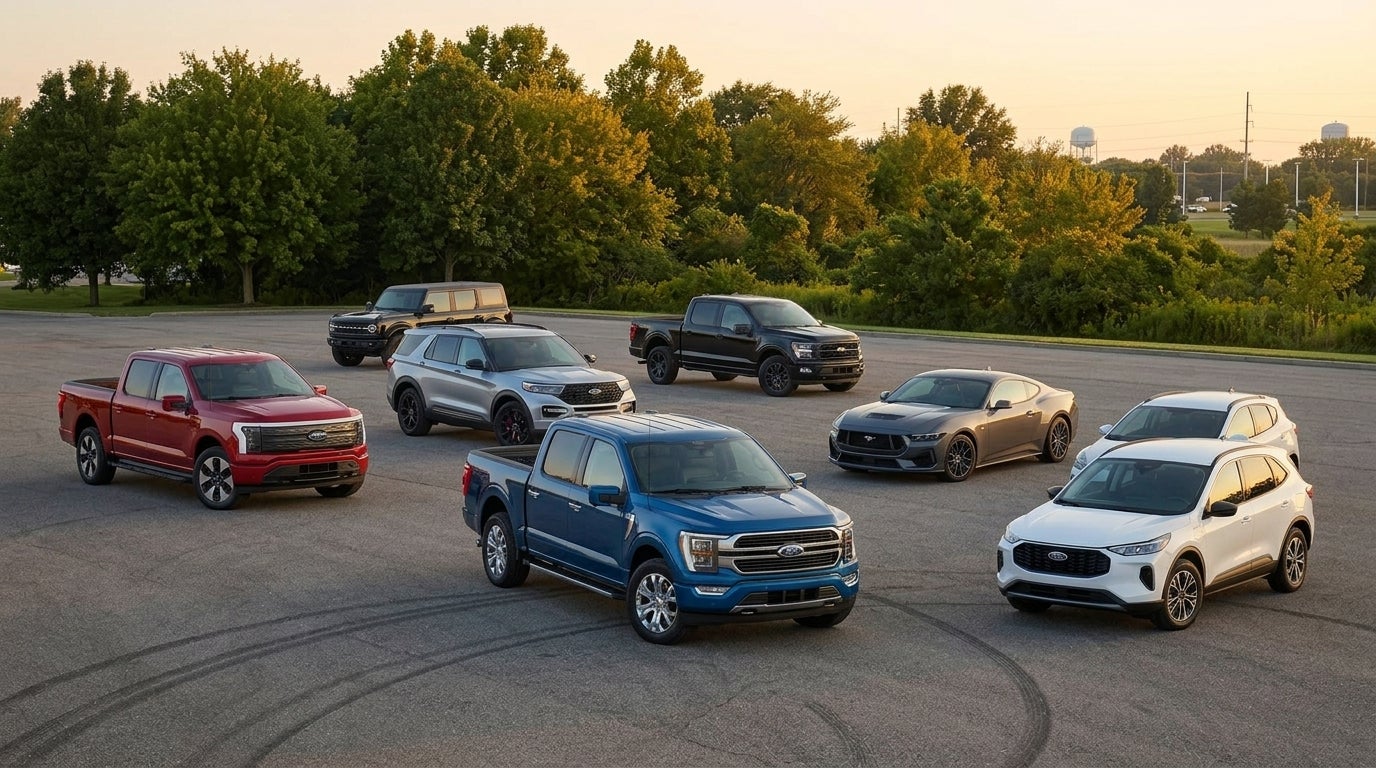
A lineup of Ford vehicles including F-150 trucks, a Mustang, Bronco, and SUVs parked on an asphalt lot. (Representative image for illustration purposes only. Actual vehicle may vary based on trim and configuration.)

Unlock Massive Savings: The Insider Secret to Ford’s Year-End Discounts

End-of-model-year Ford clearance discounts work by combining factory customer cash rebates, dealer price markdowns, and promotional interest rates—such as current promotional financing through Ford Credit—to reduce total purchase costs before new inventory arrives. Direct manufacturer incentives lower the vehicle price or interest charges, while dealership discounts trim the initial sticker price, yielding combined savings typically between $2,000 and $8,000 off MSRP. The structure of model-year closeout pricing stems from two distinct cost-reduction mechanisms that work in tandem. Manufacturer incentives represent direct factory backing designed to clear display lots for incoming shipments. These factory offers arrive as customer cash rebates or subsidized retail financing terms. At the same time, individual dealer inventory markdowns further lower the selling price below sticker value. By stacking these incentives, buyers secure maximum financial leverage on outgoing model-year vehicles that share virtually identical engineering, powertrain choices, and technology with incoming stock. Navigating these closeout incentives requires evaluating how cash-back offers and promotional interest rates affect overall loan balances. Cash rebates reduce the initial invoice amount, which directly lowers the total principle financed and reduces applicable state sales tax. Alternatively, promotional financing through Ford Credit reduces long-term interest charges over the length of the loan contract. Drivers researching local options can explore our new Ford inventory to identify active closeout offers on popular trucks and crossovers. Preparing financial documentation in advance ensures buyers can secure current factory rates before targeted vehicle configurations change. To review specific vehicles in person or speak directly with our team, stop by our showroom on Dupont Highway or give us a quick call to learn about current promotional inventory. Table of Contents How Much Can You Realistically Save During a Ford Clearance Event? Is It Better to Choose current promotional financing Financing or a Higher Cash Rebate? What Does a Sample Price Breakdown Look Like on a Clearance Deal? How Do Inventory Configurations and F-150 Capabilities Drive Closeout Value? Common Questions About Ford End-of-Model-Year Clearance Secure Your End-of-Model-Year Ford Discounts in Dover Today How Much Can You Realistically Save During a Ford Clearance Event? Shoppers may find factory incentives and promotional offers on select models depending on the model, trim level, and active promotional campaign. Higher trim levels generally carry larger dollar discounts off sticker price, while high-volume crossovers frequently feature cash-back offers reaching $5,000 Total Cash. The overall discount potential during closeout events relies heavily on vehicle segment and trim level. Full-size trucks and heavy-duty models often carry substantial factory incentives, where combined customer cash and dealer adjustments reach $6,000 Total Cash or $7,000 Total Cash on select builds. Three-row family vehicles like the Explorer regularly feature up to $4,000 Total Cash in manufacturer incentives across trims such as Active, ST-Line, and Platinum. Compact crossovers like the Escape deliver versatile efficiency alongside factory discounts up to $5,000 Total Cash. Evaluating total acquisition value involves looking at every component of the deal structure: Direct factory rebates that subtract from the initial selling price Dealer discounts off MSRP driven by incoming inventory deadlines Subsidized APR programs that eliminate thousands in compound interest Trade-in equity that offsets the overall loan principal and reduces sales tax For buyers weighing new closeout specials against high-quality pre-owned options, evaluating pre-owned inventory options provides useful price points across multiple model years. In coastal areas around Milford, where active drivers frequently tow personal watercraft or haul recreational equipment to the riverfront, acquiring full factory towing capacity at closeout pricing significantly improves overall ownership value. ​ Is It Better to Choose current promotional financing Financing or a Higher Cash Rebate? Choosing between current promotional financing promotional financing and a higher upfront cash rebate depends on the total loan amount and repayment term; low-interest financing saves more money on higher-priced vehicles financed over 48 to 72 months, whereas cash rebates benefit short-term loans and cash buyers. Calculating the total cost of financing clarifies which incentive structure delivers the greatest long-term savings. On a $40,000 vehicle balance financed over 60 months at a standard market rate of 6.5% APR, total interest charges equal roughly $7,000 over the life of the loan. In this scenario, selecting a current promotional financing for 60 months offer saves more money than taking a $3,000 or $4,000 upfront cash rebate at standard rates. Conversely, for a buyer making a substantial down payment and financing a small remaining balance over 36 months, taking the upfront cash discount yields lower overall expenditure. Key factors when choosing between financing rates and cash incentives include: Total loan principal and down payment percentage Intended loan term length (36, 48, 60, or 72 months) Current market interest rates for standard auto loans Planned ownership duration before trading or selling Reviewing financing scenarios before visiting the dealership streamlines the purchasing experience. Buyers can submit an online credit application to review qualified interest rates or check out our research blog for detailed guides on structuring automotive loans. ​ What Does a Sample Price Breakdown Look Like on a Clearance Deal? A typical Ford clearance price breakdown starts with the manufacturer suggested retail price, subtracts dealer inventory markdowns and factory customer cash, and adds standard destination charges to establish the final purchase price before taxes and fees. Understanding invoice structure allows buyers to track how individual incentives reduce net costs. For example, an F-150 XLT 4x4 SuperCab 6-1/2’ Box carries a base MSRP of $49,495 along with a $2,595 destination charge. This configuration provides seating for 6, a cargo volume of about 62 cu ft, a curb weight of 4,895 lbs, a maximum towing capacity of 7,400 lbs, and a payload capacity of 1,600 lbs. During year-end clearance, combining a dealer markdown with regional factory customer cash brings the net selling price down substantially from the initial window sticker. Higher trim levels demonstrate how factory customer cash scales with baseline pricing: XL Regular Cab 8’ Box: Base MSRP of $37,290 with a $2,595 destination charge, offering seating for 3, a cargo volume of about 77 cu ft, curb weight of 4,396 lbs, maximum towing capacity of 7,400 lbs, and payload capacity of 1,775 lbs. Lariat SuperCrew 5-1/2’ Box: Base MSRP of $59,560 with a $2,595 destination charge, offering seating for 5, a cargo volume of about 53 cu ft, curb weight of 5,020 lbs, maximum towing capacity of 9,300 lbs, and payload capacity of 2,020 lbs. King Ranch 4x4 SuperCrew 5-1/2’ Box: Base MSRP of $69,625 with a $2,595 destination charge, offering seating for 5, a cargo volume of about 53 cu ft, curb weight of 5,096 lbs, maximum towing capacity of 10,400 lbs, and payload capacity of 1,945 lbs. Applying trade-in equity to these closeout price points further reduces the net balance financed, creating an exceptionally low entry cost for premium capability. Pricing Pricing by trim Feature King Ranch 4x4 SuperCrew 5-1/2’ Box King Ranch 4x4 SuperCrew 6-1/2’ Box King Ranch SuperCrew 5-1/2’ Box Lariat SuperCrew 5-1/2’ Box Platinum 4x4 SuperCrew 5-1/2’ Box Platinum 4x4 SuperCrew 6-1/2’ Box Platinum SuperCrew 5-1/2’ Box Police Responder 4x4 SuperCrw 5-1/2’ Box Raptor 4x4 SuperCrew 5-1/2’ Box STX 4x4 SuperCab 6-1/2’ Box STX 4x4 SuperCrew 5-1/2’ Box STX SuperCab 6-1/2’ Box STX SuperCrew 5-1/2’ Box Tremor 4x4 SuperCrew 5-1/2’ Box XL 4x4 Regular Cab 6-1/2’ Box XL 4x4 Regular Cab 8’ Box XL 4x4 SuperCab 6-1/2’ Box XL 4x4 SuperCrew 5-1/2’ Box XL 4x4 SuperCrew 6-1/2’ Box XL Regular Cab 6-1/2’ Box XL Regular Cab 8’ Box XL SuperCab 6-1/2’ Box XL SuperCrew 5-1/2’ Box XLT 4x4 SuperCab 6-1/2’ Box XLT SuperCab 6-1/2’ Box Base MSRP $69,625 $69,930 $65,825 $59,560 $72,600 $72,905 $68,800 $52,350 $79,005 $48,655 $51,070 $44,855 $47,190 $64,915 $44,345 $42,305 $45,400 $47,820 $50,475 $39,330 $37,290 $41,600 $43,935 $49,495 $45,695 Destination charge $2,595 $2,595 $2,595 $2,595 $2,595 $2,595 $2,595 $2,595 $2,595 $2,595 $2,595 $2,595 $2,595 $2,595 $2,595 $2,595 $2,595 $2,595 $2,595 $2,595 $2,595 $2,595 $2,595 $2,595 $2,595 ​ How Do Inventory Configurations and F-150 Capabilities Drive Closeout Value? Remaining inventory configurations dictate clearance savings because specific option packages and cab styles carry distinct dealer markdowns, while high-demand capabilities like the F-150’s maximum 13,500 lbs towing capacity retain exceptional long-term utility. Engine selection across the F-150 lineup allows buyers to match work demands with closeout availability. The twin-turbocharged 3.5L EcoBoost V6 unlocks the truck's maximum towing capacity of 13,500 lbs alongside a maximum payload capacity of 2,455 lbs. The 3.5L PowerBoost Full Hybrid V6 delivers high system output while maintaining a robust towing capacity of 11,200 lbs. Additional engine choices include the responsive 2.7L EcoBoost V6 and the naturally aspirated 5.0L V8, each paired with a 10-speed SelectShift automatic transmission for optimized power delivery. Interior technology and electrical utility add significant functional value to discounted trucks: 12-inch touchscreen display: Standard equipment featuring the SYNC 4 infotainment system with wireless smartphone connectivity. Pro Power Onboard: Bed-mounted generator system supplying 2.0kW, 2.4kW, or 7.2kW output options to power job site tools or campsite accessories. Trim versatility: Options ranging from practical XL and STX work builds to luxury Lariat, King Ranch, and Platinum editions. When buyers examine an F-150 on the lot, they routinely inspect the bed-mounted Pro Power Onboard outlet panel before opening the cab door, evaluating how mobile electricity supports daily projects. Suburban commuters traveling along Route 1 near Smyrna benefit from this versatility during weekend trips or daily highway drives. Comparing full-size truck capabilities highlights the F-150's competitive advantages. Its maximum towing rating of 13,500 lbs exceeds the Chevrolet Silverado 1500’s 13,300 lbs rating and the Ram 1500’s 12,750 lbs rating. Furthermore, the standard 12-inch touchscreen display on the F-150 provides greater viewing area than the entry-level Chevrolet Silverado 1500's 7-inch touchscreen. Buyers can utilize our online trade-in appraisal tool to estimate current vehicle equity before test driving. ​ Common Questions About Ford End-of-Model-Year Clearance Q: Can factory rebates be combined with promotional current promotional financing financing during clearance? In most standard clearance promotions, buyers choose between maximum direct factory customer cash rebates or subsidized promotional finance rates like current promotional financing through Ford Credit. However, specific seasonal campaigns occasionally offer combined packages featuring moderate cash bonuses alongside promotional low interest rates. Reviewing active regional incentive structures helps determine which choice minimizes overall purchase expenditure based on individual loan terms. Q: How does trading in an existing vehicle increase total clearance savings? Trading in an existing vehicle contributes direct equity that acts as an immediate down payment toward the closeout purchase. This trade-in value lowers the net principle financed, which directly reduces monthly loan payments and total interest accrued over time. Furthermore, applying trade-in equity reduces the overall taxable sale amount, offering additional sales tax savings on top of clearance price markdowns. Q: Are premium trims like Lariat, King Ranch, and Platinum included in year-end discounts? End-of-model-year clearance discounts apply across the entire vehicle lineup, including luxury trims like Lariat, King Ranch, and Platinum. Premium trim levels often carry larger total dollar markdowns off MSRP because manufacturer cash incentives and dealer savings scale higher with baseline vehicle pricing. Year-end closeouts represent an ideal opportunity to step up to advanced luxury and convenience options. Q: What documentation is required to finalize financing on a closeout vehicle? To ensure efficient processing during high-volume clearance sales, buyers should bring a valid driver's license, current proof of auto insurance, recent pay stubs or proof of income, and a recent utility bill confirming physical address. If trading in a current vehicle, bring the vehicle title, current registration card, and all operational key fobs. Having these items organized streamlines the finance approval process. Q: Is leasing or purchasing a better option during end-of-model-year clearance events? Deciding between leasing and purchasing depends on annual driving mileage and long-term ownership plans. Leasing an outgoing model-year vehicle often yields exceptionally low monthly payments due to high residual value support and factory lease cash. Purchasing with current promotional financing or taking upfront customer cash rebates is advantageous for drivers who plan to retain the vehicle for many years or accumulate high annual mileage. ​ ​ Engine & Performance Powertrain specs by trim Feature King Ranch 4x4 SuperCrew 5-1/2’ Box King Ranch 4x4 SuperCrew 6-1/2’ Box King Ranch SuperCrew 5-1/2’ Box Lariat SuperCrew 5-1/2’ Box Platinum 4x4 SuperCrew 5-1/2’ Box Platinum 4x4 SuperCrew 6-1/2’ Box Platinum SuperCrew 5-1/2’ Box Police Responder 4x4 SuperCrw 5-1/2’ Box Raptor 4x4 SuperCrew 5-1/2’ Box STX 4x4 SuperCab 6-1/2’ Box STX 4x4 SuperCrew 5-1/2’ Box STX SuperCab 6-1/2’ Box STX SuperCrew 5-1/2’ Box Tremor 4x4 SuperCrew 5-1/2’ Box XL 4x4 Regular Cab 6-1/2’ Box XL 4x4 Regular Cab 8’ Box XL 4x4 SuperCab 6-1/2’ Box XL 4x4 SuperCrew 5-1/2’ Box XL 4x4 SuperCrew 6-1/2’ Box XL Regular Cab 6-1/2’ Box XL Regular Cab 8’ Box XL SuperCab 6-1/2’ Box XL SuperCrew 5-1/2’ Box XLT 4x4 SuperCab 6-1/2’ Box XLT SuperCab 6-1/2’ Box Engine 3.5L 3.5L 3.5L 3.5L 3.5L 3.5L 3.5L 3.5L 3.5L 2.7L 2.7L 2.7L 2.7L 3.5L 5L 2.7L 2.7L 2.7L 3.5L 5L 2.7L 2.7L 2.7L 2.7L 2.7L Horsepower 400 hp 400 hp 400 hp 400 hp 400 hp 400 hp 400 hp 400 hp 450 hp 325 hp 325 hp 325 hp 325 hp 400 hp 400 hp 325 hp 325 hp 325 hp 400 hp 400 hp 325 hp 325 hp 325 hp 325 hp 325 hp Torque 500 lb-ft 500 lb-ft 500 lb-ft 500 lb-ft 500 lb-ft 500 lb-ft 500 lb-ft 500 lb-ft 510 lb-ft 400 lb-ft 400 lb-ft 400 lb-ft 400 lb-ft 500 lb-ft 410 lb-ft 400 lb-ft 400 lb-ft 400 lb-ft 500 lb-ft 410 lb-ft 400 lb-ft 400 lb-ft 400 lb-ft 400 lb-ft 400 lb-ft Transmission SelectShift® SelectShift® SelectShift® SelectShift® SelectShift® SelectShift® SelectShift® SelectShift® SelectShift® SelectShift® SelectShift® SelectShift® SelectShift® SelectShift® SelectShift® SelectShift® SelectShift® SelectShift® SelectShift® SelectShift® SelectShift® SelectShift® SelectShift® SelectShift® SelectShift® Drivetrain All-wheel drive All-wheel drive Rear-wheel drive Rear-wheel drive All-wheel drive All-wheel drive Rear-wheel drive All-wheel drive All-wheel drive All-wheel drive All-wheel drive Rear-wheel drive Rear-wheel drive All-wheel drive All-wheel drive All-wheel drive All-wheel drive All-wheel drive All-wheel drive Rear-wheel drive Rear-wheel drive Rear-wheel drive Rear-wheel drive All-wheel drive Rear-wheel drive Secure Your End-of-Model-Year Ford Discounts in Dover Today Securing an end-of-model-year deal on a Ford truck or SUV delivers exceptional value by pairing factory customer cash, promotional interest rates, and transparent dealer markdowns. Whether requiring the heavy-duty towing capacity of an F-150 or the versatile passenger space of an Explorer, closeout inventory offers full factory capability at reduced transaction costs. Taking the next step toward a new vehicle is straightforward. Browse available closeout models online, calculate trade-in equity, or submit a financing application to lock in promotional rates before remaining stock sells out. Stop by our showroom at 591 S Dupont Hwy in Dover to experience your preferred model firsthand, or give our sales team a quick call for personalized guidance and active clearance details. Keep Your Vehicle Running Strong Keep your vehicle performing at its best with our service team: Schedule Service Parts Department © 2026 Winner Ford. All rights reserved. Vehicle specification data © JATO Dynamics Limited. Ford Year-End Discounts in Dover DE | Winner Ford

Contact Us

Fill out this form below and we'll contact you shortly
*Required Fields