
Blog / Used Vehicle Guides

What Should You Know Before Buying a Used Car in Dover, DE?

Winner_Ford_of_Dover_Delaware_used_car_buying_guide

Buying a used vehicle in Delaware requires budgeting for a mandatory 5.25% motor vehicle document fee, a $35 certificate of title fee (or $55 certificate of title fee if there is an active lien), an annual $40 registration fee, and dealer processing costs. Buyers must apply for a new title within 30 days of purchase, verify title and vehicle history records, pass state safety and OBD-II diagnostic scan emissions checks, and perform thorough mechanical inspections before completing the sale.

Navigating the pre-owned market starts with setting a realistic budget and understanding local documentation requirements. Delaware does not impose a general state sales tax on vehicle purchases, but the state document fee applies to almost every transfer. For commuters traveling along Route 1 from Middletown, choosing a dependable car requires evaluating full vehicle history reports and conducting physical mechanical reviews to ensure long-term highway reliability.

Partnering with an established dealership such as Winner Ford of Dover simplifies the buying process by combining titling, vehicle verification, trade-in valuations, and competitive auto financing under one roof. Our team maintains a diverse selection of quality pre-owned trucks, SUVs, and sedans that undergo thorough evaluations to ensure they meet strict performance and safety standards.

Starting your vehicle search online allows you to compare models, estimate values, and explore purchase options from home. You can visit our showroom on Dupont Highway to inspect available vehicles or give our team a quick call to speak with a sales specialist today.

Table of Contents

Are Used Car Prices Dropping in Delaware?

Used vehicle prices across Delaware have moderated relative to historic peak highs, with wholesale market valuations and retail inventory pricing adjusting into more predictable seasonal patterns.

Macroeconomic shifts and normalized trade-in volumes across regional wholesale auctions have helped stabilize pre-owned retail prices. While peak inventory shortages previously drove up prices across all segments, current market dynamics reflect typical seasonal demand shifts. During late autumn and winter, pre-owned trucks and SUVs equipped with all-wheel drive or 4WD experience increased market demand. Conversely, compact sedans and fuel-efficient crossovers see heightened buyer interest during spring and summer commuting seasons.

Timing your purchase around monthly sales targets or year-end inventory transitions offers distinct pricing advantages. As dealerships clear lot space for incoming arrivals, shoppers find attractive opportunities on quality pre-owned vehicles. Reviewing our current pre-owned inventory online allows you to track market-aligned pricing and identify vehicles that fit your budget before visiting the showroom.

How Can You Estimate the Out-the-Door Price for a Used Car?

Estimating your total out-the-door price requires combining the vehicle's negotiated sale price, the 5.25% motor vehicle document fee, state title and registration charges, and dealer processing fees, while subtracting the total value of your trade-in allowance.

Delaware calculates its motor vehicle document fee strictly on the net purchase price after deducting your trade-in allowance. This tax structure yields significant savings when trading in your current vehicle. For example, purchasing a pre-owned SUV at a negotiated price of $22,000 with a $6,000 trade-in allowance lowers the taxable baseline to $16,000, reducing your document fee from $1,155 to $840.

To calculate your estimated out-the-door costs accurately, follow this breakdown:

Cost Component Calculation or Standard Fee Example Amount ($22,000 Vehicle with $6,000 Trade)
Vehicle Negotiated Price Base agreed purchase price $22,000
Less Trade-In Allowance Subtracted from vehicle price -$6,000
Taxable Net Difference Agreed price minus trade value $16,000
5.25% Motor Vehicle Document Fee 5.25% of net difference $840
Certificate of Title Fee Standard state fee ($55 with lien) $55
Annual Registration Fee Standard state passenger vehicle rate $40
Dealer Processing Fee Administrative paperwork fee Varies by dealer

State workers and local professionals commuting along the St. Jones River corridor in Dover benefit from requesting a line-item fee breakdown on a buyer's order before finalizing purchase agreements. Clear fee transparency ensures no unexpected costs appear at closing.

What Should You Check Under the Hood When Inspecting a Used Car?

A thorough under-hood inspection must verify engine oil clarity and level, coolant condition, brake fluid clarity, battery charge, drive belt integrity, and visible signs of fluid leaks around gaskets and hoses.

Checking under the hood provides critical insight into how well a pre-owned vehicle was maintained by its previous owner:

  • Engine Oil Condition: Pull the dipstick to check oil level and color. Clean oil appears amber and translucent, while dark, thick, or sludgy oil indicates deferred oil changes or internal engine wear.
  • Battery and Electrical Terminals: Inspect battery posts for white or bluish corrosion buildup. Testing resting voltage with a multimeter should yield approximately 12.6 volts on a healthy, fully charged battery.
  • Serpentine Belt: Examine the rubber drive belt for rib cracking, fraying along the edges, or glazing. A worn belt risks snapping and causing loss of power steering or alternator charging.
  • Coolant and Fluid Lines: Check the coolant expansion tank for proper fluid level and clarity. Never open a hot radiator cap, but inspect hoses for soft spots, bulging, or cracks.
  • Underbody and Frame Rails: In Mid-Atlantic coastal environments, use a flashlight to check the engine subframe, suspension arms, and brake lines for surface rust or severe corrosion.

When walking shoppers through pre-owned trucks and SUVs on our lot, our team usually opens the hood to demonstrate oil dipstick clarity and points a flashlight at the frame rails to show a clean, rust-free underbody before starting the test drive. For buyers considering brand-new models alongside pre-owned choices, browsing our new Ford inventory highlights the latest factory engineering and full warranty coverage options available.

How Do You Verify Title History and Delaware DMV Inspection Requirements?

Verifying a pre-owned vehicle requires pulling a detailed history report using the 17-digit VIN, inspecting the physical title certificate for salvage or rebuilt brandings, and confirming the vehicle meets Delaware Division of Motor Vehicles safety and emissions standards.

A vehicle history report captures records submitted by insurance companies, law enforcement agencies, and participating repair facilities. Reviewing the report verifies title transfers, reported accidents, odometer readings, and flood damage flags. However, minor out-of-pocket body repairs paid directly by a previous owner may not appear on a digital history report, making a physical inspection equally essential.

Every used car titled and registered in Delaware must pass a free state inspection at an official DMV lane. Key inspection components include:

  • OBD-II Diagnostic Scan: Required for most gasoline vehicles from model year 1996 or newer to verify that no active emissions-related diagnostic trouble codes or check engine lights exist.
  • Curb-Idle and Gas Cap Tests: Conducted on older gasoline vehicles to verify exhaust output levels and fuel cap pressure seals.
  • Safety Component Verification: Comprehensive checks covering brake system operation, tire tread depth, windshield wiper function, horn operation, and exterior lighting.
  • Undercarriage Review: Exhaust system and structural checks to confirm no severe rust holes or dangerous exhaust leaks exist.

Delaware registration renewals occur every two years, with exemptions available for qualifying newer model years weighing under 10,000 pounds.

Can You Start the Trade-In and Financing Process Online?

Shoppers can complete trade-in appraisals, prequalify for auto loans, estimate monthly payments, and select pre-owned vehicles online before visiting the dealership.

Starting your purchase journey digitally saves time at the dealership and helps set a comfortable buying budget. Online trade-in tools calculate estimated vehicle values based on current market data, vehicle age, mileage, and condition. Entering your current vehicle's details provides an appraisal estimate that can be applied directly toward your pre-owned purchase as a down payment.

Completing an online financing prequalification allows you to explore personalized loan terms and interest options tailored to your credit profile. Establishing your budget beforehand streamlines sales paperwork, allowing you to focus on test-driving vehicles that meet your lifestyle needs. You can value your trade-in online today to see how much equity you can apply toward your next purchase.

Frequently Asked Questions About Used Cars

Q: What documents are required when purchasing a pre-owned vehicle in Delaware?

A: Buyers must present a valid driver's license, proof of active Delaware automobile insurance, and payment for the vehicle, state fees, and the 5.25% motor vehicle document fee. If you plan to transfer existing registration plates, bring your current vehicle registration card. Buyers financing their purchase must also supply recent pay stubs and proof of residency for credit approval.

Q: Do out-of-state buyers pay Delaware's motor vehicle document fee?

A: Out-of-state buyers do not pay Delaware's 5.25% motor vehicle document fee or registration charges at the time of purchase. Instead, the dealership issues a temporary registration permit, and the buyer pays their home state's applicable sales tax, title, and registration fees when titling the vehicle in their home state.

Q: How long do you have to title and register a newly bought used car in Delaware?

A: Delaware law requires buyers to apply for a new certificate of title within 30 days of purchase. Late titling applications incur a penalty fee from the Delaware Division of Motor Vehicles. Purchasing through a licensed dealership provides temporary registration tags at delivery while the dealer processes permanent title and lien paperwork.

Q: Does Delaware's Lemon Law apply to used car purchases?

A: Delaware's Lemon Law applies almost exclusively to new vehicle purchases, leaving used cars sold without active factory warranty coverage exempt from statutory lemon law protections. Pre-owned vehicles purchased "as-is" carry no dealer-backed warranty unless explicit written coverage or manufacturer certified pre-owned terms are included in the final purchase agreement.

Q: What documents are needed to complete an online credit application?

A: Completing an online credit submission requires personal identification details, residential address history, current employer contact information, and gross monthly income figures. Submitting an online credit application ahead of your visit allows our finance team to secure competitive loan options before you arrive.

Find Your Next Quality Pre-Owned Vehicle at Winner Ford

Choosing the right pre-owned car, truck, or SUV requires balancing vehicle history, mechanical condition, state fee requirements, and transparent financing. By understanding Delaware's titling procedures, document fees, and inspection standards, you can buy with total confidence.

Our team is dedicated to providing an easygoing, straightforward shopping experience. Whether you need a fuel-efficient daily commuter, a versatile crossover for family routines, or a durable truck featuring Ford Co-Pilot360™ safety technology, our inventory offers reliable choices built for your family and ready for every adventure.

Take the next step toward your next vehicle today by browsing our pre-owned selection online, applying for financing, or visiting our dealership at 591 S Dupont Hwy for a test drive. You can also give our team (302) 734-0444 a call for friendly, personalized assistance.

Keep your vehicle performing at its best with our service team:


© 2026 Winner Ford. All rights reserved.


Posted in:

Related Posts

A Ford car dealership lot showcasing various trucks, SUVs, and Mustangs on a sunny day. (Representative image for illustration purposes only. Actual vehicle may vary based on trim and configuration.)

How Do You Properly Inspect a Used Car Before Buying in Dover?

To properly inspect a used car before buying, systematically evaluate four core areas: verify the paperwork and 17-character VIN match, review the title and history report, perform a detailed visual check of fluids, tires, body panels, and electronics, and complete a 20-minute test drive with an OBD-II diagnostic scanner. Taking these structured steps ensures mechanical integrity, prevents hidden post-purchase repair costs, and confirms the vehicle will pass state safety and emissions requirements. Evaluating a pre-owned automobile requires a methodical approach that looks past fresh detailing and glossy paint. Spending 45 to 60 minutes conducting a multi-point evaluation allows buyers to identify underlying mechanical wear, past collision repairs, or deferred maintenance before signing any purchase contract. A complete visual walk-around paired with a diagnostic electronic scan reveals how the vehicle was cared for by previous owners and whether key systems require immediate attention. At Winner Ford, our team believes in full transparency during every stage of your pre-owned vehicle search. Every pre-owned truck, car, and SUV on our lot undergoes an intensive multi-point safety inspection conducted by factory-certified technicians before it is ever offered to the public. Drivers interested in comparing late-model options can browse our inventory of pre-owned vehicles online or explore our selection of new Ford models to find the ideal match for their lifestyle and budget. If you are getting ready to make your next purchase, getting pre-approved through our online credit application streamlines the entire buying process. You can also give our team (302) 734-0444 a quick call or visit our showroom on South Dupont Highway to speak with our pre-owned sales experts directly. Table of Contents What Paperwork, Title History, and Dealership Inspection Policies Should You Verify First? What Should Be Included in a Comprehensive Pre-Purchase Mechanical and Diagnostic Checklist? How Do You Identify Prior Accident Damage, Frame Issues, and Airbag Deployment Repairs? What Safety and Emissions Standards Are Checked at the DMV Inspection Lane? Common Questions About Pre-Owned Vehicle Inspections Take the Next Step Toward Your Inspected Pre-Owned Vehicle at Winner Ford What Paperwork, Title History, and Dealership Inspection Policies Should You Verify First? Before physically examining a pre-owned vehicle, buyers must verify that the 17-character VIN matches across the windshield plate, driver door jamb sticker, and vehicle title, while confirming the title is clean and free of active liens. Reviewing a CARFAX or AutoCheck report guarantees the mileage history is linear and reveals open safety recalls or prior accident documentation. A clean title is essential when purchasing a pre-owned vehicle. Branded titles—such as salvage, rebuilt, flood, or lemon law buyback designations—can diminish a vehicle's market value by 20 to 50 percent and frequently create difficulties when securing auto insurance or future trade-in value. Verifying that the current owner or selling dealer holds a clear, lien-free title protects buyers from legal complications. Vehicle history reports provide critical insight into ownership longevity and service discipline. A record showing two long-term owners with consistent routine maintenance documentation is far preferable to a vehicle with five short-term owners over a brief period. Unrepaired safety recalls must also be checked through official federal database tools; while authorized dealerships perform recall repairs free of charge, knowing outstanding recall status before purchase prevents unexpected service visits. Buyers commuting along the coastal routes near Milford need clear documentation that a pre-owned truck or SUV carries a clean title without hidden liens or outstanding safety recall work. Reputable dealerships encourage buyers to verify all vehicle documentation and welcome independent pre-purchase mechanical evaluations. If you plan on upgrading your current ride, you can value your trade-in online to see how much equity you can apply toward your purchase. ​ What Should Be Included in a Comprehensive Pre-Purchase Mechanical and Diagnostic Checklist? A mechanical pre-purchase checklist requires inspecting underhood fluid quality, measuring tire tread depth and alignment wear, testing brake pedal firmness, and plugging an OBD-II diagnostic tool into the onboard computer. Connecting a scanner verifies that diagnostic trouble codes like misfires or catalyst errors are clear and confirms all internal monitor readiness statuses are active. Under the hood, fluid condition offers an immediate snapshot of engine maintenance. Engine oil should sit at the correct dipstick level and appear amber to dark brown; milky oil indicates internal coolant leakage, while thick, pitch-black sludge points to missed oil changes. Engine coolant must be vibrant and free of rust particles or oil sheen. Transmission fluid should display a translucent pink or light brown tint without a burnt odor. Tires and braking components require close physical measurement. Each tire must have at least 2/32 inch of remaining tread depth across all grooves, though replacement is advisable once tread wears down to 4/32 inch. Uneven tread wear—such as excessive inner edge smoothing—signals wheel misalignment or worn suspension bushings. During the road test, the brake pedal should feel firm and responsive without soft travel, vibration, shuddering, or steering wheel pull. +------------------------+------------------------------------+-------------------------------------+ | Inspection Area | Ideal Pre-Owned Condition | Red Flag Warning Signs | +------------------------+------------------------------------+-------------------------------------+ | Engine Oil | Amber/brown, correct level on stick| Milky appearance, black sludge | | Coolant System | Bright color, clean reservoir | Rust flakes, oil film floating | | Diagnostic System | Zero active codes, monitors ready | Active P0300/P0700 codes, light lit | | Tire Wear | Even tread depth above 4/32 inch | Cupping, inner edge wear, cracks | | Brake Performance | Firm pedal, straight stopping line | Pulsation, grinding, steering pull | +------------------------+------------------------------------+-------------------------------------+ Connecting a portable scanner into the diagnostic port beneath the dashboard takes seconds and prevents major mechanical surprises. Fault codes in the P0300 series reveal active engine misfires, while P0700 series codes point to internal transmission failures. Shoppers testing a pre-owned SUV usually connect an OBD-II reader to verify readiness monitors before taking the vehicle on a 20-minute highway test loop. For more car-buying advice and maintenance insights, check out our dealership blog. ​ How Do You Identify Prior Accident Damage, Frame Issues, and Airbag Deployment Repairs? Identifying past structural damage requires inspecting exterior body panel gaps for uneven alignment, checking rubber door seals for paint overspray, and evaluating unibody frame rails for fresh weld marks or undercoating. Verifying proper airbag repairs involves confirming SRS indicator light sequences at startup, inspecting steering wheel seam integrity, and scanning the airbag control module for fault codes. Walk around the vehicle in bright outdoor light, viewing body panels from a three-quarters angle to catch subtle ripples or variations in paint reflection. Factory body panels fit together with uniform alignment gaps along the hood, doors, and trunk lid. Uneven gaps or doors that require extra force to latch cleanly often point to past collision impacts that altered structural alignment. Look closely at rubber window trim and wheel arch moldings for rough paint edges or color overspray. Unibody frame rails running along the underbody must be straight and free of clamping marks or fresh spot welds. While light surface oxidation on exhaust heat shields is normal, heavy flaking rust or freshly sprayed black undercoating designed to cover structural damage should raise immediate concern. In coastal regions, inspect lower rocker panels and floor pans for hidden corrosion or flood damage indicators like silt lines behind trunk lining. Airbag system integrity is vital for passenger protection. When turning the ignition key to the run position, the SRS dashboard warning light must illuminate for a self-test and extinguish after a few seconds. If the light remains on or never turns on at all, the supplemental restraint system requires immediate professional service. Inspect the center steering wheel pad and passenger dashboard seam for original factory textures, ensuring no rough stitching, mismatched color covers, or glued cover seams remain from previous deployments. ​ What Safety and Emissions Standards Are Checked at the DMV Inspection Lane? The Delaware safety and emissions inspection lane evaluates headlight aim, brake force balance, windshield glass integrity, horn operation, mirror condition, bumper alignment, and tailpipe or OBD-II emissions compliance. Vehicles registered in northern Kent County must meet current Department of Natural Resources and Environmental Control standards to receive official registration approval. Emissions testing for gasoline-powered passenger vehicles produced from 1996 onward relies on automated computer diagnostics. The inspection computer interfaces directly with the vehicle's onboard system to verify that the check-engine light operates correctly and that no active diagnostic trouble codes exist in the powertrain control system. The system also checks that internal readiness monitors for catalytic converter performance and evaporative emission controls have completed their self-diagnostic cycles. Safety testing checks fundamental equipment required for daily road driving. Headlights are evaluated for proper aim and illumination intensity on high and low beams. The brake test lane measures stopping force balance between the left and right wheels to verify even stopping capability. Windshields must be free of cracks or bullseye chips in the driver's direct field of vision, and windshield wipers must clear water effectively. Drivers heading to the state inspection station in Dover benefit from choosing vehicles pre-inspected by factory-certified technicians to avoid re-inspection delays. Purchasing a pre-owned truck or car that has already completed a rigorous reconditioning process saves time and provides peace of mind on every commute. ​ Common Questions About Pre-Owned Vehicle Inspections Q: How long does a thorough pre-purchase used car inspection typically take? A comprehensive pre-purchase inspection typically takes 45 to 60 minutes to complete. This timeframe allows sufficient opportunity to review vehicle documentation, perform a complete underhood fluid check, inspect tires and underbody components, run an OBD-II diagnostic scan, and complete a 20-minute test drive across varied road speeds. Q: What happens if a pre-owned vehicle shows a pending OBD-II trouble code during inspection? A pending OBD-II trouble code indicates that the vehicle's onboard computer has detected an active mechanical or electrical anomaly that has not yet triggered the dashboard check-engine light. Pending codes should be addressed before purchase, as unresolved issues like engine misfires or emission control failures can prevent the car from passing Delaware emissions testing. Q: Can a used car with a history of minor cosmetic damage still be a safe purchase? Yes, pre-owned vehicles with minor cosmetic damage such as bumper scrapes or light door dings remain structural and mechanically sound options. As long as a CARFAX history report confirms no unibody frame compromise or airbag deployment, cosmetic defects provide an excellent opportunity to negotiate pricing while securing a reliable, fully inspected automobile. Q: Why is starting an engine cold an important step in pre-purchase evaluation? Starting an engine when completely cold reveals mechanical issues that disappear once components reach operating temperature. Cold starts make it easier to detect timing chain rattles, valve train knocks, power steering pump noise, or initial exhaust smoke, providing an accurate assessment of internal engine health before committing to a purchase. Q: What specific tire indicators reveal underlying alignment or suspension problems? Uneven tread wear patterns, such as severe inner edge smooth wear or outer tread feathering, directly signal improper wheel alignment or worn suspension bushings. Measuring tread depth across the inner, center, and outer grooves ensures the tire has at least 2/32 inch of remaining tread and helps buyers identify hidden suspension repair needs. ​ Take the Next Step Toward Your Inspected Pre-Owned Vehicle at Winner Ford Choosing a pre-owned truck, crossover, or sedan should be an exciting and stress-free experience. By following a thorough pre-purchase inspection guide—verifying title records, evaluating underhood fluids, testing diagnostic systems, and confirming frame and safety integrity—you can shop with absolute confidence. At Winner Ford, we simplify your pre-owned vehicle purchase by holding every vehicle on our lot to rigorous quality standards. Our experienced pre-owned sales consultants are here to answer your questions, walk you through detailed vehicle history reports, and help you find a dependable vehicle tailored to your daily driving requirements. Ready to find your next reliable pre-owned car or truck? Give our team (302) 734-0444 a call today or visit our Dover showroom to schedule a test drive and experience our straightforward car-buying process firsthand. Keep Your Vehicle Running Strong Keep your vehicle performing at its best with our service team: Schedule Service Parts Department © 2026 Winner Ford. All rights reserved.

A crowded Ford dealership parking lot filled with various used cars, SUVs, trucks, and walking shoppers. (Representative image for illustration purposes only. Actual vehicle may vary based on trim and configuration.)

How Do You Buy a Used Car in Dover, DE?

Buying a used car in Dover requires selecting a vehicle, verifying its history report, passing state safety and emissions inspections, and completing titling within 30 days. Delaware charges no state sales tax on pre-owned auto purchases, but buyers must pay a mandatory 4.25% motor vehicle document fee on the net purchase price, along with a $55 certificate of title fee, an annual $40 vehicle registration fee, and a dealer documentation fee. Understanding the exact breakdown of Delaware state charges prevents unexpected expenses when finalizing a purchase contract. The document fee applies to almost all used vehicle transfers within the state. For example, a pre-owned vehicle purchase may include state document, title, and registration fees based on the transaction details. Trading in a vehicle during the transaction provides substantial savings because Delaware calculates the 4.25% motor vehicle document fee strictly on the net price difference after deducting your trade-in allowance. Navigating the pre-owned market starts with selecting a vehicle that matches your daily routine. Drivers commuting near government offices along the St. Jones River corridor or traveling to Dover Air Force Base frequently put 15 to 30 miles per day on their odometers, making long-term durability and verified maintenance records essential. Running a vehicle identification number through established history services confirms ownership transfers and accident records, while a hands-on physical inspection evaluates mechanical health, tire tread depth, and frame integrity. Completing your transaction at a established dealership streamlines the entire process by combining state inspection compliance, titling paperwork, and financing into a single visit. At Winner Ford, our team maintains a wide inventory of pre-owned trucks, SUVs, and sedans. Beyond our lineup of Ford models equipped with EcoBoost engines and Ford Co-Pilot360 safety systems, we offer pre-owned vehicles from various manufacturers. Starting your purchase research online allows you to compare models, begin an online credit application, and browse our current pre-owned inventory before stepping onto the lot. If you decide a factory-fresh model fits your driving style better, you can also explore our new vehicle options. Stop by our showroom on Dupont Highway for a test drive, or reach our sales team directly at (302) 734-0444 to confirm vehicle availability. Table of Contents What Is the Best Way to Shop for Used Cars in Central Delaware? How Can You Find a Reliable Used Car and Inspect It Under the Hood? How Do You Tell If a Used Car Price Is Fair Compared to Market Value? How Does a Certified Pre-Owned Vehicle Compare to a Standard Used Car? What Is the Difference Between a Salvage Title and a Rebuilt Title in Delaware? What Is an Efficient Step-by-Step Approach to Shopping Used Cars? Quick Answers Before You Visit Winner Ford for a Pre-Owned Vehicle What Is the Best Way to Shop for Used Cars in Central Delaware? The best way to shop for used cars in central Delaware is to combine online market research with hands-on physical evaluations and transparent dealer financing. Comparing regional market pricing digital listings helps establish realistic budget expectations before visiting showroom lots in person. Seasonal weather patterns in central Delaware directly influence pre-owned vehicle inventory and pricing. As autumn approaches, demand increases for crossover models and full-size trucks equipped with all-wheel drive, higher ground clearance, and heated seating. Conversely, fuel-efficient compact sedans and hybrid models experience peak demand during late spring when daily highway commuting increases. Shoppers traveling from nearby coastal communities like Milford often prioritize versatile cargo configurations and towing capabilities for weekend recreational trips along the waterfront. Shopping Stage Key Action Items Primary Benefit Initial Research Filter online inventories by price, mileage, and vehicle history Narrows choices to matching budgets Market Valuation Compare listing prices against regional wholesale data Ensures competitive baseline pricing Physical Inspection Review fluid conditions, tire tread, and body panels Verifies mechanical health before purchase Paperwork Review Confirm state inspection status and itemized fee line items Prevents surprise costs at signing Timing your purchase strategy offers a distinct market advantage. End-of-month sales windows and late December bring competitive buying opportunities as dealerships work to achieve monthly and annual volume goals. For more insights on evaluating vehicle history and ownership considerations, explore our automotive blog to help guide your research. ​ How Can You Find a Reliable Used Car and Inspect It Under the Hood? Identifying a reliable pre-owned vehicle requires pairing a digital vehicle history report with a detailed mechanical inspection under the hood and beneath the chassis. While history reports log insurance claims, title transfers, and reported accidents, physical checks uncover unreported body repairs, deferred maintenance, and hidden component wear. When evaluating a vehicle under the hood, begin with fundamental engine fluids and electrical components: Check engine oil clarity and level; dark, thick, or sludgy oil points to extended drain intervals and potential internal engine wear. Inspect engine coolant inside the overflow reservoir to ensure clear coloration without rust particles or oil contamination. Examine brake fluid levels and clarity, ensuring the reservoir appears clean and free of dark moisture buildup. Test battery terminals for heavy corrosion or oxidation, and check battery charge voltage using a digital multimeter. Inspect drive belts and rubber radiator hoses for fine cracks, fraying, soft spots, or glazing. Look closely around valve covers, oil pan gaskets, and timing covers for wet oil residue or active fluid drips. After completing under-hood checks, start the engine and let it idle until it reaches normal operating temperature. Look under the engine and transmission housing with a flashlight to confirm no fluid is actively dripping onto the pavement. Evaluating exhaust smoke, checking frame rails for repair pull marks, and scanning computer modules for stored diagnostic trouble codes ensures total confidence in the vehicle's long-term mechanical condition. ​ How Do You Tell If a Used Car Price Is Fair Compared to Market Value? A used car price is fair when it aligns with local market value estimates derived from recent regional sales, vehicle mileage, physical condition, and option packages. In central Delaware, standard dealer retail pricing typically reflects a minor markup of roughly 3% to 5% over wholesale acquisition costs. To evaluate whether a price reflects true market value, compare the listing price against independent valuation tools and factor in total out-the-door expenses. Dealership processing fees represent administrative costs for submitting title applications to the Delaware Division of Motor Vehicles and verifying lien status. Because Delaware has no statutory ceiling on dealer documentation fees, buyers should request a complete itemized quote that clearly separates the mandatory state fee from dealer administrative charges. Utilizing a trade-in vehicle serves as one of the most effective ways to lower your final purchase expenditure. Because Delaware levies its 4.25% motor vehicle document fee exclusively on the net purchase price after trade credit is applied, trading in a vehicle valued at $10,000 on a $25,000 purchase reduces the taxable baseline to $15,000. This net calculation can reduce state document fees. Before visiting the lot, shoppers can easily value your trade-in online to establish an accurate baseline for purchase negotiations. ​ How Does a Certified Pre-Owned Vehicle Compare to a Standard Used Car? A Certified Pre-Owned (CPO) vehicle differs from a standard used car by undergoing a mandatory factory-backed multi-point inspection, meeting strict age and mileage thresholds, and including extended manufacturer warranty protection. Standard used vehicles are typically sold as-is or with limited short-term dealer warranties. The Ford Blue Advantage program provides pre-owned buyers with two distinct levels of certification based on vehicle age and mileage: Gold Certified: Reserved for vehicles up to 6 model years old with less than 80,000 miles. Includes a 172-point inspection, a 12-month/12,000-mile comprehensive limited warranty, and a 7-year/100,000-mile powertrain limited warranty. EV Certified: Designed specifically for all-electric pre-owned models up to 6 model years old with less than 80,000 miles. Features a 127-point inspection, comprehensive limited warranty coverage, and an 8-year/100,000-mile component warranty. Blue Certified: Covers vehicles up to 10 model years old with less than 120,000 miles. Includes a 139-point inspection and a 90-day/4,000-mile comprehensive limited warranty. Feature Comparison Standard Pre-Owned Vehicle Ford Gold Certified Pre-Owned Mechanical Inspection Standard Safety Check 172-Point Factory Inspection Powertrain Warranty Optional / Remaining Factory 7-Year/100,000-Mile Coverage Roadside Assistance Varies by Seller 24/7 Included During Warranty Vehicle History Report Optional Comprehensive CARFAX Included Component Replacement Standard Aftermarket Parts Genuine OEM Parts Only Choosing a Certified Pre-Owned model offers long-term financial predictability and manufacturer-backed quality standards that generic used cars cannot match. ​ What Is the Difference Between a Salvage Title and a Rebuilt Title in Delaware? A salvage title indicates that an insurance company declared the vehicle a total loss due to severe accident damage, flooding, or severe structural compromise, making it illegal to drive on public roads. A rebuilt title signifies a former salvage vehicle that has undergone extensive repairs and successfully passed a rigorous physical inspection by the Delaware Division of Motor Vehicles. Purchasing a vehicle with a rebuilt title carries substantial financial and operational risks: Traditional auto lenders rarely approve financing contracts for vehicles carrying rebuilt or salvage branding. Insurance companies often restrict policy options, offering only basic liability coverage while denying comprehensive and collision protection. Future resale value drops significantly, as most franchised dealerships do not accept rebuilt-title vehicles on trade. Hidden structural damage or compromised airbag deployment systems may remain undetected despite state inspection clearance. Sticking with clean-title vehicles or Certified Pre-Owned models ensures complete safety, straightforward financing options, and reliable long-term vehicle performance. ​ What Is an Efficient Step-by-Step Approach to Shopping Used Cars? Following an efficient step-by-step shopping approach eliminates guesswork, protects your budget, and ensures you select a reliable pre-owned vehicle tailored to your needs. Establish a Complete Budget: Calculate your maximum expenditure, incorporating Delaware's mandatory 4.25% motor vehicle document fee, the $55 certificate of title fee, the $40 vehicle registration fee, and dealer documentation costs. Secure Pre-Approved Financing: Complete an online credit application to establish clear loan terms, interest rates, and monthly payment parameters before visiting physical showrooms. Narrow Inventory Online: Filter pre-owned vehicle listings by year, mileage, seating capacity, and powertrain options to create a focused list of top contenders. Conduct a Thorough Inspection and Test Drive: Examine under-hood fluid conditions, test electronic features, check tire tread, and evaluate transmission shift quality on local roads. Review Out-the-Door Paperwork: Examine the itemized buyer's order to verify net purchase pricing, trade-in allowances, and state titling fee allocations before signing final agreements. Organizing your purchase journey through these steps keeps your priorities clear and guarantees a transparent transaction from initial research to delivery. ​ Quick Answers Before You Visit Winner Ford for a Pre-Owned Vehicle Q: What documents do I need to bring when buying a pre-owned vehicle in Delaware? A: Buyers must bring a valid driver's license, proof of active Delaware auto insurance, payment for the vehicle purchase or down payment, and current registration documents if transferring license plates. When financing a pre-owned vehicle, lenders also require recent income verification documents, such as pay stubs, along with proof of physical residency. Q: Does Delaware's Lemon Law cover pre-owned car purchases? A: Delaware's Lemon Law applies almost exclusively to new vehicle purchases within their first year or 12,000 miles of operation. Pre-owned vehicles sold as-is carry no state lemon law protections, which is why choosing a Certified Pre-Owned vehicle with factory warranty coverage or verifying remaining original manufacturer warranties is strongly recommended. Q: How long do I have to register my newly purchased used car in Delaware? A: Buyers have exactly 30 days from the purchase date to title and register a newly acquired pre-owned vehicle with the Delaware Division of Motor Vehicles. Purchasing through a licensed dealership simplifies this process, as temporary registration tags are issued at the point of sale while original title applications are processed. Q: How does a trade-in affect Delaware motor vehicle document fees? A: Delaware calculates its mandatory 4.25% motor vehicle document fee strictly on the net purchase price after subtracting your trade-in allowance. If you purchase a used car and apply a trade-in allowance, your taxable baseline may be reduced, which can lower the applicable state document fee. Q: What is included with Ford Roadside Assistance for pre-owned buyers? A: Pre-owned Ford vehicles covered under remaining factory warranties or the Ford Blue Advantage CPO program receive 24/7 Roadside Assistance. Coverage includes emergency towing to authorized service centers, flat tire changes, battery jump-starts, lockout assistance, and fuel delivery. For emergency roadside dispatch support, drivers can contact Ford Roadside Assistance: 1-800-241-3673. Ready to take the next step toward your next pre-owned truck, SUV, or sedan? Stop by our showroom at 591 S Dupont Hwy to explore our complete inventory in person, or give our friendly sales team a call today at (302) 734-0444 to schedule a personalized test drive. Keep Your Vehicle Running Strong Keep your vehicle performing at its best with our service team: Schedule Service Parts Department © 2026 Winner Ford. All rights reserved. Used Cars for Sale in Dover, DE | Winner Ford
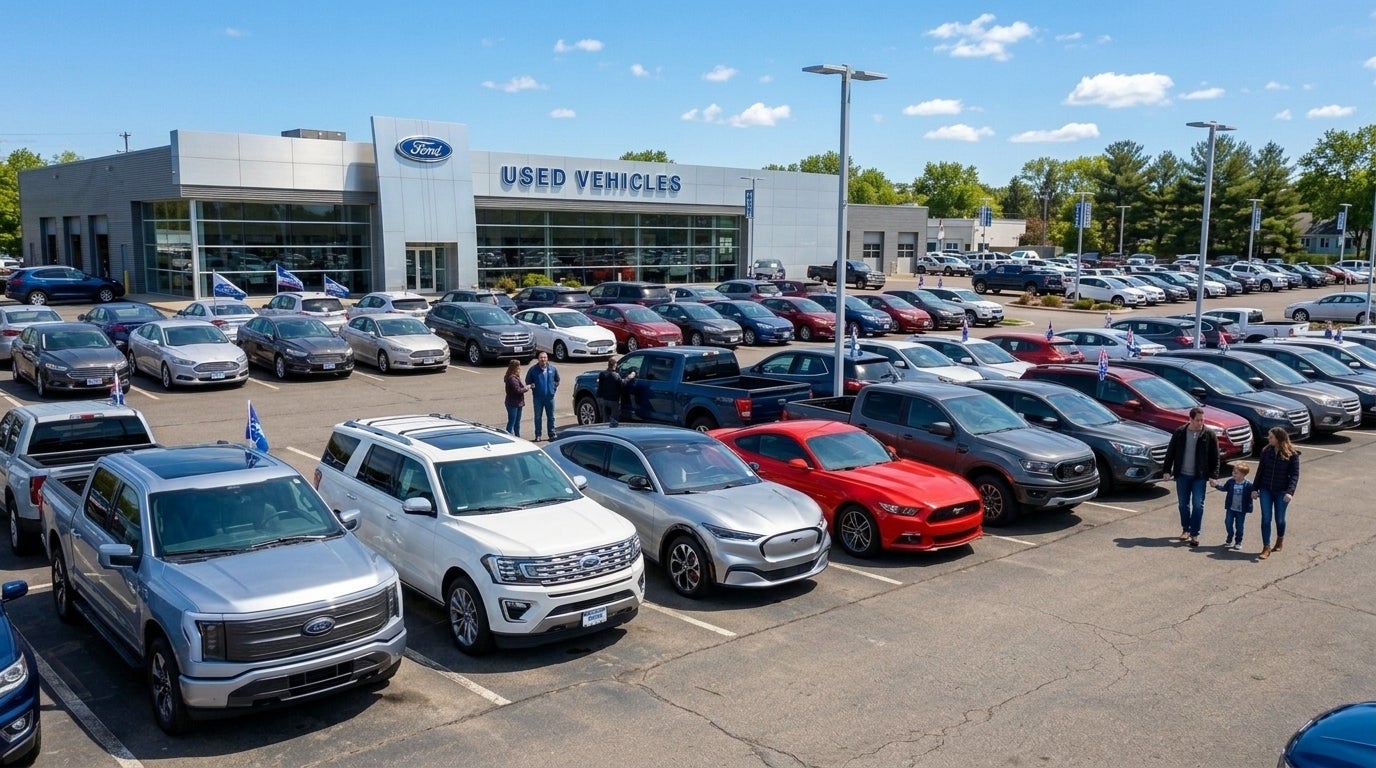
Three Ford Maverick pickup trucks in different trims parked outside a Ford dealership. (Representative image for illustration purposes only. Actual vehicle may vary based on trim and configuration.)

Exploring the 2026 Ford Maverick XL, XLT, and Lariat Lineup

Finding a vehicle that balances daily usability with genuine utility can be a challenge for modern truck buyers. The compact pickup truck segment has evolved rapidly, and the core lineup of the XL, XLT, and Lariat models represents the sweet spot for everyday versatility. These trims offer a practical alternative to oversized midsize or full-size trucks, providing the utility of a cargo bed with the easy driving dynamics of a compact crossover. For instance, state government employees commuting to Legislative Hall in Dover will find the compact footprint of these trucks highly maneuverable in tight municipal parking spots. Each of the three primary trims serves a distinct purpose. The XL functions as a straightforward, value-oriented work truck, equipped with durable steel wheels and essential features. Stepping up to the XLT adds stylish exterior accents, unique interior finishes, and a power-locking tailgate, making it a popular choice for active families. The premium Lariat sits at the top of the core lineup, starting at an MSRP of $35,870 for its highly equipped configuration, which includes upscale cabin comforts and advanced driver-assist technologies. Our team is ready to help you compare these trims side-by-side to find the configuration that best fits your lifestyle. We invite you to explore our new-vehicle inventory online to see which models we currently have available. When you are ready to experience this versatile truck in person, you can easily get directions to our showroom or give us a quick call to schedule a test drive. Table of Contents Powertrain Choices and Fuel Economy for Commuters Towing Capacity and the Maverick 4K Tow Package Equipment FLEXBED Cargo Utility and Practical DIY Bed Solutions Interior Tech Upgrades and Cabin Comfort in the Maverick Lariat Common Questions About the 2026 Ford Maverick Trims Finding Your Next Compact Truck at Winner Ford Powertrain Choices and Fuel Economy for Commuters Fuel costs remain a primary consideration for truck buyers looking to balance daily commutes with weekend capability. The powertrain lineup offers exceptional choice, allowing buyers to select either a fuel-efficient hybrid or a turbocharged gas engine across the core trims. For drivers commuting from Milford along the flat coastal terrain near Silver Sands State Park, the hybrid powertrain's regenerative braking maximizes efficiency during daily coastal drives. The XL and XLT trims come standard with a 2.5L hybrid engine producing 184 hp, which is paired with a 1.1 kWh battery. On the standard XL trim, this Front-wheel drive setup utilizes an eCVT to deliver an EPA-estimated 42 city / 35 hwy / 38 combined. The XLT hybrid also features a Front-wheel drive layout but utilizes a Power-Split Electronic CVT to achieve the same highly efficient 42 city / 35 hwy / 38 combined. The upscale Lariat trim pairs the 2.5L hybrid engine with an All-wheel drive system and a Power-Split eCVT transmission, returning 39 city / 32 hwy / 36 combined. For buyers seeking maximum performance, the turbocharged 2.0L EcoBoost engine is available, producing 250 hp and 280 lb-ft of torque. This turbocharged engine is also featured on specialized models like the standard Lobo, which utilizes an 8-speed automatic and Four-wheel Drive to return 21 city / 28 hwy / 24 combined, and the Tremor, which uses an 8-speed automatic and Four-wheel Drive to return 21 city / 28 hwy / 24 combined. In comparison, the non-hybrid Hyundai Santa Cruz returns an EPA-estimated 22 mpg city and 26 mpg highway with its base engine, highlighting the hybrid's efficiency advantage. If you are interested in exploring previous model years or different configurations, you can also browse the selection of pre-owned trucks in our pre-owned inventory. Engine & Performance Powertrain specs by trim Feature Lariat Lobo Premium Lobo Standard Tremor XL XLT Engine 2.5L 2.0L 2.0L 2.0L 2.5L 2.5L Horsepower 184 hp 250 hp 250 hp 250 hp 184 hp 184 hp Torque — 280 lb-ft 280 lb-ft 280 lb-ft — — Transmission Power-Split eCVT 7-speed Quick Shift automatic 7-speed Quick Shift automatic 8-speed automatic eCVT Power-Split Electronic CVT Drivetrain All-wheel drive Four-wheel Drive Four-wheel Drive Four-wheel Drive Front-wheel drive Front-wheel drive Fuel Economy Fuel economy and range by trim Feature Lariat Lobo Premium Lobo Standard Tremor XL XLT MPG 39 city / 32 hwy / 36 combined 22 city / 32 hwy / 25 combined 21 city / 30 hwy / 24 combined 21 city / 28 hwy / 24 combined 42 city / 35 hwy / 38 combined 42 city / 35 hwy / 38 combined Battery (kWh) — — — — 1.1 1.1 ​ Towing Capacity and the Maverick 4K Tow Package Equipment Compact trucks must still deliver genuine utility when it comes to hauling trailers and managing heavy payloads. The core lineup comes standard with a towing capacity of 2,000 lbs, which is plenty of capability for hauling a pair of jet skis, a light utility trailer, or a small pop-up camper. Additionally, the truck offers a maximum payload capacity of up to 1,500 pounds, allowing you to load the bed with mulch, soil, or home improvement supplies without breaking a sweat. For owners who need to pull heavier loads, the available 4K Tow Package doubles the maximum towing capacity to 4,000 lbs on both hybrid and EcoBoost models when properly equipped. This comprehensive package includes specialized heavy-duty hardware to manage the increased thermal and mechanical stress of heavy towing. It adds a trailer hitch receiver, an auxiliary transmission oil cooler, a higher-capacity radiator, and an upgraded cooling fan. The package also features an integrated trailer brake controller, a safety feature available on this model. When buyers ask us about towing capacities, we point out that the standard setup handles small utility trailers easily, but opting for the upgraded package is essential if you plan to haul a lightweight camper or a small boat. Our finance team can help you explore purchasing options that include these useful utility packages. You can take the first step toward ownership today by submitting a secure online credit application. Dimensions & Capacity Capacity and dimensions by trim Feature Lariat Lobo Premium Lobo Standard Tremor XL XLT Seating 5 5 5 5 5 5 Cargo 33.3 cu ft 33.3 cu ft 33.3 cu ft 33.3 cu ft 33.3 cu ft 33.3 cu ft Curb weight 3,856 lbs 3,814 lbs 3,686 lbs 3,892 lbs 3,674 lbs 3,674 lbs Towing 4,000 lbs 2,000 lbs 2,000 lbs 2,000 lbs 2,000 lbs 2,000 lbs Payload 1,500 lbs 1,045 lbs 1,045 lbs 1,140 lbs 1,500 lbs 1,500 lbs Available Packages Factory packages and per-trim availability Package Lariat Lobo Premium Lobo Standard Tremor XL XLT Front License Plate Bracket Optional (0) Optional (0) Optional (0) Optional (0) Optional (0) Optional (0) Floor Liners, Front and Rear (w/ Carpet Mats) Optional (175) — Optional (175) — Optional (175) Optional (175) Floor Liners, Front and Rear (w/o Carpet Mats) Optional (135) — Optional (135) — Optional (135) Optional (135) Tonneau Pickup Box Cover - Soft Folding Optional (600) Optional (600) Optional (600) Optional (600) Optional (600) Optional (600) Tonneau Pickup Box Cover - Hard Trifold Optional (1260) Optional (1260) Optional (1260) Optional (1260) Optional (1260) Optional (1260) Tonneau Pickup Box Cover - Hard Rollup Optional (1280) Optional (1280) Optional (1280) Optional (1280) Optional (1280) Optional (1280) Engine Block Heater Optional (190) Optional (190) Optional (190) Optional (190) Optional (190) Optional (190) Power Moonroof Optional (995) — — Optional (995) — Optional (995) 2.0L Ecoboost w/ 8-Spd Auto Transmission Lariat w/AWD Optional (add-on pricing only) — — — — — Bed Extender Optional (370) Optional (370) Optional (370) Optional (370) Optional (370) Optional (370) Conventional 17 Spare Tire Optional (115) Optional (115) Optional (115) — Optional (115) Optional (115) 4K Tow Package Optional (745) — — — Optional (745) Optional (745) Sirius XM Radio (3-year) Optional (300) Optional (300) Optional (300) Optional (300) Optional (300) Optional (300) Black Appearance Package Optional (1645) — — — — Optional (1645) Bed Tie Down locking Rails w/ 2 Locking Brackets Optional (225) — Optional (225) — Optional (225) Optional (225) Splash Guards, Molded, Front And Rear (4-Piece) Optional (180) — — Optional (180) Optional (180) Optional (180) Power-Sliding Rear Window Optional (350) — Optional (350) Optional (350) — Optional (350) Bed Mat - Removable Optional (140) Optional (140) Optional (140) Optional (140) Optional (140) Optional (140) Protective Film Hood/Fenders Optional (360) Optional (360) Optional (360) Optional (360) Optional (360) Optional (360) Connectivity Package (7 year) Optional (745) Optional (745) Optional (745) Optional (745) Optional (745) Optional (745) Daytime Running Lights (Fleet) Optional (45) — — — — Optional (45) Bed Divider Kit (Dealer) Optional (385) Optional (385) Optional (385) Optional (385) Optional (385) Optional (385) Tool Box - Driver Side (Dealer) Optional (310) — — Optional (310) Optional (310) Optional (310) Tool Box - Passenger Side (Dealer) Optional (310) — — Optional (310) Optional (310) Optional (310) TOUCHLINK Truck Bed Lighting (Dealer) Optional (480) Optional (480) Optional (480) Optional (480) Optional (480) Optional (480) Illuminated Ford Logo Badge (Dealer) Optional (510) Optional (510) Optional (510) Optional (510) Optional (510) Optional (510) Commercial Roadside Assist Kit (Dealer) Optional (240) Optional (240) Optional (240) Optional (240) Optional (240) Optional (240) Roadside Assistance Kit (Dealer) Optional (80) Optional (80) Optional (80) Optional (80) Optional (80) Optional (80) Tool Kit (Dealer) Optional (420) Optional (420) Optional (420) Optional (420) Optional (420) Optional (420) First Aid Kit (Dealer) Optional (60) Optional (60) Optional (60) Optional (60) Optional (60) Optional (60) ​ FLEXBED Cargo Utility and Practical DIY Bed Solutions Versatility in a truck bed is about more than just raw cargo volume. Every trim in the lineup features the innovative FLEXBED storage system, which transforms the 4.5-foot cargo box into a highly adaptable workspace. Instead of relying solely on expensive aftermarket cargo management systems, this bed is designed to let owners create their own custom storage solutions using inexpensive materials. The bed walls feature molded-in pockets specifically sized to fit 2x4 and 2x6 lumber. By sliding wooden boards into these slots, you can easily create horizontal dividers, raised cargo platforms, or custom bike racks. The system also includes 10 sturdy tie-down points to secure large items and two pre-wired 12V power sources located near the tailgate. These power connections allow DIY enthusiasts to safely wire their own low-voltage accessories, such as bed lighting, air compressors, or small 12-volt coolers, without splicing into the main wiring harness. This focus on practical, user-friendly utility is a hallmark of the lineup's design. We frequently share creative ideas, custom bed configurations, and owner tips for this versatile storage system on our blog to help you get the most out of your truck. ​ Interior Tech Upgrades and Cabin Comfort in the Maverick Lariat Modern truck cabins are increasingly serving as mobile offices and family hubs, requiring a blend of comfort and advanced connectivity. While the base trims offer comfortable cloth seating and straightforward layouts, the premium Lariat trim elevates the interior experience with upscale materials and sophisticated electronics. The centerpiece of the Lariat cabin is a standard 13.2-inch touchscreen running the latest SYNC 4 infotainment system. This high-resolution display features crisp graphics, rapid processing speeds, and intuitive menus. It supports wireless Apple CarPlay and Android Auto, allowing you to connect your smartphone seamlessly without cluttering the center console with cords. The driver is also treated to a customizable 12.3-inch digital instrument cluster and a wireless device charging pad. To complement the quiet cabin, the Lariat comes standard with a premium 8-speaker B&O Sound System by Bang & Olufsen, complete with a dedicated subwoofer. If you are planning to upgrade your current vehicle to a more connected and comfortable truck, our team can help you transition smoothly. You can use our online tool to value your trade-in and find out how much value you can apply toward the purchase of a new model. ​ Common Questions About the 2026 Ford Maverick Trims Q: Does the 2026 Maverick XLT include push-button start? Standard push-button start with intelligent access is typically reserved for the premium Lariat trim. The XLT trim utilizes a traditional physical key for ignition, unless it is equipped with specific optional luxury packages that add keyless ignition features. Q: Which 2026 Maverick trim has the best sound system? The Lariat trim features the premium B&O Sound System by Bang & Olufsen. This upgraded audio setup includes eight high-performance speakers and a dedicated subwoofer, providing a much richer audio experience than the standard six-speaker system found on lower trims. Q: Are LED headlights standard on all 2026 Maverick trims? Yes, energy-efficient LED headlamps are standard equipment across the entire Maverick lineup, including the entry-level XL. However, the top-tier Lariat trim features upgraded LED signature accent lighting for a more distinctive exterior appearance. Q: What is the price gap between the Maverick XLT and Lariat? Please contact us for current pricing differences between the XLT and Lariat trims. This step up in price reflects the addition of premium interior amenities, such as synthetic leather upholstery, dual-zone automatic climate control, and advanced driver-assist technologies. Q: Does the 2026 Maverick qualify for any federal EV tax credits? No, federal clean vehicle tax credits for new, used, or commercial vehicles were terminated for vehicles acquired after September 30, 2025. The only exception is for buyers who took possession of a vehicle acquired via a binding written contract executed on or before that date. Pricing Pricing by trim Feature Lariat Lobo Premium Lobo Standard Tremor XL XLT Base MSRP $35,870 $41,425 $35,930 $41,140 $27,145 $29,645 Destination charge $1,695 $1,695 $1,695 $1,695 $1,695 $1,695 ​ Finding Your Next Compact Truck at Winner Ford Choosing the right dealership is just as important as choosing the right truck. As a second-generation, family-owned business, we are committed to providing a transparent, straightforward, and easygoing shopping process. Our knowledgeable sales team is dedicated to helping you find the exact trim, powertrain, and utility options that align with your daily needs. We invite you to visit our showroom to compare these impressive compact trucks in person and experience our pressure-free buying environment. You can easily find our showroom on Dupont Highway or give us a quick call to schedule a personalized test drive with one of our truck experts today. Keep Your Vehicle Running Strong Keep your vehicle performing at its best with our service team: Schedule Service Parts Department © 2026 Winner Ford. All rights reserved.