
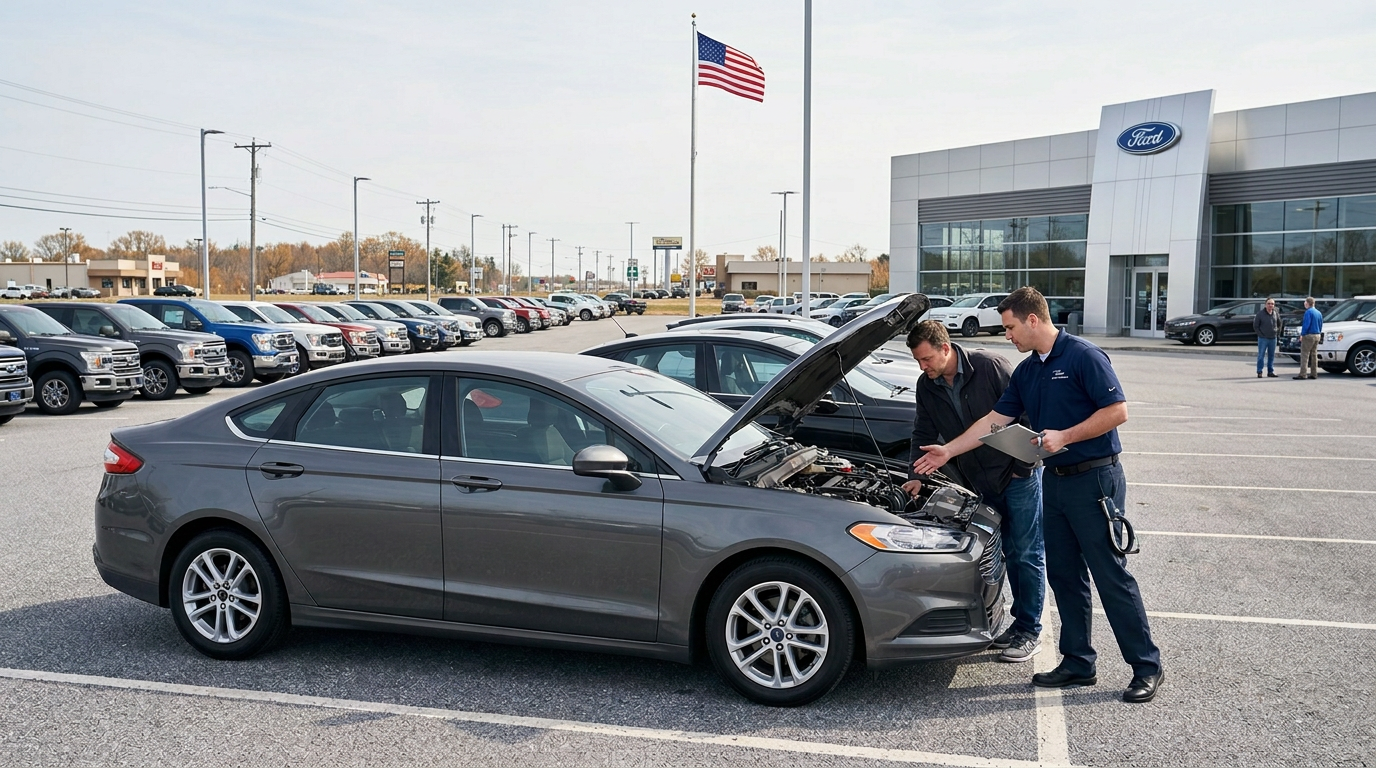
Before buying a pre-owned vehicle, you should review a vehicle history report, inspect the frame and body, check tire wear and brake condition, verify service records, evaluate cabin electronics, and conduct a thorough road test. Confirming that the car passes state safety and emissions standards ensures dependable operation on every drive.
Evaluating a pre-owned vehicle requires a methodical walk-around to confirm its safety and overall mechanical condition. Start by examining exterior body panels for inconsistent paint textures, misaligned gaps, or undercarriage rust that could signal past collision damage. Check fluid levels under the hood, noting the color and condition of engine oil, transmission fluid, and coolant. Inspect the tread depth and wear patterns on all four tires, as uneven wear often points to alignment or suspension issues.
When you get inside the cabin, verify that electronic features operate properly. Test the climate control system, touchscreens, power windows, seat adjustments, and active safety systems like blind-spot monitoring and adaptive cruise control. During your road test, pay attention to engine responsiveness, transmission shift smoothness, brake pedal firmness, and steering feedback over varied pavement surfaces.
State government employees and daily commuters in Dover need a vehicle that delivers steady fuel efficiency and complete comfort on everyday drives. Our team recommends verifying all maintenance records to ensure previous oil changes, fluid flushes, and scheduled services occurred on time. You can visit our showroom on South Dupont Highway to inspect high-quality pre-owned options, or reach out directly by giving our team a call at (302) 734-0444 to schedule a personalized consultation.
Table of Contents
- What Is Considered Good Mileage for a Used Car?
- Is It Better to Buy a Used Car from a Dealer or a Private Seller in Delaware?
- How Can Buyers Determine Fair Market Value and Negotiate Used Car Pricing?
- How Do Delaware Document Fees, Registration Costs, and Taxes Impact Used Car Buyers?
- Are Factory Certified Pre-Owned Warranties Transferable to Subsequent Buyers?
- Common Questions About Buying a Used Car
- Drive Away with Confidence at Winner Ford
What Is Considered Good Mileage for a Used Car?
A standard benchmark for a used car is an average of 12,000 to 15,000 miles per year of age. Under this rule of thumb, a five-year-old pre-owned vehicle with 60,000 to 75,000 miles on the odometer is considered to have normal, acceptable mileage.
While odometer numbers provide a starting point, vehicle condition, maintenance history, and driving conditions matter just as much as total mileage. A vehicle driven 80,000 miles mostly on open highways often experiences less engine and brake wear than a vehicle driven 50,000 miles in constant stop-and-go city traffic. Highway driving lets engines operate at consistent temperatures with fewer gear changes, preserving critical components over time.
Modern engineering standards allow well-maintained vehicles to comfortably reach 150,000 to 200,000 miles without major mechanical failures. When evaluating pre-owned vehicles, look for models equipped with durable engine options like Ford EcoBoost technology, which balances responsive acceleration with engine longevity. Regular maintenance—such as timely oil changes, filter replacements, and transmission services—plays a far greater role in long-term reliability than the initial number on the dash.
- Low Mileage (Under 30,000 miles): Often commands higher pricing but comes with minimal component wear and remaining factory warranty coverage.
- Moderate Mileage (30,000 to 75,000 miles): Strikes a strong balance between initial cost savings, reliable performance, and remaining service life.
- Higher Mileage (75,000+ miles): Offers maximum affordability, making it ideal for budget-conscious buyers who prioritize consistent service records over low odometer readings.
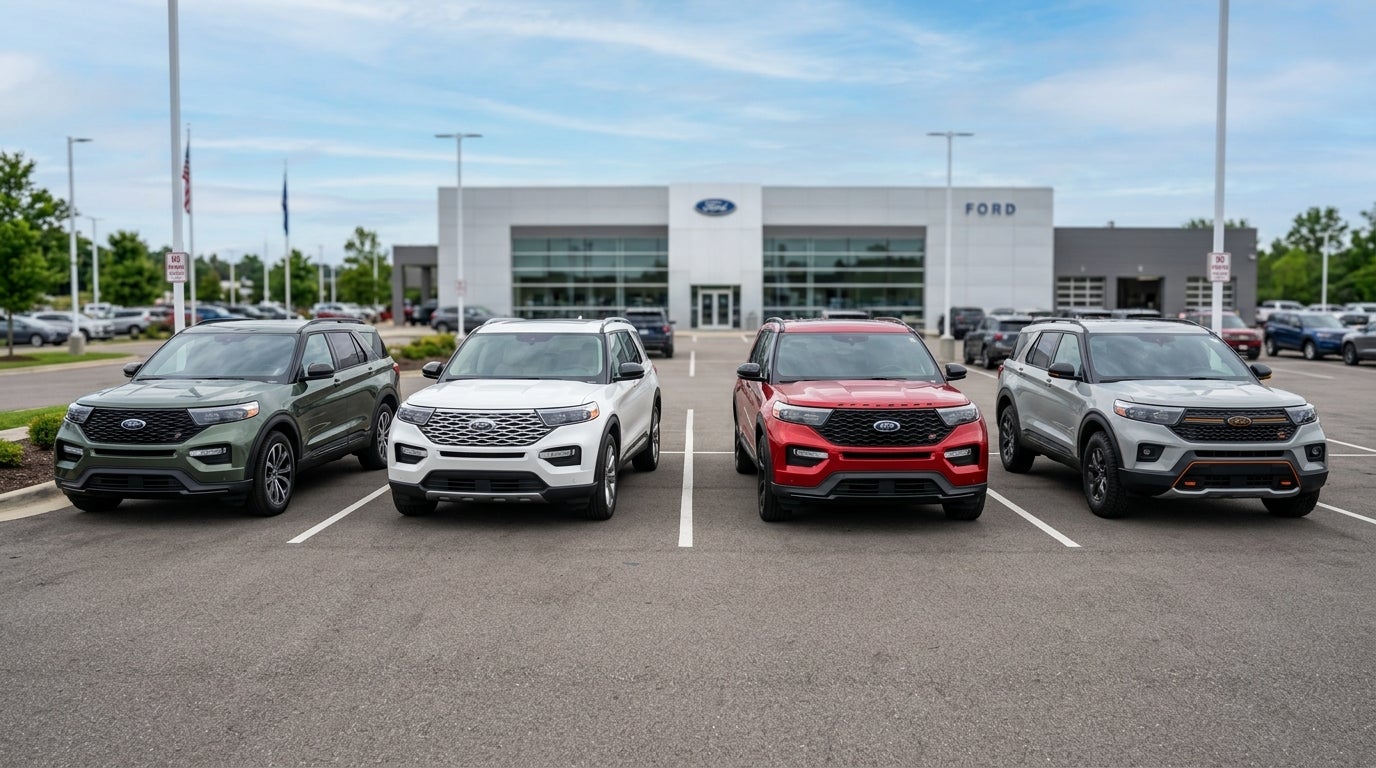
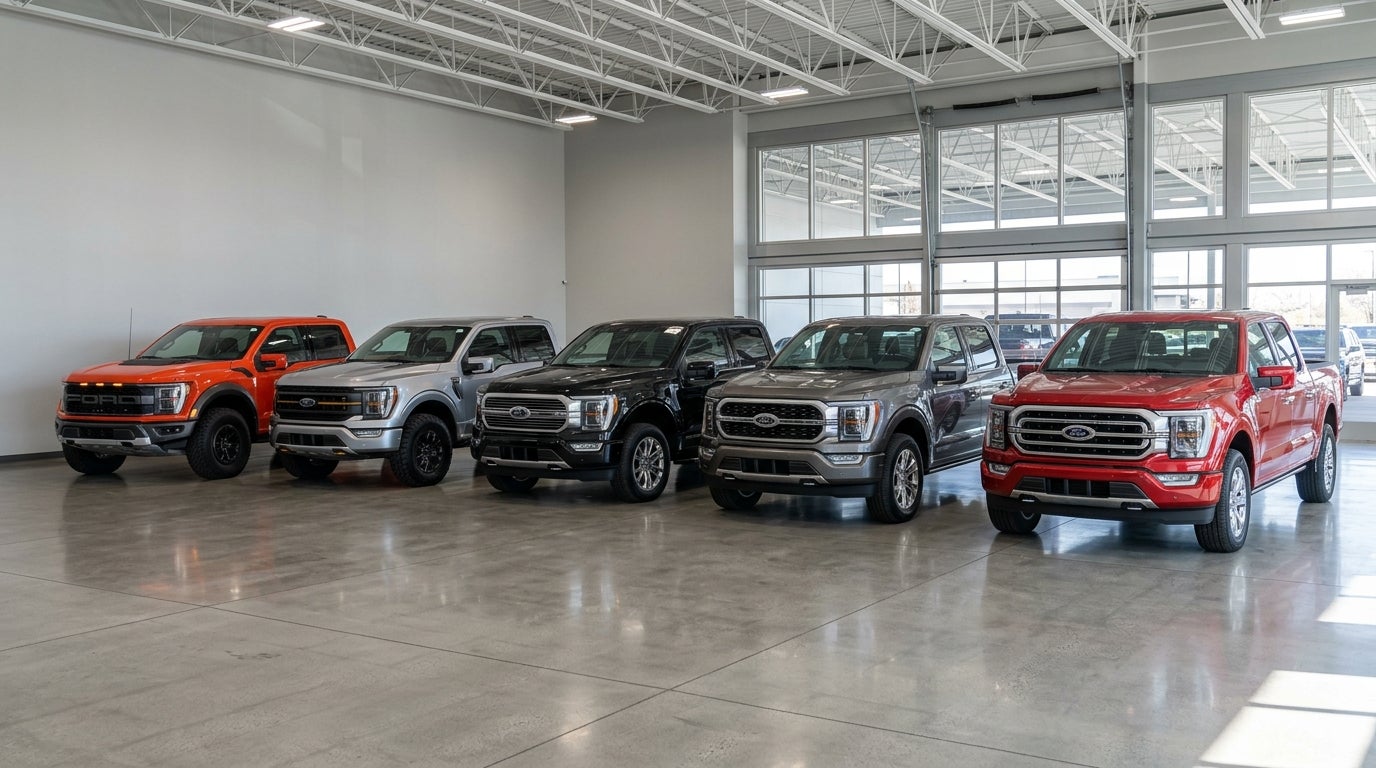
Exploring our pre-owned vehicle lineup gives you access to thoroughly inspected options across various mileage bands and price points.
Is It Better to Buy a Used Car from a Dealer or a Private Seller in Delaware?
Purchasing a used car from an established dealership offers vehicle reconditioning, structured consumer protections, flexible financing options, and trade-in convenience that private sales cannot match. While private sellers might list lower asking prices, those vehicles are sold strictly as-is, leaving buyers with no warranty protection or legal recourse.
Dealerships perform detailed multi-point inspections on every vehicle before placing it on the lot. Factory-trained technicians inspect mechanical systems, replace worn brake pads or tires, recondition interior surfaces, and ensure all safety equipment meets strict standards. Dealerships also handle complex legal paperwork—including title transfers, lien payoffs, and registration processing—saving you time and preventing title defects.
Private transactions carry inherent risks for buyers. Private sellers generally do not provide vehicle history reports, detailed repair records, or post-purchase protection. If a mechanical issue develops immediately after money changes hands, the buyer bears the full repair cost. Furthermore, private transactions require cash payments or securing independent personal loans, whereas dealerships partner with multiple financial institutions to craft payment structures customized for your family's budget.
Families taking weekend trips to community parks around Middletown benefit from the added peace of mind that comes with a dealership-inspected vehicle. If you are comparing pre-owned value against updated technology, taking a look at our latest new vehicle selection helps clarify feature differences across model years.
How Can Buyers Determine Fair Market Value and Negotiate Used Car Pricing?
Determining a fair market price requires checking independent valuation tools like Kelley Blue Book, Edmunds, and NADA Guides against local market listings while factoring in vehicle condition, trim level, and total mileage. Buyers can typically negotiate between 3% and 7% off a dealer's listing price depending on market demand, vehicle condition, and inventory age.
Automotive market benchmarks provide valuable context during your research phase. Kelley Blue Book reported that the average U.S. used-vehicle listing price reached $27,235 in September 2026, with models priced at $15,000 or less remaining in particularly tight supply. Reviewing market benchmarks helps you identify competitive asking prices for specific trim levels, such as a Ford F-150 equipped with FX4 Off-Road Package upgrades or a Ford Explorer featuring luxury King Ranch trim finishes.
Effective negotiation relies on objective data rather than emotional back-and-forth. When negotiating, bring printed or digital market comparisons showing similar models with comparable mileage. Point out practical factors that justify price adjustments, such as upcoming maintenance needs or minor exterior scratches.
| Valuation Factor | Impact on Asking Price | Key Consideration |
|---|---|---|
| Vehicle History Report | High Impact | Clean title vs. past accidents |
| Service & Maintenance Records | Moderate to High Impact | Documented timely oil/fluid shifts |
| Overall Mechanical & Body Condition | High Impact | Wear on tires, brakes, paint finish |
| Local Market Supply & Demand | Moderate Impact | Regional demand for AWD or trucks |
Factoring your existing vehicle into the purchase structure can further optimize your final cost. You can value your trade-in online to establish an accurate vehicle equity estimate before finalizing your contract negotiations.
How Do Delaware Document Fees, Registration Costs, and Taxes Impact Used Car Buyers?
Delaware does not levy a general state sales tax on vehicle purchases, but the state assesses a 5.25% motor-vehicle document fee based on the vehicle purchase price or official valuation upon titling. Factoring in a standard $35 title fee (plus a $20 lien-recording charge when applicable) and an annual $40 registration fee helps buyers calculate their total purchase obligation accurately.
| Delaware Fee Item | Standard Fee Amount | Details & Rules |
|---|---|---|
| Motor Vehicle Document Fee | 5.25% of purchase price or valuation | Assessed upon titling in Delaware |
| Vehicle Sales Tax | 0% (No state sales tax) | Delaware levies no general sales tax |
| Certificate of Title Fee | $35 standard ($55 with active lien) | Mandatory state titling fee |
| Annual Passenger Registration | $40 per year | Base vehicle registration cost |
| DMV Safety & Emissions Inspection | Free at state DMV facilities | Conducted at state lanes like Dover |
Understanding how trade-in vehicles affect document fee calculations offers substantial financial savings. Delaware law allows the agreed trade-in value of your current car to be subtracted from the purchase price of your replacement vehicle before calculating the 5.25% motor-vehicle document fee. For example, if you purchase a pre-owned vehicle for $25,000 and trade in your current vehicle for $10,000, the 5.25% document fee applies only to the net $15,000 difference.
Out-of-state buyers purchasing a vehicle in Delaware do not pay Delaware's document fee. Instead, out-of-state buyers pay applicable sales taxes, document fees, and registration costs in their home state when registering the car locally. In addition, Delaware conducts safety and emissions testing at state DMV facilities—including the Dover station—free of charge, helping buyers verify compliance before completing official paperwork.
Preparing your budget is easier when you map out terms early. Take a few minutes to get pre-approved by submitting an online credit application with our finance department.
Are Factory Certified Pre-Owned Warranties Transferable to Subsequent Buyers?
Most factory Certified Pre-Owned (CPO) warranties transfer directly to subsequent private buyers during the active coverage period. Program structures like Ford Blue Advantage allow coverage to pass to a new owner, sometimes requiring a minor administrative processing fee.
Factory CPO programs offer layered protection that mimics new-vehicle peace of mind. Under the Ford Blue Advantage system, vehicles earn certification under specific tiers based on age and mileage:
- Gold Certified: Covers Ford models up to 6 model years old with less than 80,000 miles. Includes a 12-month/12,000-mile comprehensive limited warranty, a 7-year/100,000-mile powertrain limited warranty, and 24/7 Ford Roadside Assistance.
- Blue Certified: Covers any make and model up to 10 model years old with less than 120,000 miles. Includes a 90-day/4,000-mile comprehensive limited warranty and roadside support.
Transferable warranty coverage preserves resale value over time. If you decide to sell your certified vehicle privately after a few years, transferring the remaining factory powertrain warranty gives prospective buyers heightened confidence, helping your listing stand out in a competitive market.
If you ever require towing, battery jump-starts, or fuel delivery during an active roadside coverage period, you can reach manufacturer support directly via Ford Roadside Assistance: 1-800-241-3673.
Common Questions About Buying a Used Car
Q: Do out-of-state buyers pay Delaware document fees when purchasing a used car?
Out-of-state buyers do not pay Delaware's 5.25% motor-vehicle document fee when purchasing a used vehicle in Delaware. Instead, the dealership coordinates out-of-state titling paperwork so you pay your home state's required sales taxes, titling charges, and registration fees when the vehicle is registered in your home state.
Q: How does trading in a car lower the taxable total in Delaware?
Delaware allows the agreed trade-in value of your current vehicle to be deducted directly from the purchase price of the replacement vehicle prior to fee calculation. The 5.25% motor-vehicle document fee is then calculated solely on the remaining net balance, saving you money on your total transaction.
Q: Are vehicle inspections mandatory before registering a pre-owned car in Delaware?
Yes, Delaware requires all pre-owned vehicles to pass a safety inspection and emissions test at a state DMV facility before issuing official registration tags. Delaware DMV locations, including the facility in Dover, perform these inspections free of charge to vehicle owners.
Q: What paperwork should buyers bring to the dealership when financing a used car?
Buyers applying for financing should bring a valid driver's license, current proof of auto insurance, your most recent pay stubs or proof of income, proof of residence (such as a utility bill), and title/registration documents for any vehicle you plan to trade in. Bringing these complete documents speeds up credit approval processing.
Q: Can a used vehicle warranty be extended past its initial term?
Yes, buyers can opt to purchase extended service plans at the time of purchase to protect critical mechanical components after factory or CPO warranties expire. Extended protection coverage can be tailored for specific term lengths and mileage limits, giving your family long-term financial predictability.
For personalized answers to specific inventory questions or to arrange a walk-around, visit our dealership address in Dover or call our team directly at (302) 734-0444.
Drive Away with Confidence at Winner Ford
Finding the ideal pre-owned car, truck, or SUV requires balancing reliable performance, transparent market pricing, and flexible payment plans tailored to your budget. Whether you need a fuel-efficient Ford Escape for daily work travel or a rugged Ford F-150 equipped for weekend towing projects, choosing a vehicle backed by comprehensive inspections gives you complete confidence on the road.
Our team believes in delivering an easygoing car-buying experience focused entirely on your needs. As a second-generation family-owned business, we strive to build lifelong relationships across our local community by providing honest advice, reliable vehicles, and straightforward financing options.
Explore our current pre-owned inventory online, schedule a convenient test drive, or stop by to speak with our knowledgeable team today. Your next adventure begins with a reliable vehicle built to keep your family safe on every mile of the journey ahead.
Keep Your Vehicle Running Strong
Keep your vehicle performing at its best with our service team: