

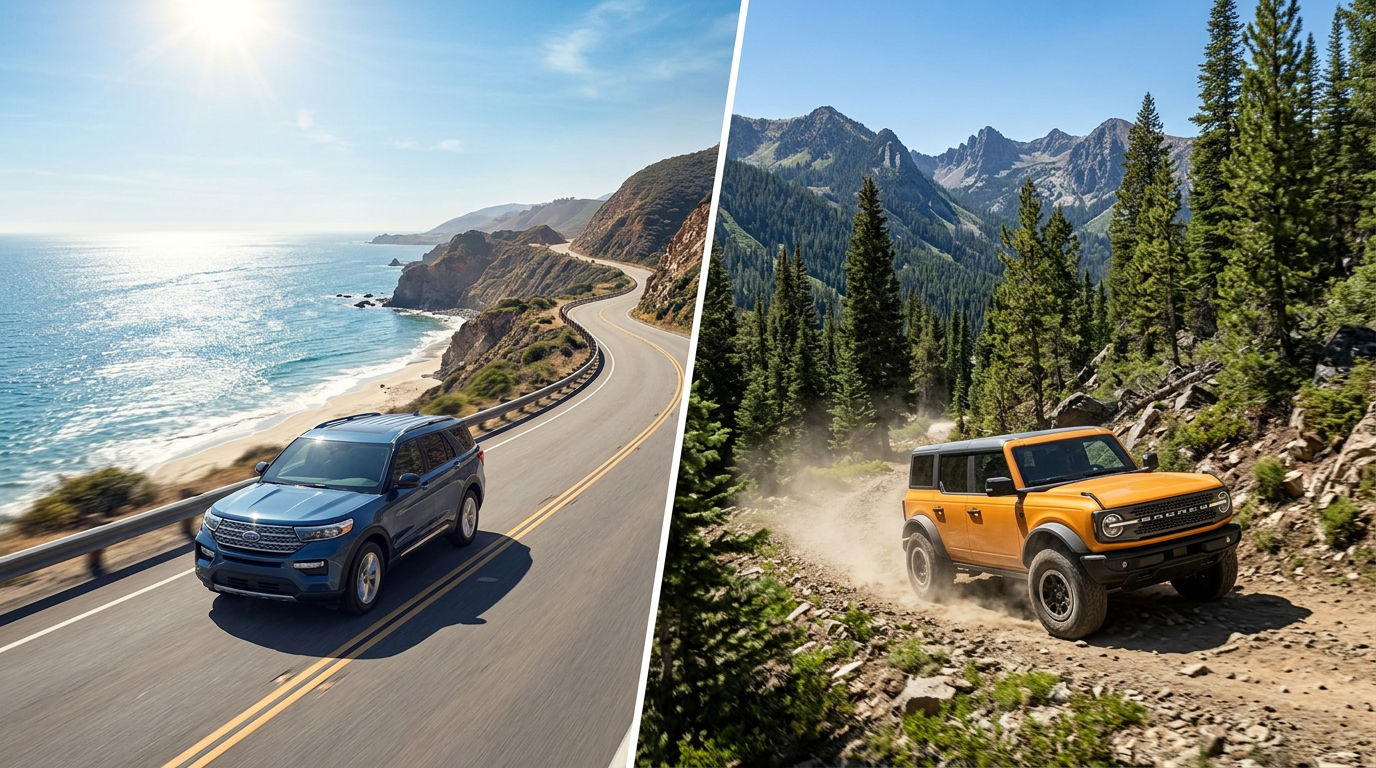
 Planning a summer getaway introduces distinct mechanical demands on your vehicle, especially when transitioning from flat coastal highways to steep elevation changes. High seasonal temperatures accelerate wear on critical components like your battery, tires, and cooling systems. When a vehicle is packed with luggage and family members, the engine and transmission work significantly harder, making proactive maintenance essential to prevent roadside emergencies.
Our team at Winner Ford focuses on keeping your vehicle operating at peak manufacturer standards. Whether you are packing a 2026 Ford Explorer ST-Line for a family trip or prepping a 2026 Ford Bronco Sport for rugged trailheads, addressing key service areas beforehand ensures your vehicle handles the stress of long-distance driving. For drivers beginning their journey in Dover, having our certified technicians perform a comprehensive check-up prevents minor wear from developing into a major breakdown.
Before hitting the highway, we recommend verifying that all primary systems are fully operational. Our service team is available to help you coordinate your pre-trip maintenance checklist. If you need to confirm our location or want to speak directly with a service advisor, you can easily get directions to our Dover service center or give our team a quick call to discuss your travel plans.
Table of Contents
- How to Inspect Your Ford Cooling System for Hot Weather and Steep Grades
- When to Schedule a Professional Pre-Trip Inspection Before Summer Vacation
- Minimum Brake Pad Thickness and Braking Performance for Safe Mountain Descents
- When to Avoid DIY Repairs and Trust Certified Technicians Before Your Trip
- Common Questions About Summer Road Trip Maintenance for Your Ford
- Drive Confidently with Ford’s Advanced Safety Features
How to Inspect Your Ford Cooling System for Hot Weather and Steep Grades
Engine overheating represents the most frequent cause of summer roadside breakdowns. When climbing steep mountain passes or idling in heavy beach traffic, your engine generates extreme internal heat that must be dissipated efficiently. To safeguard your engine, you should regularly inspect the coolant reservoir under the hood to ensure the fluid level rests securely between the minimum and maximum indicator lines.
Modern vehicles require highly specific fluid formulations to prevent internal corrosion and boiling. For example, the 2026 Ford Explorer relies on Motorcraft Yellow Prediluted Antifreeze/Coolant, which is engineered to meet strict Ford specification WSS-M97B57-A2. Utilizing generic, non-approved coolant mixtures can lead to premature water pump failure, radiator scaling, and chemical reactions that clog the cooling passages. A standard cooling system service involves verifying both the fluid level and the concentration of the mixture, which should maintain a precise 50/50 ratio of approved antifreeze to distilled water.
Beyond the fluid itself, a physical inspection of the hardware is necessary to ensure system integrity:
- Inspect all upper and lower radiator hoses for signs of bulging, softening, cracking, or leaks.
- Examine the radiator cap to verify the rubber gasket is sealing properly and holding the correct pressure.
- Look for white, powdery residue around hose clamps and radiator seams, which indicates slow, heat-activated coolant leaks.
- Verify that the electric radiator cooling fan engages correctly when the engine reaches operating temperature.
For long-term durability, Ford recommends performing the first complete engine coolant flush at 100,000 miles or 6 years, followed by subsequent flushes every 50,000 miles or 3 years. If you are preparing for a demanding drive through high elevations, you can read more about seasonal fluid care guidelines on our blog, where we regularly share technical advice for local owners.
When to Schedule a Professional Pre-Trip Inspection Before Summer Vacation
Timing your service appointment correctly is key to a stress-free departure. Many drivers make the mistake of seeking maintenance the day before a long trip, which leaves zero margin for error if a technician discovers an issue requiring replacement parts. To ensure your vacation plans remain on schedule, you should arrange a professional multi-point inspection one to two weeks prior to your departure date.
A professional inspection covers critical safety and performance systems that are difficult to evaluate fully at home. Technicians will place the vehicle on a lift to inspect the suspension components, check steering linkage play, and examine the undercarriage for fluid leaks. They will also test your battery’s cold cranking amps and charge capacity, as summer heat degrades internal battery plates faster than winter cold, often causing sudden failures in batteries older than three years.
Our factory-trained technicians use specialized diagnostic equipment to read pending trouble codes that may not have triggered a dashboard warning light yet. When you bring your vehicle to our service center, we perform a thorough assessment of your tires, brakes, belts, and hoses. To secure a convenient time slot before the summer travel rush, you can easily schedule service online through our convenient booking portal.
Minimum Brake Pad Thickness and Braking Performance for Safe Mountain Descents
Descending steep mountain grades places immense thermal stress on your braking system. As you apply the brakes to control your descent speed, friction converts kinetic energy into intense heat, which can lead to brake fade or vapor lock if your components are worn. To maintain reliable stopping power, your brake pads must have adequate friction material to isolate and dissipate this heat safely.
The absolute minimum safe brake pad thickness for daily driving is 3 millimeters (roughly 1/8 inch), but starting a demanding road trip with pads at this limit is highly discouraged. For mountain travel, industry standards recommend replacing brake pads if they have worn down to 4 millimeters or less. Thinner pads cannot absorb or transfer heat efficiently, which rapidly accelerates wear on the brake rotors and can cause warping, steering wheel vibration, and significantly extended stopping distances.
When preparing your vehicle for high-altitude descents, a complete brake inspection should also verify the condition of the brake fluid. Brake fluid is hygroscopic, meaning it absorbs moisture from the air over time. Under heavy braking conditions on a descent, moisture trapped in old brake fluid can boil, creating highly compressible steam pockets that result in a spongy brake pedal or a complete loss of braking pressure. Ensuring your fluid is clean, clear, and filled to the correct level is just as critical as having thick brake pads.
When to Avoid DIY Repairs and Trust Certified Technicians Before Your Trip
While basic tasks like checking engine oil or replacing windshield wiper blades are manageable for many owners, complex safety and performance systems demand professional expertise. Attempting to diagnose or repair advanced components without the proper diagnostic tools and training can lead to incomplete repairs, voided warranties, or unexpected mechanical failures when you are far from home. Systems such as computerized climate control, electronic brake distribution, and engine timing should always be handled by specialists.
Using the correct replacement parts is equally critical to maintaining your vehicle’s reliability and safety. Generic aftermarket components often lack the precise fit and material quality of original equipment manufacturer parts. If your vehicle requires a new belt, hose, water pump, or thermostat before your trip, our parts department supplies genuine Motorcraft and Ford parts designed specifically for your model’s powertrain configuration.
Our certified technicians understand the exact tolerances and calibration procedures required for your vehicle. Relying on professional service ensures that every component is installed to factory specifications, backed by a manufacturer warranty, and thoroughly tested before you load up your family for the highway.
Common Questions About Summer Road Trip Maintenance for Your Ford
Q: What is the recommended tire pressure for a fully loaded Ford vehicle?
A: You should always inflate your tires to the exact PSI listed on the tire certification label located on the driver-side door jamb, rather than the maximum pressure stamped on the tire sidewall. For families traveling from Milford, checking tire pressure when the tires are cold is crucial, as driving raises tire temperatures and artificially increases pressure by roughly 1 PSI for every 10-degree increase in outdoor temperature.
Q: How do I know if my Ford’s battery is failing before a long trip?
A: Common warning signs of a weak battery include a slow engine crank when starting, flickering or dimming headlights when idling, and corrosion buildup around the battery terminals. If your battery is more than three years old, we recommend having our technicians perform a professional load test to verify its charge capacity before you depart.
Q: Can I use generic coolant in my Ford truck or SUV?
A: No, you should avoid generic coolant formulas because they often lack the specific chemical inhibitors required to protect Ford cooling systems. Using non-approved fluids can lead to chemical scaling, water pump damage, and localized overheating, so you should always use the recommended Motorcraft coolant spec.
Q: How does carrying a heavy load affect my vehicle’s braking distance?
A: Added cargo and passenger weight increase the total kinetic energy of your vehicle, which naturally requires more physical effort and distance to bring to a complete stop. This added mass makes having healthy brake pads and clean brake fluid even more critical when descending steep mountain roads.
Q: What should I do if my vehicle starts to overheat on a steep highway climb?
A: If the temperature gauge climbs toward the red zone, immediately turn off the air conditioning, turn on your heater to its maximum setting to help pull heat away from the engine, and pull over safely. Do not attempt to open the radiator cap while the engine is hot, as the system is under high pressure and can cause severe burns; instead, contact Ford Roadside Assistance: 800-241-3673 for professional towing support.
If you have additional questions or want to speak with our service advisors directly, please visit our team or call us at your convenience. For turn-by-turn navigation to our facility, you can view our service center location on the map.
Drive Confidently with Ford’s Advanced Safety Features
Taking the time to complete your summer maintenance checklist ensures your vehicle remains dependable, efficient, and safe through every mile of your upcoming trip. From checking your cooling system to verifying your brake pad thickness, proactive care prevents unexpected delays and expensive repairs. Our factory-trained technicians at Winner Ford are committed to providing the precise care your vehicle deserves.
For residents in Smyrna balancing busy commuter schedules and weekend travel preparation, our service department offers convenient scheduling and efficient maintenance solutions. We use genuine parts and specialized equipment to perform every service, ensuring your vehicle is fully prepared for both beach highways and mountain climbs.
Do not wait until the week of your departure to verify your vehicle’s road readiness. Let our professional team handle your maintenance needs so you can focus entirely on enjoying your summer vacation. We invite you to schedule your pre-trip multi-point inspection online today or visit our service center in Dover for personalized assistance and expert care.
Connect with us


- August 2026
- July 2026
- June 2026
- April 2026
- March 2026
- February 2026
- January 2026
- December 2025
- November 2025
- October 2025
- September 2025
- August 2025
- July 2025
- June 2025
- May 2025
- April 2025
- March 2025
- February 2025
- January 2025
- December 2024
- November 2024
- October 2024
- September 2024
- July 2024
- June 2024
- April 2024
- March 2024
- February 2024
- January 2024
- November 2023
- September 2023
- August 2023
- July 2023
- June 2023
- May 2023
- April 2023
- March 2023
- February 2023
- January 2023
- December 2022
- November 2022
- October 2022
- September 2022
- August 2022
- July 2022
- June 2022
- May 2022
- April 2022
- March 2022
- February 2022
- January 2022
- December 2021
- November 2021
- October 2021
- September 2021
- August 2021
- July 2021
- June 2021
- May 2021
- April 2021
- March 2021
- February 2021
- January 2021
- December 2020
- November 2020
- October 2020
- September 2020
- August 2020
- July 2020
- June 2020
- May 2020
- April 2020
- March 2020
- February 2020
- January 2020
- December 2019
- November 2019
- October 2019
- September 2019
- August 2019
- July 2019
- June 2019
- May 2019
- April 2019
- March 2019
- February 2019
- January 2019
- December 2018
- November 2018
- October 2018
- September 2018
- August 2018
- July 2018
- June 2018
- May 2018
- April 2018
- March 2018
- February 2018
- December 2017
- November 2017
- October 2017
- September 2017
- August 2017
- July 2017
- June 2017
- May 2017
- April 2017
- March 2017
- February 2017
- January 2017
- December 2016
- November 2016
- August 2016
- June 2016
- May 2016
Archives
- Automotive News
- Buying Guides
- Certified Pre-Owned Program
- Community Events
- Dover Ford Dealer
- Finance
- Financing & Insurance
- Fleet
- Green
- Maintenance & Service
- Model Comparisons
- New Inventory
- New Vehicle Reviews
- News
- Off-Road & 4WD Features
- Parts
- Parts & Repairs
- Powertrain Care & Repair
- Pre-Owned Inventory
- Pre-Owned Vehicle Sales
- Safety Features
- Seasonal Driving Tips
- Service
- Service Center Tips
- Social
- technology
- Technology & Innovation
- Used Vehicle Guides
- Vehicle Inspection & Certification
- Vehicle Inventory Updates
- Vehicle Ownership & Protection
- Vehicle Trade-In Tips
- Video
- Warranty & Extended Coverage