
Blog

All New Inventory Social Buying Guides New Vehicle Reviews Financing & Insurance Model Comparisons News Community Events Finance Green Service Technology Maintenance & Service Video Used Vehicle Guides Vehicle Ownership & Protection Technology & Innovation Automotive News Dover Ford Dealer Parts Fleet Pre-Owned Inventory Safety Features Vehicle Inventory Updates Warranty & Extended Coverage Parts & Repairs Powertrain Care & Repair Financing Model Research Seasonal Driving Tips Service Center Tips Vehicle Ownership Care Vehicle Trade-In Tips Automotive Technology & Innovation Certified Pre-Owned Program Dealership Sales & Inventory Electric Vehicle Maintenance Engine Maintenance OEM Parts & Accessories Off-Road & 4WD Features Pre-Owned Vehicle Sales Repair & Diagnostics Safety and Emissions Testing Towing Used Car Inspection Used Car Pricing Vehicle History Vehicle Inspection & Certification Winner Ford Service
Winter Technician
in Vehicle Ownership & Protection

How Do You Prepare a Ford Vehicle for Winter Weather?

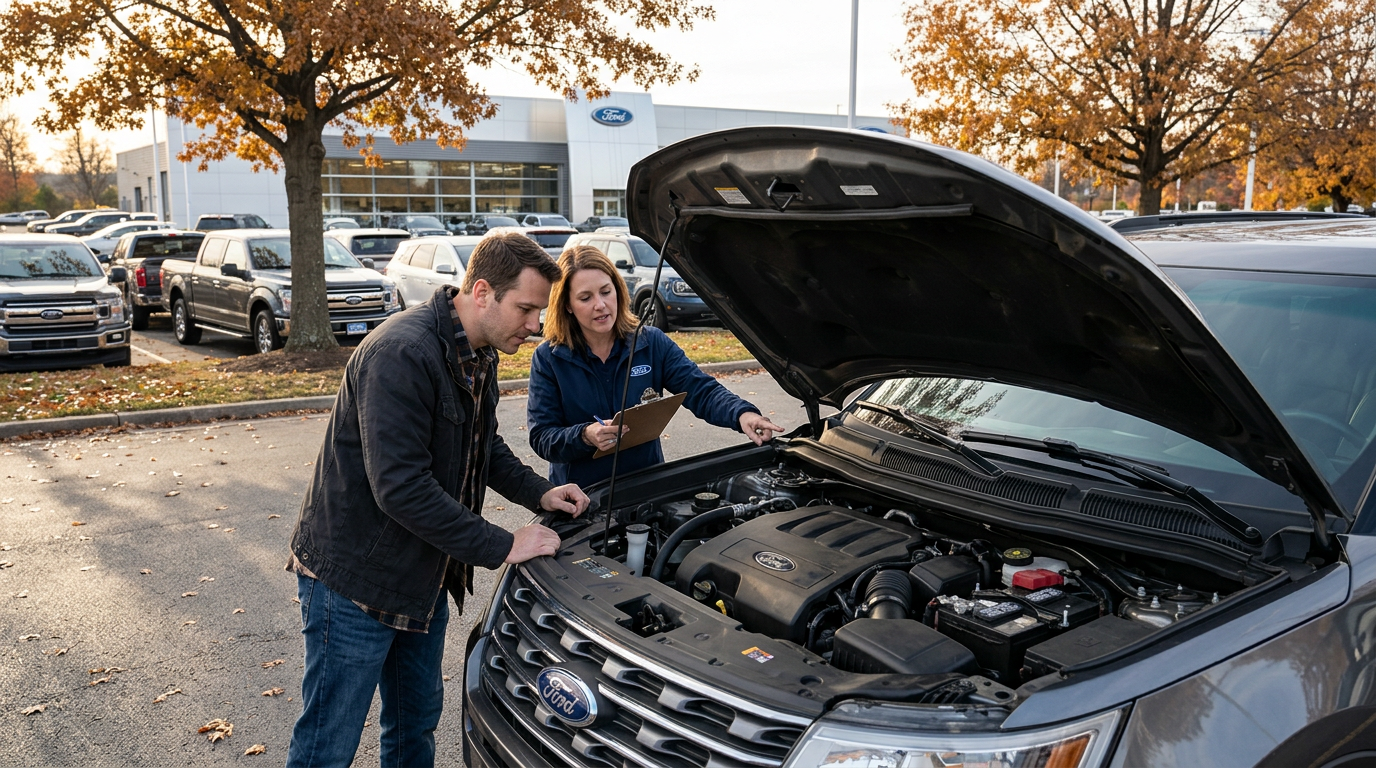
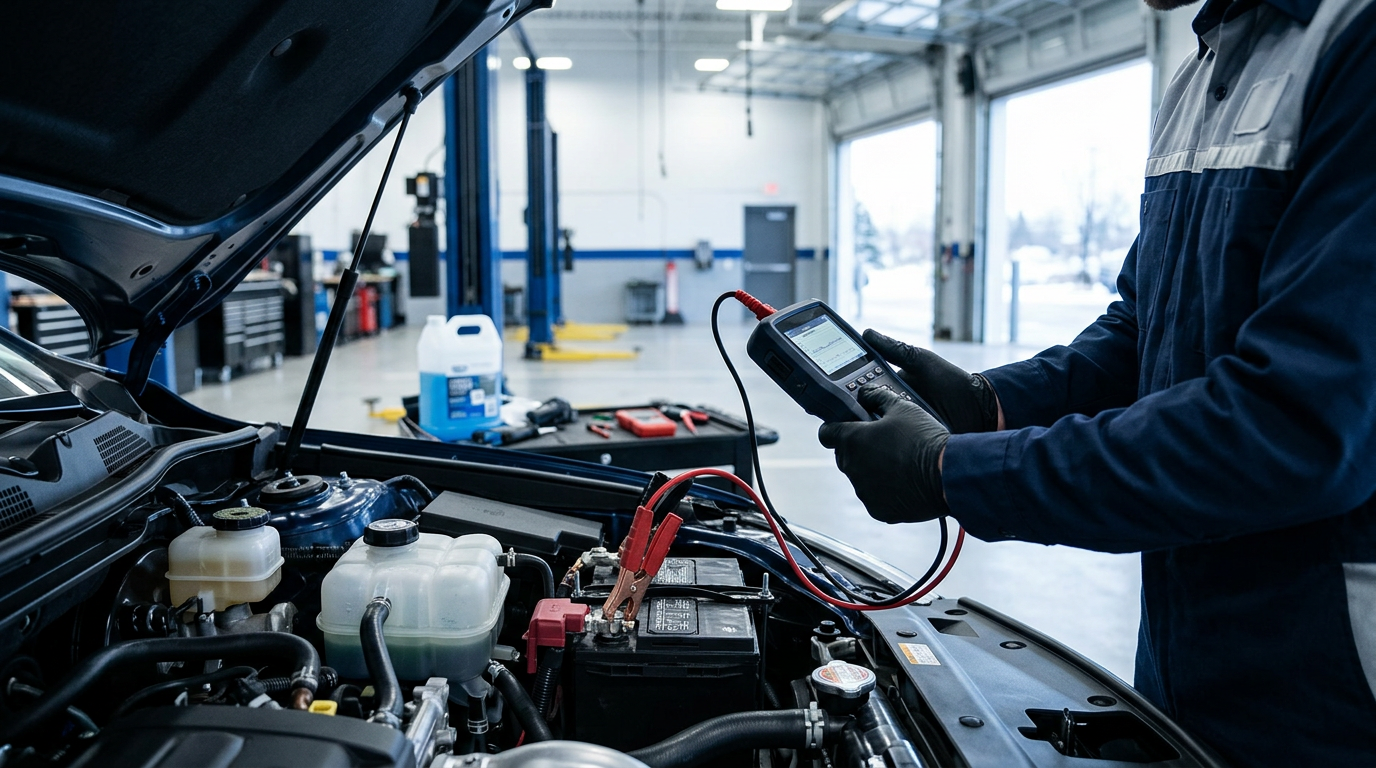
Preparing a Ford vehicle for winter weather requires inspecting critical systems that cold temperatures stress most, including the battery, engine coolant, tire tread and pressure, wiper blades, and braking components. Freezing temperatures reduce battery output, lower tire pressure by 1 to 2 PSI for every 10-degree drop, and increase engine load during cold starts. Routine winter prep involves verifying battery charge and Cold Cranking Amps, flushing or topping off engine coolant to the correct freeze-protection ratio, ensuring tire tread meets safety thresholds, and replacing worn wiper blades with winter-rated fluid. Our factory-trained service team helps drivers stay ahead of seasonal hazards by performing comprehensive pre-winter vehicle inspections. If you need routine maintenance or a quick diagnostic check before freezing temperatures arrive, contact our team at (302) 734-0444 or stop by our service center on South Dupont Highway to ensure your vehicle is completely ready for cold-weather driving. Table of Contents What Belongs on Your Essential Ford Winter Maintenance Checklist? How Does Cold Weather Affect Your Ford Battery and Cold Cranking Amps? Does Ford Intelligent AWD Require Special Winter Maintenance or Fluid Changes? What Are the Costs and Best Practices for Coolant Flushes and Remote Idling? Frequently Asked Questions About Winter Ford Maintenance Schedule Your Pre-Winter Ford Inspection at Winner Ford What Belongs on Your Essential Ford Winter Maintenance Checklist? An essential Ford winter maintenance checklist focuses on six vital areas: battery health, cooling system protection, tire condition, wiper and defroster function, brake performance, and driveline lubrication. Systematically inspecting each component prevents unexpected breakdowns during cold snaps and helps keep your family safe on slick morning roads. Completing these routine checks ensures reliable performance throughout the coldest months of the year: Tire Tread and Inflation: Cold weather causes air to contract, reducing tire pressure by roughly 1 to 2 PSI for every 10-degree Fahrenheit drop in ambient temperature. According to National Highway Traffic Safety Administration winter driving guidance, tires must have at least 2/32 inch of tread depth to remain legal, though deeper tread provides superior traction in slush and snow. Always check tire pressure when tires are cold and inflate them to the recommended pressure listed on the Ford driver-door label—never the maximum pressure molded on the tire sidewall. Cooling System and Antifreeze: Engine coolant prevents freeze-ups inside the engine block and radiator core. Our technicians check coolant concentration using a refractometer to verify protection levels and inspect hoses for cracking or deterioration. Wiper Blades and Washer Fluid: Worn wiper blades leave streaks that compromise visibility in freezing rain or snow. Installing winter blades paired with de-icing washer fluid rated to at least -20 degrees Fahrenheit keeps glass clear. Operating washer systems with an empty reservoir can overheat the pump motor, so keeping fluid levels topped off is critical. Brake System Inspection: Slippery pavement requires balanced stopping power. A thorough brake check evaluates pad thickness, rotor surface condition, and brake fluid moisture levels. Modern Ford vehicles equipped with an advanced collision mitigation system and Anti-Lock Brakes (ABS) rely on firm, continuous pedal pressure during emergency stops on slick roads. Driveline and Battery Verification: Inspecting drive belts, alternator charging voltage, and driveline fluids ensures smooth power delivery when cold starts place maximum demand on the engine. Commuters taking major highway routes through Smyrna frequently encounter rapidly changing road conditions during winter storms, making tire grip and clear visibility top priorities. Drivers navigating these daily routes count on vehicles like the 2026 Ford Explorer, which pairs a 2.3L engine with available Four-wheel drive and SelectShift® transmission to deliver confidence when road surfaces freeze. Scheduling seasonal service before winter settles in keeps every component operating at peak efficiency. When you are ready to prepare your vehicle for the season, consider scheduling a seasonal maintenance inspection or visiting our genuine Ford parts center for winter wiper blades and original equipment components. How Does Cold Weather Affect Your Ford Battery and Cold Cranking Amps? Cold weather significantly decreases chemical activity inside automotive batteries, reducing available starting power by up to 50 percent at freezing temperatures while gasoline and diesel engines simultaneously require higher cranking energy to start. Cold Cranking Amps (CCA) measure a battery's capability to deliver power at 0 degrees Fahrenheit for 30 seconds while maintaining functional voltage. When temperatures plummet, an aging battery with diminished CCA capacity struggles to turn over cold engine oil. Most 12-volt car batteries have a functional lifespan of three to five years. During cold weather, weak batteries exhibit distinct warning signs, such as a slow engine crank during initial startup, dimming headlights at idle, or delayed power to interior accessories. Having our certified technicians perform a conductance test measures actual CCA output against the original Motorcraft® factory specification, identifying weak cells before they fail completely during a cold snap. Electric and hybrid Ford vehicles also experience seasonal performance shifts during winter weather. Low ambient temperatures temporarily reduce high-voltage battery chemical efficiency, which can decrease total driving range. Pre-conditioning the cabin while connected to a charger uses grid power rather than battery energy, preserving driving range for your commute. If a battery fails while traveling, Ford vehicle owners have access to manufacturer-backed emergency support. Emergency roadside assistance provides jump-starts, flat tire assistance, and towing to an authorized dealer service center. To request emergency towing or jump-start support, contact Ford Roadside Assistance at (800) 241-3673. Does Ford Intelligent AWD Require Special Winter Maintenance or Fluid Changes? Ford Intelligent AWD requires routine fluid inspections of the Power Transfer Unit (PTU) and rear differential assembly to protect internal gears against extreme heat and cold stress. Unlike conventional four-wheel-drive systems that require manual engagement, Intelligent AWD uses electronic sensors to monitor wheel speed, throttle position, and steering angle, instantly shifting torque to the wheels with the most grip. Maintaining clean, high-grade synthetic gear lubricants ensures these electro-mechanical actuators respond instantly on icy surfaces. The driveline maintenance steps below keep all-wheel-drive and four-wheel-drive systems operating smoothly in cold conditions: Inspect Power Transfer Unit (PTU) Fluid: Check the fluid level and condition inside the PTU to prevent thermal degradation and fluid breakdown during heavy torque transfers. Verify Rear Differential Lubricant: Inspect the rear drive unit fluid for water contamination or metal wear particles that reduce lubricating effectiveness in freezing weather. Check CV Axle Boots and Seals: Examine rubber constant-velocity boots for cracks or tears that permit road salt and water to enter precision joint assemblies. Calibrate Selectable Drive Modes: Test the vehicle's drive mode selector to confirm seamless engagement of Slippery mode or Deep Snow/Sand mode, which adjusts throttle sensitivity and traction control interventions. Drivers negotiating the gently rolling hills and wooded back routes around Middletown depend heavily on responsive driveline systems when shaded pavement turns to black ice. Models like the 2026 Ford F-150 equipped with a 3.5L engine and Four-wheel drive deliver impressive control when driveline fluids are maintained according to factory service intervals. Inspecting transfer case and differential fluids prior to severe winter weather protects heavy-duty components against accelerated wear. What Are the Costs and Best Practices for Coolant Flushes and Remote Idling? A standard Ford engine coolant flush removes accumulated rust scale and sediment while replenishing essential corrosion inhibitors, ensuring the engine block remains protected against internal freezing down to target winter temperatures. Engine coolant consists of a 50/50 mixture of concentrated antifreeze and distilled water. Over years of thermal heating cycles, chemical additives break down, increasing the risk of internal radiator corrosion, heater core blockages, and water pump seal failure. Replacing old coolant according to factory intervals maintains proper thermal management and protects cabin heater efficiency. Remote idling is a popular winter feature, but extended idling is inefficient and unnecessary for modern fuel-injected engines. Today's Ford engines build full oil pressure within 30 to 60 seconds after startup. Idling an engine for extended periods burns between 0.2 and about 0.5 gallons of fuel per hour while generating minimal warmth for driveline components like the transmission and wheel bearings, which only warm up when the vehicle is in motion. Best practices for winter engine warmup include: Limit Remote Start Time: Limit remote idling to 5 or 10 minutes to clear windshield frost and pre-warm the cabin while conserving fuel. Drive Gently Initially: Accelerate smoothly for the first few miles of driving to bring the engine, transmission, and differential fluids up to normal operating temperatures evenly. Utilize Heated Features: Rely on heated seats and heated steering wheels for immediate personal comfort rather than waiting for engine coolant to heat the entire cabin volume. Following these practical steps reduces engine wear, saves fuel, and maintains peak heating performance throughout the winter months. Frequently Asked Questions About Winter Ford Maintenance Q: How often should tire pressure be checked during cold Mid-Atlantic winter months? Tire pressure should be checked at least once a month and prior to extended highway trips during winter. Because air pressure drops roughly 1 to 2 PSI for every 10-degree drop in ambient temperature, sudden cold snaps can cause tires to become underinflated rapidly. Always measure inflation when tires are cold and set them to the recommended pressure indicated on the vehicle's driver-door jamb sticker. Q: What freeze protection rating is recommended for washer fluid in local winter driving? Windshield washer fluid rated to at least -20 degrees Fahrenheit is recommended for regional winter driving. Standard summer formulas contain higher water concentrations that freeze upon contact with a cold windshield or inside the washer fluid lines and reservoir tank. Using winter-specific fluid containing de-icing agents prevents reservoir cracking and maintains clear driver visibility during snowstorms. Q: Should wiper blades be lifted off the windshield overnight during a snowstorm? Lifting wiper arms off the windshield prevents rubber blades from freezing directly to the glass surface, protecting the rubber edge from tearing when turned on. However, high winds can snap elevated wiper arms back down against the glass, potentially cracking the windshield. Using a protective windshield cover or ensuring wipers are completely switched off before turning off the ignition protects wiper motor gears from overload damage upon engine startup. Q: What is included when technicians perform a pre-winter multi-point inspection? A pre-winter multi-point inspection evaluates battery Cold Cranking Amps, charging system output, engine coolant concentration and hose integrity, tire tread depth and inflation pattern, brake pad and rotor wear, steering linkage, drive belt tension, exterior lighting, wiper blade condition, and heating system operation. Catching minor wear issues during an autumn inspection prevents cold-weather breakdowns. Q: What winter checks should be prioritized for Ford diesel engines or electric vehicles? Ford PowerStroke® diesel models require checking glow plug operation, verifying fuel heater function, and adding anti-gel fuel additives during extreme cold to prevent paraffin wax formation in fuel filters. Electric vehicles like the Mustang Mach-E® benefit from thermal battery preconditioning while plugged into Level 2 chargers, verifying tire pressure for range efficiency, and maintaining clear sensor lenses for driver-assist systems. Schedule Your Pre-Winter Ford Inspection at Winner Ford Seasonal winter maintenance protects your investment, preserves long-term vehicle reliability, and helps keep your family safe during challenging driving conditions. Taking a proactive approach to battery health, tire grip, brake condition, and engine cooling systems ensures your vehicle performs dependably on every daily commute or weekend trip. Our factory-certified technicians use genuine original equipment parts and diagnostic equipment designed specifically for your vehicle. Whether you drive a truck, an SUV, or a hybrid model, our team provides expert care tailored to your driving habits. To prepare your vehicle for freezing temperatures, call our service team at (302) 734-0444 or stop by our Dover service facility on South Dupont Highway to schedule your winter service appointment today. © 2026 Winner Ford. All rights reserved. Vehicle specification data © JATO Dynamics Limited.

Read More
Expedition

2026 Ford Expedition: Full Trim Guide for Delaware Families

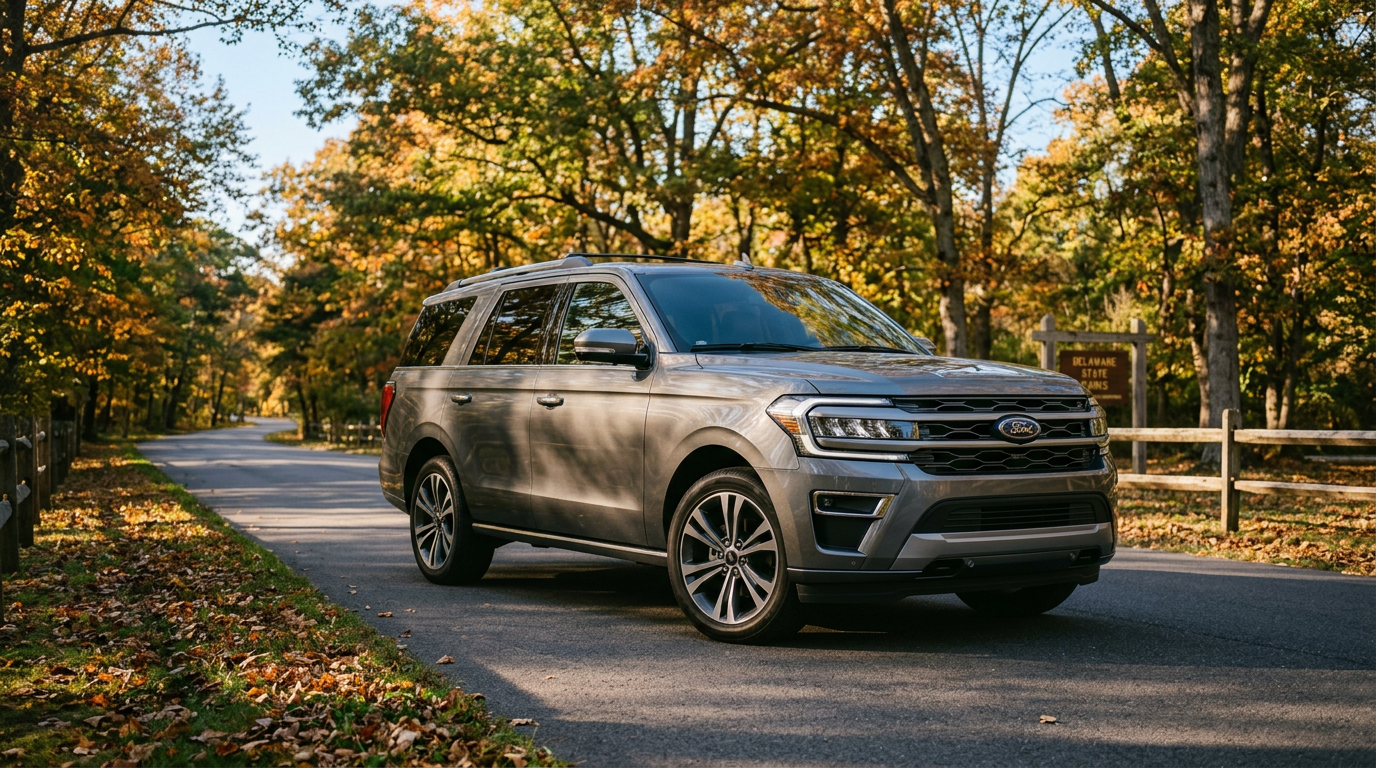
The 2026 Ford Expedition is a full-size SUV for Delaware families who need genuine eight-passenger seating, up to 9,600 lbs of towing capacity, and a 400 hp twin-turbocharged EcoBoost V6 — all in one vehicle. Eleven trim configurations span from the fleet-focused XL 4x4 at MSRP $57,400 to the luxury King Ranch MAX 4x4 at MSRP $87,360, giving buyers a clear path from workhorse utility to premium comfort without switching nameplates. Table of Contents How Well Does the 2026 Ford Expedition Serve Middletown Families and Adventurers? Bold Exterior Styling That Matches the Scenic and Suburban Charm of the Region Power and Towing Capability Tailored for Suburban Roads and Outdoor Escapes Spacious Interior Comfort Designed for Family Days and Beyond Intuitive Tech Features That Simplify Commuting and Weekend Adventures Safety Systems Built for School Runs and Community Events Comprehensive Pricing Breakdown of All 2026 Ford Expedition Trims Award-Winning Excellence and Expert Praise for the 2026 Ford Expedition Warranty, Maintenance, and Service Insights for Long-Term Ownership Frequently Asked Questions from Families Considering the 2026 Ford Expedition How Well Does the 2026 Ford Expedition Serve Middletown Families and Adventurers? The 2026 Ford Expedition is purpose-built for exactly the kind of life Middletown families lead: hauling kids and gear across gently rolling suburban roads during the week, then pulling a boat or camper trailer to a river valley on Saturday morning. With up to 8-passenger seating, a 23.6-gallon fuel tank, and a calculated highway range of 448 miles on the rear-wheel-drive Active trim, a single fill-up handles a full week of school runs and still leaves room for a weekend road trip. What makes the Expedition stand out in this segment is how it scales. The Active and Active MAX trims cover families who prioritize cargo room and seating flexibility. The King Ranch and Platinum trims add premium leather, panoramic glass roofs, and a 22-speaker Bang & Olufsen audio system for buyers who want a refined daily driver. The Tremor 4x4 brings 440 hp and 510 lb-ft of torque for those who want capability to match the outdoor lifestyle. And the XL 4x4 Fleet trims serve commercial and organizational buyers who need straightforward dependability. Whether you are researching from your home office or ready to get behind the wheel, browsing our current new Expedition inventory at Winner Ford is the fastest way to see which configuration is available for your family right now. Bold Exterior Styling That Matches the Scenic and Suburban Charm of the Region The 2026 Expedition arrives with a stance that commands attention without being out of place on tree-lined suburban streets or at a community festival parking lot. Its body measures 209.9 inches long on standard-wheelbase trims and 221.7 inches on MAX variants, with an overall width of 81.5 inches and a height of 78.1 inches — proportions that communicate capability while still fitting in a standard garage. The standard-wheelbase trims ride on an 18-inch alloy wheel with an 8.5-inch rim width as the base configuration. Step up to the King Ranch 4X4 or King Ranch MAX 4x4 and 22-inch alloys with a 9-inch rim width come standard, giving those trims a more planted, upscale road presence. The Platinum Ultimate Package pushes wheel size further, offering 24-inch alloys with 9.5-inch rim widths — a visual statement that fits right in at Smyrna's tree-lined neighborhood streets or at Dover's community events. Exterior lighting is full LED across all trims, with LED low-beam and high-beam headlights featuring complex-surface lens optics, LED rear lights, and LED brake lights. Auto high-beam control and a dusk sensor add convenience for evening drives. All trims include painted front and rear bumpers, chrome bright trim around the side windows as standard, and platform-style running boards for easy entry — a practical feature for families lifting young children into a vehicle that sits nearly 78 inches tall. The Stealth Appearance Package and Stealth Performance Package available on the Platinum 4x4 swap chrome accents for black roof rails and window trim, creating a darker, more aggressive look for buyers who want their Expedition to stand out differently. The standard King Ranch and Platinum trims feature chrome/silver roof rails that complement the premium character of those builds. Buyers considering a pre-owned entry point into the Expedition family can also explore our pre-owned Expedition inventory at Winner Ford, where previous-generation models offer many of the same core features at a different budget range. Power and Towing Capability Tailored for Suburban Roads and Outdoor Escapes Every 2026 Expedition in this lineup shares the same twin-turbocharged 3.5L EcoBoost V6 engine paired to a 10-speed SelectShift automatic transmission — with one meaningful exception. The Tremor 4x4 is tuned to produce 440 hp and 510 lb-ft of torque, compared to the 400 hp and 480 lb-ft delivered by every other trim. That extra output matters when you are pulling a loaded boat trailer up a ramp or navigating a steep gravel access road. 2026 Ford Expedition Engine & Performance by Trim Feature Active Active 4x4 Active MAX Active MAX 4x4 King Ranch 4X4 King Ranch MAX 4x4 Platinum 4x4 Platinum MAX 4x4 Tremor 4x4 XL 4x4 (Fleet) XL MAX 4x4 (Fleet) Horsepower 400 hp 400 hp 400 hp 400 hp 400 hp 400 hp 400 hp 400 hp 440 hp 400 hp 400 hp Torque 480 lb-ft 480 lb-ft 480 lb-ft 480 lb-ft 480 lb-ft 480 lb-ft 480 lb-ft 480 lb-ft 510 lb-ft 480 lb-ft 480 lb-ft Drivetrain Rear-wheel drive Four-wheel drive Rear-wheel drive Four-wheel drive Four-wheel drive Four-wheel drive Four-wheel drive Four-wheel drive Four-wheel drive Four-wheel drive Four-wheel drive All trims share: Engine: 3.5L · Transmission: SelectShift The drivetrain choice is one of the most consequential decisions in this lineup. The Active and Active MAX are the only rear-wheel-drive configurations — they return the best fuel economy figures at 16 city / 24 highway / 19 combined mpg, with a calculated range of 448 miles on the Active's 23.6-gallon tank. Every other trim runs four-wheel drive, dropping efficiency to 15 city / 22 highway / 18 combined mpg. Towing capacity swings significantly based on drivetrain. The rear-wheel-drive Active tops out at 6,000 lbs — sufficient for a small boat or utility trailer. Add four-wheel drive with the Active 4x4 and towing jumps to 9,600 lbs. The table below shows exactly how capacity varies across the full lineup: 2026 Ford Expedition Dimensions & Capacity by Trim Feature Active Active 4x4 Active MAX Active MAX 4x4 King Ranch 4X4 King Ranch MAX 4x4 Platinum 4x4 Platinum MAX 4x4 Tremor 4x4 XL 4x4 (Fleet) XL MAX 4x4 (Fleet) Seating 8 8 8 8 7 7 7 7 7 5 5 Cargo 21.6 cu ft 21.6 cu ft 36.1 cu ft 36.1 cu ft 21.6 cu ft 36.1 cu ft 21.6 cu ft 36.1 cu ft 21.6 cu ft 21.6 cu ft 36.1 cu ft Curb weight 5,404 lbs 5,668 lbs 5,542 lbs 5,794 lbs 5,668 lbs 5,794 lbs 5,668 lbs 5,794 lbs 5,668 lbs 5,623 lbs 5,794 lbs Towing 6,000 lbs 9,600 lbs 6,300 lbs 9,000 lbs 9,600 lbs 9,000 lbs 9,600 lbs 9,000 lbs 9,300 lbs 6,000 lbs 6,000 lbs Payload 1,971 lbs 1,957 lbs 1,958 lbs 1,956 lbs 1,957 lbs 1,956 lbs 1,957 lbs 1,956 lbs 1,957 lbs 6,377 lbs 6,206 lbs The Pro Trailer system comes standard across the lineup, including automatic trailer steering, a tow mode, trailer hitch assist, trailer reversing aid, trailer brake control, and a 360-camera extension — a full suite of tools that makes backing a boat trailer into a narrow riverfront launch ramp far less stressful. The suspension uses independent front wishbone geometry with coil springs and a multi-link independent rear setup, keeping the ride composed whether you are loaded with passengers or pulling a trailer. If you are ready to move from your current vehicle into an Expedition, you can get an estimate on your trade-in at Winner Ford before you visit the showroom. Spacious Interior Comfort Designed for Family Days and Beyond Seating configuration is the interior decision that divides this lineup most clearly. Active, Active 4x4, Active MAX, and Active MAX 4x4 trims seat 8 passengers in a 2+3+3 arrangement — the full bench second row. King Ranch, Platinum, and Tremor trims seat 7 in a 2+2+3 layout, swapping the second-row bench for captain's chairs. The XL Fleet trims seat 5. Families who regularly carry more than six people should prioritize the Active or Active MAX configurations. 2026 Ford Expedition Engine & Performance by Trim Feature Active Active 4x4 Active MAX Active MAX 4x4 King Ranch 4X4 King Ranch MAX 4x4 Platinum 4x4 Platinum MAX 4x4 Tremor 4x4 XL 4x4 (Fleet) XL MAX 4x4 (Fleet) Horsepower 400 hp 400 hp 400 hp 400 hp 400 hp 400 hp 400 hp 400 hp 440 hp 400 hp 400 hp Torque 480 lb-ft 480 lb-ft 480 lb-ft 480 lb-ft 480 lb-ft 480 lb-ft 480 lb-ft 480 lb-ft 510 lb-ft 480 lb-ft 480 lb-ft Drivetrain Rear-wheel drive Four-wheel drive Rear-wheel drive Four-wheel drive Four-wheel drive Four-wheel drive Four-wheel drive Four-wheel drive Four-wheel drive Four-wheel drive Four-wheel drive All trims share: Engine: 3.5L · Transmission: SelectShift Passenger room is genuinely generous throughout. Front headroom measures 41.8 inches, second-row headroom is 40 inches, and even the third row delivers 37.4 inches. Shoulder room runs 64.9 inches up front, 64.8 inches in the second row, and 64.2 inches in the third — figures that mean full-sized adults are not cramped in the back seats on longer drives to Dover's museums or a day at First State Heritage Park. Cargo behind the third row starts at about 22 cu ft on standard-wheelbase trims and grows to about 36 cu ft on MAX variants. Fold the third row and cargo expands to about 108.5 cu ft on standard trims and about 123 cu ft on MAX trims — enough space for bikes, camping gear, or sports equipment for a full team. The Ford Split Gate rear door design makes loading easier in tight parking situations, and a hands-free power liftgate is available through the Equipment Group 202A package. Climate comfort is handled by a standard three-zone automatic climate control system across all trims, with rear controls and secondary ventilation outlets keeping back-seat passengers comfortable on longer trips. The front seats on all trims are electrically adjustable — the driver gets five-way electric adjustment including electric lumbar, and the passenger gets four-way electric adjustment. The Equipment Group 202A package adds heated front seats and memory seat positions for the driver. When you are ready to explore your financing path, Winner Ford makes it easy to start a credit application online before you visit the dealership. Intuitive Tech Features That Simplify Commuting and Weekend Adventures The 2026 Expedition's technology stack is anchored by a 13.2-inch touchscreen infotainment display paired to a 24-inch digital instrument cluster — a dual-screen setup that gives drivers clear, reconfigurable information without requiring them to dig through menus. The navigation system uses satellite-view mapping with internet-fed traffic data and includes a 12-month subscription to traffic updates and map refreshes standard; the optional Connectivity Package (One Time Purchase) extends both subscriptions to 84 months. Wireless Apple CarPlay and wireless Android Auto come standard across the entire lineup, so connecting a phone takes seconds rather than hunting for a cable. Bluetooth is standard, and the embedded Wi-Fi hotspot uses a built-in SIM card with a 12-month included subscription — useful on long weekend drives when the kids need to stay connected. The system also supports over-the-air OS updates, meaning the software can improve after purchase without a dealership visit. Voice activation through Google Assistant is standard, allowing hands-free control of navigation, media, and climate functions while keeping attention on the road. Steering-wheel-mounted audio controls keep common functions within thumb's reach. The standard audio system on Active, Active MAX, and XL Fleet trims features 6 speakers with AM/FM, satellite radio (3-month trial), and internet radio. The King Ranch and Platinum trims step up to a 22-speaker Bang & Olufsen system with a subwoofer and surround sound — a meaningful upgrade for anyone who spends significant time in the vehicle. Connected services include the 911 Assist emergency notification system, remote lock/unlock, remote vehicle start, remote climate control (heating and cooling), vehicle diagnostics, theft alerts, and a find-my-car function — all with a long-term subscription included. The Tremor 4x4 and King Ranch trims also include Ford BlueCruise as the cruise control system, which is a hands-free highway driving assist feature. For owners who want to maintain peak system performance, genuine Ford-compatible accessories and technology components are available through our parts department at Winner Ford. Safety Systems Built for School Runs and Community Events The 2026 Expedition carries a comprehensive set of driver assistance systems as standard equipment across every trim — a meaningful baseline for families who use this vehicle for daily school runs, community errands, and highway commutes. Pre-Collision Assist with Pedestrian Detection is the forward collision system, activating at speeds as low as 3 mph with automatic emergency braking, brake light activation, and the ability to brake at low speed from both front and rear directions. This system includes pedestrian and cyclist detection, oncoming collision avoidance, and a programmable following distance — features that actively help reduce the risk of the most common collision types in suburban environments. Blind Spot Information System (BLIS) monitors the rear flanks and alerts the driver when vehicles enter the blind zone. Lane Keeping Alert monitors lane markings and provides steering correction if the vehicle begins to drift without a turn signal. Rear Cross Traffic Collision Avoidance uses radar to detect approaching vehicles when backing out of parking spaces — a daily-use feature in busy school lots and shopping areas. Adaptive Cruise Control with stop-and-go function comes standard, maintaining a set following distance and bringing the vehicle to a complete stop in traffic before resuming — useful during Dover's morning commute patterns. The King Ranch and Platinum trims add Ford BlueCruise, which extends this capability to hands-free highway driving on pre-mapped roads. The airbag system includes front driver and passenger airbags, front side airbags, and side curtain airbags covering all three rows — 6 airbags total. The structure includes four-wheel ventilated disc brakes with ABS, a brake assist system, a hill holder, roll stability control, electronic traction control, and a trailer stability program. All trims also include the 911 Assist telematics system, which automatically notifies emergency services in the event of a crash. IIHS testing shows a Good rating for side impact and a Good rating for seat belt reminder, with Marginal ratings on moderate and small overlap front tests. Comprehensive Pricing Breakdown of All 2026 Ford Expedition Trims Understanding where each trim sits in the lineup helps buyers compare features and MSRP. The table below shows base MSRP and the $2,795 destination charge (or $2,595 for XL Fleet trims) that applies to every build. 2026 Ford Expedition Pricing by Trim Feature Active Active 4x4 Active MAX Active MAX 4x4 King Ranch 4X4 King Ranch MAX 4x4 Platinum 4x4 Platinum MAX 4x4 Tremor 4x4 XL 4x4 (Fleet) XL MAX 4x4 (Fleet) Base MSRP $62,700 $65,700 $65,700 $68,700 $84,360 $87,360 $74,250 $77,250 $81,700 $57,400 $61,525 Destination charge $2,795 $2,795 $2,795 $2,795 $2,795 $2,795 $2,795 $2,795 $2,795 $2,595 $2,595 The lineup naturally organizes into three tiers. The Active and Active MAX trims ($62,700–$68,700) represent the entry point — they deliver the full EcoBoost powertrain, the complete safety suite, the 13.2-inch touchscreen, wireless smartphone integration, and three-zone climate control. The key trade-off is the 6-speaker audio system and cloth or ActiveX seating rather than leather. The Platinum 4x4 and Platinum MAX 4x4 ($74,250–$77,250) sit in the middle of the premium tier, adding a panoramic sunroof, the optional Bang & Olufsen 22-speaker audio system through the Platinum Ultimate Package, leather seating, stainless steel door sill protectors, Ford BlueCruise, and an electronic adaptive suspension. The Platinum trims also offer the Stealth Appearance Package (black window trim, black roof rails, 22-inch alloys) and the Stealth Performance Package (which adds the Bang & Olufsen audio alongside the blacked-out exterior treatment). The King Ranch 4X4 and King Ranch MAX 4x4 ($84,360–$87,360) are the most premium configurations, wrapping the cabin in premium leather with leather door panels and center console, adding a heated steering wheel, ventilated front seats, heated second-row seats, power-retractable running boards, and an electrically folding third row. The Tremor 4x4 at $81,700 is the performance outlier — it delivers the most powerful engine in the lineup at 440 hp and 510 lb-ft of torque with four-wheel drive and a 9,300-lb tow rating. The XL 4x4 and XL MAX 4x4 Fleet trims ($57,400–$61,525) carry the lowest price in the lineup but are designed for fleet and commercial buyers, with 5-passenger seating and higher payload ratings of 6,377 lbs and 6,206 lbs respectively. Award-Winning Excellence and Expert Praise for the 2026 Ford Expedition The 2026 Ford Expedition earned the Kelley Blue Book Best Buy Award for Full-Size SUV — a recognition that reflects the vehicle's combination of real-world utility, feature content, and value retention in a competitive segment. KBB specifically cited the Expedition as its top pick in the full-size SUV category for 2026. The Expedition also received recognition in U.S. News & World Report's 2026 Best Cars for the Money awards, reinforcing that the value equation holds up under independent analysis — not just in terms of sticker price but in the total ownership proposition including reliability, resale value, and feature content relative to cost. Edmunds notes the Expedition's towing capability and interior versatility as standout attributes in the class, particularly for buyers who need genuine three-row functionality rather than a compromised third-row experience. The Pro Trailer system, the three-zone climate control, and the extensive USB charging infrastructure throughout the cabin all contribute to real-world usability that reviewers consistently highlight. For families in the Dover area cross-shopping against rivals like the Chevrolet Tahoe, the Toyota Sequoia, or the GMC Yukon, the Expedition's combination of EcoBoost efficiency, standard safety technology, and the MAX long-wheelbase option gives it a distinct identity in the segment. Warranty, Maintenance, and Service Insights for Long-Term Ownership The 2026 Ford Expedition carries a 3-year / 36,000-mile bumper-to-bumper warranty, a 5-year / 60,000-mile powertrain warranty, a 5-year / 60,000-mile roadside assistance program, and a 5-year corrosion warranty. Paint coverage runs 3 years / 36,000 miles. These figures apply uniformly across all trim levels in this lineup. The powertrain warranty is particularly relevant for buyers who plan to use the Expedition's towing capacity regularly — knowing the EcoBoost engine and SelectShift transmission are covered for five years provides meaningful peace of mind on weekend trailer hauls. Ford's roadside assistance program runs concurrently with the powertrain warranty, meaning help is available for the first 60,000 miles if a breakdown occurs away from home. Ford also includes over-the-air software update capability on the 2026 Expedition, which means infotainment and vehicle system improvements can be delivered without a service appointment. For scheduled maintenance, oil changes, tire rotations, brake inspections, and recall work, Winner Ford's certified technicians use genuine Ford parts and have full access to the vehicle's diagnostic systems. You can book your next service appointment online at Winner Ford, making it easy to fit maintenance into a busy family schedule without a phone call. Frequently Asked Questions from Families Considering the 2026 Ford Expedition Q: How many passengers does the 2026 Ford Expedition seat, and which trim is best for large families? The Active, Active 4x4, Active MAX, and Active MAX 4x4 trims all seat 8 passengers in a 2+3+3 configuration, making them the best choice for families who regularly travel with six or more people. King Ranch, Platinum, and Tremor trims seat 7 due to second-row captain's chairs. XL Fleet trims seat 5. If maximum passenger capacity is the priority, the Active MAX 4x4 at $68,700 gives you 8 seats, four-wheel drive, and about 36 cu ft of cargo space behind the third row. Q: What is the towing capacity of the 2026 Ford Expedition, and which trim tows the most? Towing capacity ranges from 6,000 lbs on the rear-wheel-drive Active and XL Fleet trims up to 9,600 lbs on the Active 4x4, King Ranch 4X4, and Platinum 4x4. The Tremor 4x4 tows 9,300 lbs. The MAX variants with four-wheel drive tow 9,000 lbs. Adding four-wheel drive is the single biggest factor in unlocking higher tow ratings — the rear-wheel-drive Active 4x4 comparison makes this clear: the same body style jumps from 6,000 lbs to 9,600 lbs simply by choosing the four-wheel-drive configuration. Q: What fuel economy does the 2026 Ford Expedition get? Rear-wheel-drive trims (Active and Active MAX) return 16 city / 24 highway / 19 combined mpg, with a calculated range of 448 miles on the 23.6-gallon tank. Four-wheel-drive trims return 15 city / 22 highway / 18 combined mpg. MAX trims carry a larger 27.8-gallon tank, giving the four-wheel-drive Active MAX a calculated range of 500 miles. For daily commutes between suburban Delaware communities and Dover, these figures translate to roughly one fill-up per week for most drivers. Q: What is the difference between the standard Expedition and the Expedition MAX? The MAX designation indicates the long-wheelbase body. Standard trims measure 209.9 inches in overall length with a 122.5-inch wheelbase, while MAX trims stretch to 221.7 inches with a 131.5-inch wheelbase. The practical result: MAX trims deliver about 36 cu ft of cargo behind the third row versus about 22 cu ft on standard trims, and about 123 cu ft with the rear seats folded versus about 108.5 cu ft. MAX trims also gain 43.9 inches of second-row legroom compared to 41.1 inches on standard trims. Q: How do I get started purchasing a 2026 Ford Expedition at Winner Ford? Winner Ford is located at 591 S Dupont Hwy, Dover, DE 19901. You can browse current availability online, start a trade-in estimate, or submit a financing application before you visit. If you have a quick question about a specific trim or want to confirm availability, give the team (302) 734-0444 and someone will help you find the right configuration for your family's needs. © 2026 Winner Ford. All rights reserved. Vehicle specification data © JATO Dynamics Limited.
Bronco Line-up

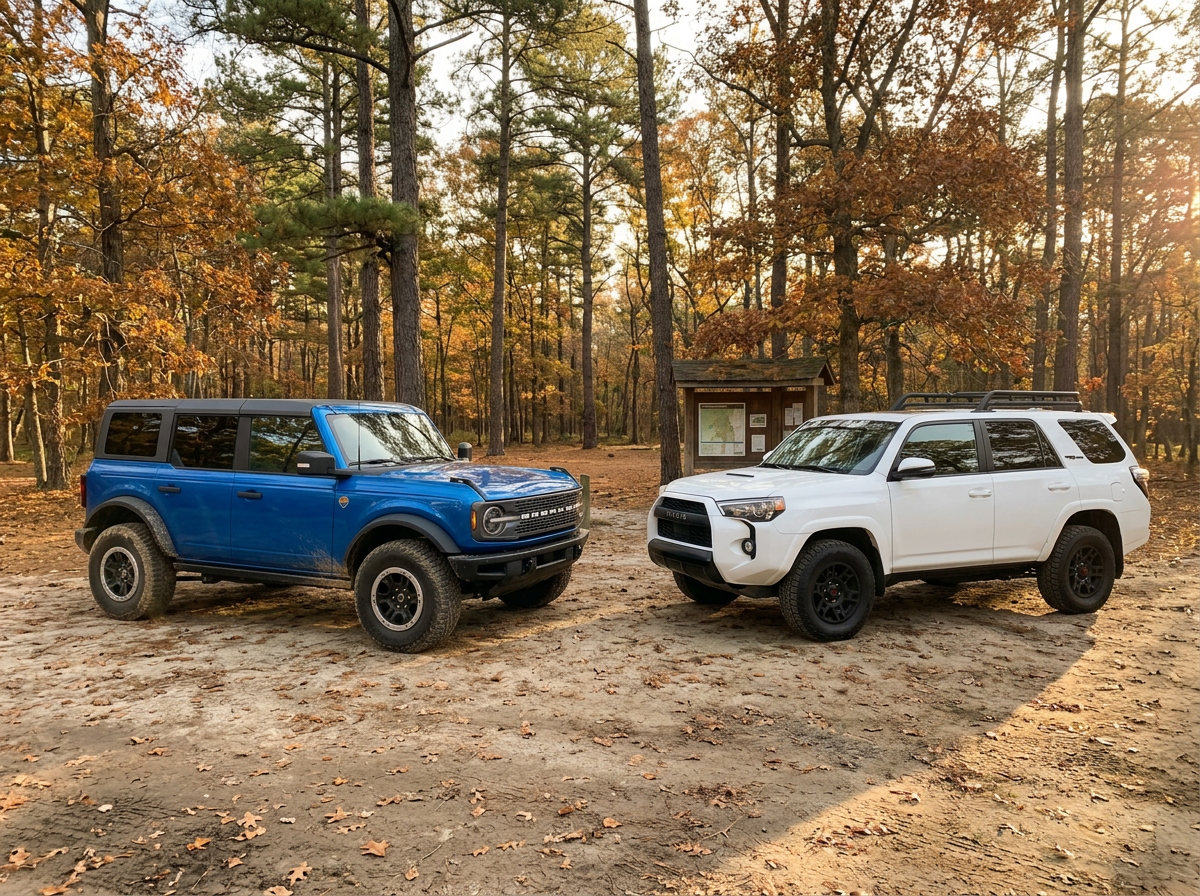
Which 2026 Ford Bronco Fits Your Delaware Adventures?

The 2026 Ford Bronco 4-Door wins as the best overall choice for buyers who need maximum passenger seating, cargo flexibility, and serious off-road capability. It combines the 300-hp 2.3L EcoBoost® engine and 3,500-lb towing capacity of the 2-Door Bronco with five-passenger seating and easier rear-seat access, while the smaller Bronco Sport serves daily commuters with an efficient 27 MPG highway rating. Table of Contents Which 2026 Ford Bronco Model Best Fits Middletown Families and Outdoor Enthusiasts? Comparing Price and Trim Value for the 2026 Ford Bronco 2-Door, 4-Door, and Sport Cargo and Passenger Space Differences Tailored for Active Lifestyles How Performance and Driving Experience Compare Across the 2026 Ford Bronco Lineup Fuel Economy and Range Considerations for Commuters and Weekend Adventurers Technology Features That Enhance Connectivity and Control Safety Systems Designed for Busy Commuters and Weekend Explorers Frequently Asked Questions: Choosing Between the 2026 Ford Bronco 2-Door, 4-Door, and Sport Which 2026 Ford Bronco Model Best Fits Middletown Families and Outdoor Enthusiasts? The 2026 Ford Bronco 4-Door is the premier choice for growing families due to its five-passenger seating configuration and 116.1-inch wheelbase, while the 2-Door Bronco caters to purist trail drivers who prioritize extreme maneuverability. Choosing between these three rugged SUVs depends on how you balance weekend recreation with daily usability around Middletown, where rolling hills and nearby park trails demand dependable four-wheel drive performance. For outdoor enthusiasts who regularly head out for weekend hiking or river trips, the body-on-frame 2-Door Bronco delivers authentic open-air freedom with a short 100.4-inch wheelbase that turns tightly on technical off-road paths. However, its 4-passenger seating capacity and two-door entry make it better suited for couples or solo adventurers. In contrast, the Bronco 4-Door adds two extra doors and expands seating capacity to 5 passengers, making it far easier to load car seats, sports gear, and camping equipment without sacrificing body-on-frame toughness. Shoppers seeking a more maneuverable utility vehicle for daily suburban driving will find the 2026 Ford Bronco Sport highly practical. Built on a unibody platform, the Bronco Sport features a 105.1-inch wheelbase (Badlands 4X4), standard four-wheel drive, and comfortable seating for 5 passengers. It easily navigates tight parking lots during family errands while retaining the rugged design traits and trail capability expected from the Bronco nameplate. Whether you need a dedicated trail machine or a versatile family crossover, exploring our broad selection of new Ford inventory gives you the opportunity to compare cabin layouts in person. You can also view our certified pre-owned and used inventory to evaluate various model years and body styles before deciding which layout best supports your household's active routine. Engine & Performance Powertrain specs by trim Specification 2026 Ford Bronco 2-Door 2026 Ford Bronco 4-Door 2026 Ford Bronco Sport Engine 2.3L 2.3L 2L Horsepower 300 hp 300 hp 238 hp Torque 325 lb-ft 325 lb-ft 277 lb-ft Transmission manual 7-speed manual 7-speed SelectShift® Drivetrain Four-wheel drive Four-wheel drive Four-wheel drive Comparing Price and Trim Value for the 2026 Ford Bronco 2-Door, 4-Door, and Sport The 2026 Ford Bronco Sport Big Bend 4X4 delivers the most affordable starting price in the comparison at $31,845 MSRP, whereas the full-size Bronco 2-Door and 4-Door both start at $41,295 MSRP for their respective Base 4x4 configurations. Each vehicle in the lineup includes a standard $1,995 destination charge, but the feature progression across trims creates distinct value propositions for different budgets. Evaluating trim value requires looking closely at standard equipment levels. The Bronco 2-Door Base 4x4 ($41,295 MSRP) and 4-Door Base 4x4 ($41,295 MSRP) share a 2.3L EcoBoost® engine generating 300 hp and 325 lb-ft of torque, a manual 7-speed transmission, and 16-inch steel wheels. Moving up to the 4-Door Big Bend 4x4 ($41,995 MSRP) adds practical interior upgrades like an illuminated entry system, rear 12v power outlets, and leather-covered steering wheel accents for a minimal price step over the base trim. For heavy-duty off-roading, the Badlands 4x4 trim ($48,890 MSRP on both 2-Door and 4-Door models) incorporates full-time four-wheel drive with Automatic On Demand Engagement, front and rear locking differentials, engine underbody protection, front fog lights, and 17-inch alloy wheels. Meanwhile, the Bronco Sport lineup tops out with the Badlands 4X4 trim at $37,265 MSRP, equipped with a 238-hp 2.0L EcoBoost® engine, SelectShift® automatic transmission, and a 2,700-lb towing capacity. Specification 2026 Ford Bronco 2-Door 2026 Ford Bronco 4-Door 2026 Ford Bronco Sport Starting Base MSRP $41,295 $41,295 $31,845 Destination Charge $1,995 $1,995 $1,995 Top Compared Trim MSRP $48,890 (Badlands) $48,890 (Badlands) $37,265 (Badlands) Standard Seating 4 passengers 5 passengers 5 passengers Maximum Towing Capacity 3,500 lbs 3,500 lbs 2,700 lbs To assist with your purchase planning, our finance team can help you value your trade-in online to establish your current vehicle's worth. Keeping up with routine maintenance at our certified Ford service department also ensures your investment retains maximum long-term trade value over time. Cargo and Passenger Space Differences Tailored for Active Lifestyles The 2026 Ford Bronco Sport Big Bend 4X4 offers the most accessible dedicated rear cargo space with about 32.5 cu ft behind the second row, making it ideal for hauling sports gear, groceries, and travel luggage. Buyers prioritizing passenger stretch-out room will prefer the 4-Door Bronco, which utilizes its longer 190.5-inch overall body length (Badlands) to maximize legroom and headroom across two rows. Passenger comfort varies significantly across the three body configurations. The 2-Door Bronco features a 2+2 seating layout for 4 passengers, providing 41 inches of front headroom, 43.1 inches of front legroom, and 35.7 inches of rear legroom. While the front seats are spacious, rear entry requires folding the front seat forward, which can be cumbersome for frequent rear passengers. The 4-Door Bronco solves rear-seat accessibility with dedicated rear doors, an expanded 116.1-inch wheelbase, and seating for 5 passengers. Passengers enjoy 43.3 inches of front headroom, 41.1 inches of rear headroom, 43.1 inches of front legroom, and 36.3 inches of rear legroom. Rear hip room also increases to 54.8 inches compared to 43.3 inches in the 2-Door model, offering ample space for three passengers on the rear split-bench seat. For suburban commuters around Smyrna visiting locations like the Smyrna Market Village or local biking trails, the Bronco Sport combines compact exterior dimensions with impressive interior utility. It offers 41.5 inches of front headroom, 41.7 inches of rear headroom, 42.4 inches of front legroom, and 36.9 inches of rear legroom. With the rear seats folded, cargo volume expands to about 61 cu ft (about 60 cu ft on Badlands 4X4), accommodating bulky gear with ease. If you are ready to secure a model that fits your lifestyle, start the buying process early by applying for financing online to review personalized credit terms before visiting our showroom. Dimensions & Capacity Capacity and dimensions by trim Specification 2026 Ford Bronco 2-Door 2026 Ford Bronco 4-Door 2026 Ford Bronco Sport Seating 4 5 5 Towing 3,500 lbs 3,500 lbs 2,700 lbs Curb weight 4,319 lbs 4,499 lbs 3,809 lbs Payload 1,401 lbs 1,368 lbs 3,081 lbs How Performance and Driving Experience Compare Across the 2026 Ford Bronco Lineup The 2026 Ford Bronco 2-Door and 4-Door deliver dominant off-road power with a standard 2.3L EcoBoost® 4-cylinder engine producing 300 hp and 325 lb-ft of torque, matched to a manual 7-speed transmission and part-time four-wheel drive. The Bronco Sport provides a smoother, more fuel-efficient pavement ride using a 1.5L or 2.0L EcoBoost® engine mated to an automatic SelectShift® transmission. On technical trails and steep inclines, the full-size Bronco models excel thanks to traditional body-on-frame construction and advanced 4x4 hardware. The Badlands 4x4 trim upgrades to Advanced 4x4 with Automatic On Demand Engagement, front and rear electronic locking differentials, a front disconnectable anti-roll bar, and 35.5-degree approach angles. Furthermore, both the 2-Door and 4-Door Bronco achieve a 3,500-lb max towing capacity, allowing drivers to pull recreational boat trailers or utility rigs effortlessly. The unibody Bronco Sport delivers a nimble, car-like driving experience on paved highways and light gravel trails. The Big Bend 4X4 utilizes a 1.5L EcoBoost® engine producing 180 hp and 200 lb-ft of torque, delivering responsive acceleration for daily commuting. Stepping up to the Badlands 4X4 equips a 2.0L EcoBoost® engine generating 238 hp and 277 lb-ft of torque, along with a twin-clutch rear differential lock and Trail Control™ for off-road maneuvering. Performance Metric Bronco 2-Door (Badlands) Bronco 4-Door (Badlands) Bronco Sport (Badlands) Engine Displacement 2.3L EcoBoost® 2.3L EcoBoost® 2.0L EcoBoost® Horsepower 300 hp 300 hp 238 hp Torque 325 lb-ft 325 lb-ft 277 lb-ft Transmission Manual 7-speed Manual 7-speed SelectShift® Automatic Drivetrain Four-wheel drive Four-wheel drive Four-wheel drive Max Towing Capacity 3,500 lbs 3,500 lbs 2,700 lbs Curb Weight 4,319 lbs 4,499 lbs 3,809 lbs Customizing your vehicle for off-road excursions is straightforward through our genuine Ford parts center, where you can order factory-engineered accessories like roof crossbars, protective floor liners, and heavy-duty recovery kits. Fuel Economy and Range Considerations for Commuters and Weekend Adventurers The 2026 Ford Bronco Sport Big Bend 4X4 is the clear efficiency leader, achieving an EPA-estimated 25 city / 30 hwy / 27 combined MPG and a calculated cruising range of 368 miles on its 16-gal fuel tank. By comparison, full-size Bronco 2-Door and 4-Door models prioritize rugged power over high fuel economy, posting combined figures between 18 MPG and 20 MPG. Within the full-size Bronco lineup, efficiency varies based on trim selection, gear ratios, and tire setups. The Bronco 2-Door Base 4x4 achieves 18 city / 21 hwy / 19 combined MPG, providing a calculated driving range of 321 miles from its 16.9-gal fuel tank. The 4-Door Base 4x4 yields 18 city / 22 hwy / 20 combined MPG, leveraging a larger 20.8-gal fuel tank to extend total highway cruising range up to 416 miles. Equipped with heavy-duty off-road gear and wider all-terrain tires, the Badlands 4x4 trim on both 2-Door and 4-Door Bronco models delivers 17 city / 19 hwy / 18 combined MPG. Calculated cruising range reaches 304 miles on the 2-Door (16.9-gal tank) and 374 miles on the 4-Door (20.8-gal tank). Drivers who spend most of their time commuting along highway corridors will find the Bronco Sport Big Bend 4X4 (27 combined MPG) or Badlands 4X4 (21 city / 27 hwy / 23 combined MPG) offers the most budget-friendly fuel consumption. Fuel Economy Fuel economy and range by trim Specification 2026 Ford Bronco 2-Door 2026 Ford Bronco 4-Door 2026 Ford Bronco Sport MPG 17 city / 19 hwy / 18 combined 17 city / 19 hwy / 18 combined 21 city / 27 hwy / 23 combined Technology Features That Enhance Connectivity and Control Modern technology is integrated throughout the 2026 Bronco lineup, featuring high-resolution digital displays, intuitive infotainment software, and seamless smartphone integration. The 2026 Ford Bronco Sport comes standard with a massive 13.2-inch center touch screen and a 12.3-inch TFT digital instrument cluster, giving drivers crisp control over media, navigation, and vehicle settings. Full-size 2-Door and 4-Door Bronco models feature a standard 12-inch center touch screen paired with a 12-inch reconfigurable digital instrument cluster. Standard connectivity includes wireless Apple CarPlay and Android Auto compatibility, Bluetooth® audio streaming, front USB charging ports, and embedded Wi-Fi hotspot capability. Premium audio experience is available through the optional Badlands Lux Package (Bronco 2-Door and 4-Door), which adds a 12-speaker Bang & Olufsen sound system with a subwoofer, 360-Degree Camera, and connected 3D navigation. Remote vehicle management is supported across all models via Ford App Connect functionality. Features like remote vehicle start, remote door locking and unlocking, location sharing, and vehicle diagnostic alerts are accessible right from your smartphone. Additionally, integrated 911 Assist® telematics provides emergency calling support if an impact is detected. Safety Systems Designed for Busy Commuters and Weekend Explorers Safety is a core priority across the 2026 Ford Bronco lineup, with each model featuring standard driver-assist technologies and robust structural engineering. Standard active safety equipment includes Pre-Collision Assist with Automatic Emergency Braking (AEB), AdvanceTrac® with RSC® (Roll Stability Control), ABS disc brakes, and an automatic hazard light alert system. Occupant protection in crash testing is proven across the board. The 2026 Ford Bronco 2-Door, 4-Door, and Bronco Sport earned a 5-star overall crash rating from the NHTSA, including 5 stars in frontal and side impact evaluations. Crash testing conducted by the IIHS resulted in Good ratings for small overlap front driver-side tests, side impact protection, and LED headlight performance. In addition to structural strength, the Bronco Sport Badlands 4X4 and optional Bronco Lux packages incorporate advanced active driver aids. These systems include a Lane-Keeping System, Blind Spot Information System (BLIS) with Rear Cross Traffic Braking, Adaptive Cruise Control with Stop & Go, and Front Cross Traffic Alert (FCTA) to enhance driver awareness in crowded parking areas and during highway cruising. Pricing Manufacturer-listed pricing per trim, across compared vehicles. 2026 Ford Bronco 2-Door Trim MSRP 2026 Ford Bronco 4-Door Trim MSRP 2026 Ford Bronco Sport Trim MSRP Base 4x4 $41,295 Base 4x4 $41,295 Big Bend 4X4 $31,845 Badlands 4x4 $48,890 Big Bend 4x4 $41,995 Heritage 4X4 $33,395 — — Badlands 4x4 $48,890 Badlands 4X4 $37,265 Frequently Asked Questions: Choosing Between the 2026 Ford Bronco 2-Door, 4-Door, and Sport Q: Is the 2026 Ford Bronco 4-Door worth the extra size over the 2-Door? Yes, if you regularly carry rear passengers or require easier cargo access. The 4-Door Bronco provides dedicated rear doors, seating for 5 passengers (compared to 4 in the 2-Door), 54.8 inches of rear hip room, and a larger 20.8-gal fuel tank. However, both models share the same $41,295 starting MSRP in Base 4x4 trim and feature identical 300-hp 2.3L EcoBoost® power, so your choice comes down to passenger needs versus tight two-door trail agility. Q: Which 2026 Ford Bronco model offers the best fuel economy? The 2026 Ford Bronco Sport Big Bend 4X4 delivers the highest fuel economy in the lineup, achieving an EPA-rated 25 city / 30 hwy / 27 combined MPG. If you prefer the 2.0L EcoBoost® engine on the Bronco Sport Badlands 4X4, fuel economy remains impressive at 21 city / 27 hwy / 23 combined MPG. Full-size 2-Door and 4-Door Bronco models average between 18 MPG and 20 MPG combined depending on trim configuration. Q: What is the maximum towing capacity across the 2026 Bronco lineup? The 2026 Ford Bronco 2-Door and 4-Door both feature a maximum towing capacity of 3,500 lbs when properly equipped with the Trailer Tow Package. The compact Ford Bronco Sport offers a maximum towing capacity of 2,700 lbs on the Badlands 4X4 trim and 2,200 lbs on the Big Bend 4X4 trim, making full-size Bronco models the clear choice for towing heavier boats or utility trailers. Q: How can I test drive the 2026 Ford Bronco near me? You can test drive the 2026 Ford Bronco 2-Door, 4-Door, and Bronco Sport at Winner Ford, located at 591 S Dupont Hwy, Dover, DE 19901. For personalized assistance or to schedule your appointment in advance, give our sales team a quick call at (302) 734-0444. If you are driving in from surrounding Delaware communities, getting turn-by-turn directions to our Dover showroom location makes it simple to stop by and experience these rugged 4x4 SUVs firsthand. © 2026 Winner Ford. All rights reserved. Vehicle specification data © JATO Dynamics Limited.

F150 vs Super Duty

Should You Choose a Ford F-150 or a Super Duty for Towing?

Choose the Ford F-150 if your trailering needs stay under 13,500 pounds and you require an agile, fuel-efficient daily driver for family errands and light job-site tasks. Choose a Ford Super Duty if your work involves heavy gooseneck trailers, multi-horse setups, large agricultural equipment, or commercial payloads that exceed 13,500 pounds and demand up to 40,000 pounds of maximum available towing capacity. Selecting between a full-size half-ton truck and a heavy-duty workhorse comes down to the specific weight of your cargo, your trailering setup, and how you use the truck when it is not hitched to a trailer. The Ford F-150 serves as a versatile dual-purpose vehicle, providing smooth ride quality, manageable exterior dimensions, and high fuel efficiency for daily commutes while maintaining exceptional light-duty capability. On the other hand, the Ford Super Duty series (including the F-250, F-350, and F-450) features a reinforced frame, heavy-duty solid axles, and high-output commercial engines designed for continuous heavy hauling without straining mechanical components. When local contractors and trailer owners arrive at our showroom to compare trucks, the first detail our team demonstrates is how the tow ratings change between conventional bumper pulls and gooseneck hitches. Knowing the exact gross vehicle weight rating of your trailer helps determine which platform delivers the proper safety margin. If you want to examine both truck lineups side by side, visit our Dover location on South Dupont Highway or give our team a quick call at (302) 734-0444 to discuss your specific trailering requirements. Table of Contents What Is the Towing and Payload Capacity Difference Between the F-150 and Super Duty? 3.5L EcoBoost F-150 vs. 6.7L Power Stroke Super Duty: Which Engine Is Right for Frequent Towing? How Do F-150 Dimensions and Turning Radius Compare to a Super Duty for Daily Driving in Dover? How Do Integrated Trailering Tech, Insurance Rates, and Resale Value Compare? Common Questions About Ford F-150 and Super Duty Towing Capabilities Test Drive the Ford F-150 and Super Duty Lineup What Is the Towing and Payload Capacity Difference Between the F-150 and Super Duty? The Ford F-150 delivers a maximum available conventional towing capacity of 13,500 pounds and a maximum gas payload rating of 2,440 pounds, whereas the Ford Super Duty delivers up to 40,000 pounds of maximum gooseneck towing, 35,000 pounds of fifth-wheel towing, 30,000 pounds of conventional towing, and up to 8,000 pounds of gas payload capacity. The primary driver behind this vast performance gap lies in chassis engineering, suspension architecture, and factory towing packages. To achieve its top ratings, the F-150 relies on specialized factory equipment. The available Max Trailer Tow Package equips the F-150 with a 3.55 electronic-locking rear axle (or 3.73 electronic-locking differential), an upgraded rear bumper, a Class IV trailer hitch receiver, a 4-pin/7-pin wiring harness, and enhanced engine cooling components. For maximum bed weight, the available Heavy-Duty Payload Package adds heavy-duty 18-inch aluminum wheels, LT-metric all-terrain tires, upgraded leaf springs, a 9.75-inch gearset, and reinforced frame crossmembers. These additions increase the gross vehicle weight rating, allowing a properly optioned half-ton truck to carry heavy building supplies or pull mid-sized utility trailers with complete confidence. The Super Duty moves into a higher commercial class. Built with a fully boxed high-strength steel frame, stiffer spring rates, and heavy-duty axles, the Super Duty handles high pin weights from fifth-wheel hitches and massive payloads in the bed without excessive rear-end sag. While an F-150 equipped with the Tow/Haul Package handles mid-size travel trailers, boats, and skid-steers easily, commercial fleets hauling heavy equipment, multi-horse trailers, or multi-ton agricultural loads need the structural strength of a Super Duty. For buyers looking for capable pre-owned options, reviewing the door-jamb payload sticker on our pre-owned truck inventory confirms the exact payload rating for each specific cab, bed, and axle configuration. 3.5L EcoBoost F-150 vs. 6.7L Power Stroke Super Duty: Which Engine Is Right for Frequent Towing? The 3.5L EcoBoost V6 in the Ford F-150 generates 400 horsepower and 500 lb-ft of torque, making it the ideal engine for pulling trailers up to 10,000 pounds while preserving lower daily fuel consumption. The 6.7L High Output Power Stroke V8 Turbo Diesel in the Ford Super Duty produces 500 horsepower and 1,200 lb-ft of torque, delivering massive low-end pulling force designed for constant heavy-duty hauling over long distances. The twin-turbocharged 3.5L EcoBoost V6 utilizes direct fuel injection and quick-spooling turbochargers to deliver peak torque early in the rev range. This gives the F-150 responsive acceleration when merging onto highways with a boat or camper attached. Ford also offers the 3.5L PowerBoost full hybrid powertrain, combining the EcoBoost engine with an electric motor to generate 430 horsepower and 570 lb-ft of torque, while providing available 7.2 kW Pro Power Onboard exportable power to run electrical tools right from the bed outlets. For relentless heavy hauling, the 6.7L Power Stroke V8 Turbo Diesel remains the standard. Its high torque output allows the Super Duty to pull massive loads up steep inclines without gear hunting from the 10-speed automatic transmission. Additionally, the integrated diesel engine exhaust brake provides supplementary stopping power on downhill descents, reducing brake wear and helping keep your family safe during long road trips with a heavy trailer attached. Maintaining these high-output powertrains with factory-scheduled oil changes and fluid flushes ensures long-term dependability. You can easily schedule service online with our certified Ford technicians to keep your truck performing at its peak. How Do F-150 Dimensions and Turning Radius Compare to a Super Duty for Daily Driving in Dover? The Ford F-150 measures approximately 2 to 3 inches narrower and 10 to 20 inches shorter than an equivalent Ford Super Duty, giving it a tighter turning radius that makes navigating tight parking spaces, school drop-off lanes, and busy municipal streets in Dover significantly easier. In everyday driving, these dimensional differences are immediately noticeable: Parking and Garages: An F-150 regular cab or crew cab fits comfortably in standard suburban driveways, commercial parking spots, and most residential garages. The taller cab height and wider body of a Super Duty F-250 or F-350 require extra clearance in covered parking structures and wider turns when pulling into tight parking stalls. Maneuverability: The F-150 features electric power-assisted steering that delivers light, precise low-speed steering effort. Turning around on narrow dead-end streets or maneuvering around municipal government buildings in Dover is manageable and stress-free. The Super Duty requires a larger turning circle, making U-turns and tight parking lot turns a multi-point process. Ride Comfort: The independent front suspension and tuned rear leaf springs of the F-150 absorb road bumps smoothly, creating a quiet, compliant ride for daily passenger commutes. The heavy-duty leaf springs and rigid front axle on 4x4 Super Duty models are engineered to support thousands of pounds of bed weight; when unladen, the ride is noticeably stiffer. If your daily routine involves more suburban commuting than heavy equipment hauling, the F-150 provides the ideal balance of everyday comfort and capability. Drivers interested in exploring ownership options can complete our secure online credit application to get pre-qualified before visiting our showroom. How Do Integrated Trailering Tech, Insurance Rates, and Resale Value Compare? Both the F-150 and Super Duty offer advanced Ford driver-assist innovations like Pro Trailer Backup Assist, which allows drivers to steer a trailer in reverse using a simple dash knob, and Pro Trailer Hitch Assist, which automatically controls steering, throttle, and braking to align the hitch ball with the trailer coupler. However, the Super Duty expands this technology with heavy-duty additions like Onboard Scales with Smart Hitch to measure real-time payload and tongue-weight distribution, alongside extended BLIS (Blind Spot Information System) coverage tailored for wide gooseneck and fifth-wheel trailers. Beyond trailering hardware, operational costs and long-term financial value differ between the two truck platforms: Insurance Rates: Auto insurance premiums for a Super Duty F-250 or F-350 are typically 10% to 20% higher than an F-150. Insurance carriers factor in the Super Duty’s heavier gross vehicle weight rating, higher replacement parts cost, and commercial vehicle risk classification. Resale Value: Super Duty models—especially those equipped with the 6.7L Power Stroke diesel engine—retain a higher percentage of their initial value over a five-year period in rural commercial and agricultural markets. High demand from commercial contractors, farm operators, and recreational tower crews keeps pre-owned Super Duty values exceptionally strong. Trailering Practicality: For weekend boaters launching along regional waterways near Middletown, the light-duty F-150 with Trailer Reverse Guidance and a 360-Degree Camera system provides easy maneuvering at boat ramps. Commercial operators hauling multi-ton loads daily benefit from the Super Duty chassis longevity. To estimate your current vehicle's worth toward a new truck purchase, you can value your trade-in online in minutes. Furthermore, our genuine Ford parts catalog provides factory gooseneck hitch kits, brake controllers, and trailering accessories designed specifically for your truck model. Common Questions About Ford F-150 and Super Duty Towing Capabilities Q: What is included in the Ford F-150 Tow/Haul Package? Ford's Tow/Haul Package enhances the F-150 with features like an integrated trailer brake controller and a Class IV hitch receiver to improve towing safety and convenience. On select trims, it also enables available Pro Trailer Backup Assist and Pro Trailer Hitch Assist to simplify hitching and reversing. Q: Can a Ford F-150 tow a fifth-wheel or gooseneck camper trailer? A properly configured Ford F-150 can pull light fifth-wheel or gooseneck travel trailers up to its 13,500-pound maximum limit. However, because fifth-wheel and gooseneck setups place 15% to 25% of the total trailer weight directly over the rear axle, pin weight can quickly consume the half-ton payload rating. A Super Duty F-250 or F-350 is recommended for larger fifth-wheel trailers. Q: What is the maximum towing capacity of the Ford Super Duty? The Ford Super Duty delivers a maximum available towing capacity of 40,000 pounds when equipped with a gooseneck hitch setup on an F-450 dual-rear-wheel diesel configuration. Conventional towing ratings on the Super Duty reach up to 30,000 pounds, while fifth-wheel towing capabilities top out at 35,000 pounds depending on cab, axle, and powertrain choices. Q: Does the F-150 or Super Duty offer a higher Pro Power Onboard wattage output? The Ford F-150 offers a higher available Pro Power Onboard electrical output, providing up to 7.2 kW of exportable power on models equipped with the 3.5L PowerBoost hybrid engine. The Ford Super Duty offers an available 2.0 kW system, which supplies plenty of wattage for charging power tools, running job-site lights, or powering camping equipment. Q: Which Ford truck engine is best for towing loads under 8,000 pounds? The 3.5L EcoBoost V6 or 5.0L V8 in the Ford F-150 is ideal for trailer weights under 8,000 pounds. Both engines supply abundant torque for smooth acceleration while maintaining lower daily fuel costs and quieter cab operation compared to heavy-duty commercial diesel trucks. Test Drive the Ford F-150 and Super Duty Lineup Whether you need the versatile efficiency of an F-150 for daily driving and light hauling or the unyielding pulling power of a Super Duty for heavy commercial jobs, our team at Winner Ford is here to help you select the exact configuration for your trailering requirements. We provide a straightforward, customer-first car-buying experience, giving you full access to explore trim levels, tow packages, and bed configurations without high-pressure sales tactics. Explore our latest inventory of new Ford truck models to browse current F-150 and Super Duty pickups equipped with the latest trailering technology and engine options. When you are ready to experience dependable performance and modern driver-assist features firsthand, stop by our showroom on South Dupont Highway or call our team at (302) 734-0444 to schedule your test drive today. © 2026 Winner Ford. All rights reserved.

Escape Winter Prep

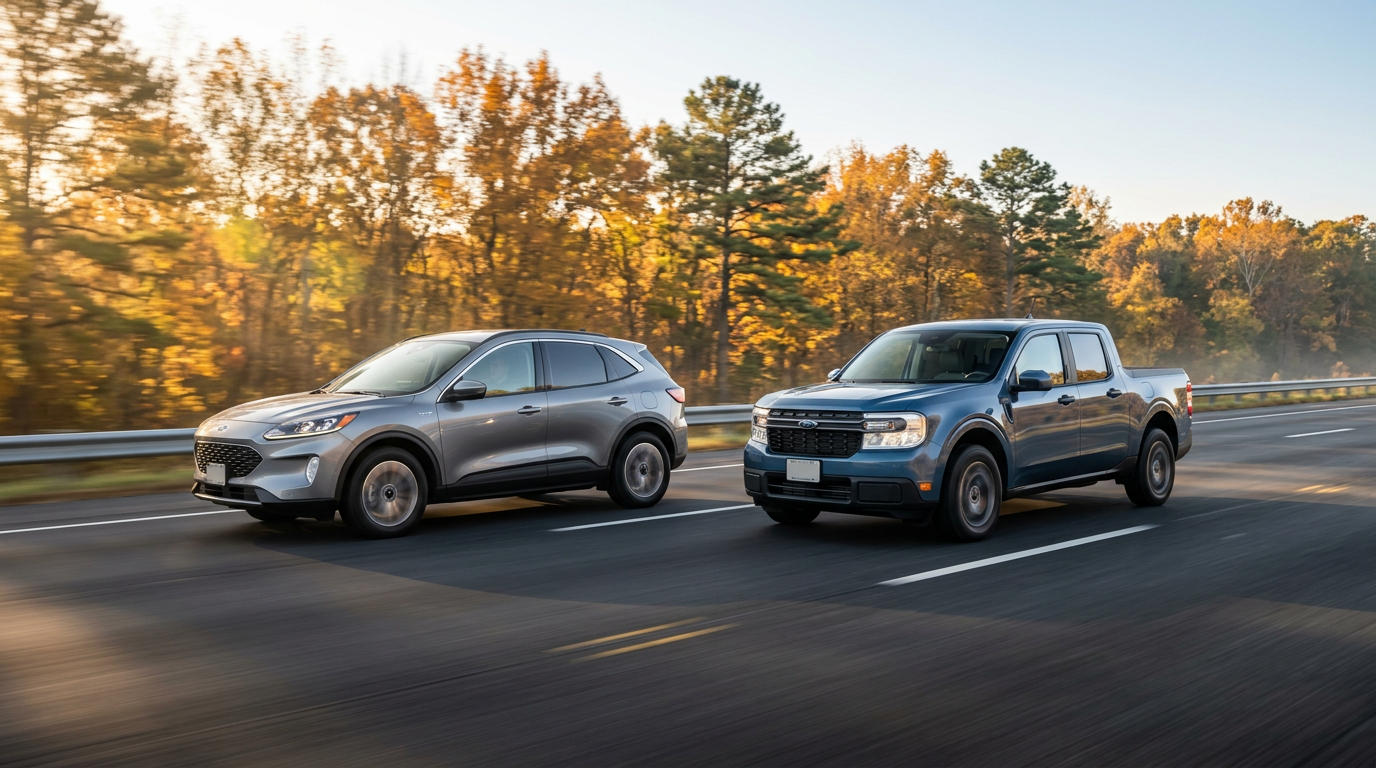
How Do You Prepare a Ford SUV for a Long Highway Road Trip?

Preparing a Ford SUV for a long highway road trip requires verifying key mechanical systems 1 to 2 weeks prior to departure. A proper pre-trip preparation includes inspecting engine oil and coolant levels, testing battery charge health, verifying tire inflation pressures and tread depth, inspecting brake system components, and checking wiper blades and washer fluid. Ensuring these critical maintenance items are addressed helps maintain highway efficiency and prevents unexpected breakdowns during holiday travel. Long-distance highway driving puts sustained stress on your vehicle's engine, cooling loop, braking hardware, and tires. While modern Ford crossovers and SUVs are built for durability, long stretches of high-speed travel accelerate heat buildup in essential fluids and expose hidden mechanical vulnerabilities. Drivers heading out on extended journeys from Middletown often encounter shifting weather conditions and dense highway traffic along major Mid-Atlantic transit corridors. Addressing proactive maintenance measures well before loading up luggage ensures your vehicle delivers efficient operation, predictable stopping power, and added confidence. A comprehensive pre-trip strategy focuses on three core pillars: fluid health, tire integrity, and electrical reliability. Engine oil lubricates critical internal components under sustained high RPMs, while engine coolant regulates temperatures during prolonged highway cruising. Tires require precise inflation pressure adjustments to match vehicle load weights and protect against uneven tread wear or thermal blowout risks. Finally, modern Ford SUVs rely heavily on stable battery voltage to power advanced driver-assist systems and onboard infotainment features. Our certified service facility is conveniently situated to serve regional drivers. If you need expert guidance before setting out on your trip, contact our team at (302) 734-0444 or stop by our Dover service location for professional support. Table of Contents What Essential Maintenance Items Should Be Checked Before Holiday Travel? Which Ford SUV Driver Assistance Features Best Reduce Highway Fatigue? How Does Ford Intelligent AWD and Drive Modes Handle Snow and Ice on Long Trips? Does Ford Protect Roadside Assistance Cover Towing and What Emergency Gear Should You Pack? Common Questions About Pre-Trip Ford SUV Maintenance Schedule Your Pre-Trip SUV Inspection at Winner Ford What Essential Maintenance Items Should Be Checked Before Holiday Travel? A thorough pre-trip maintenance check requires inspecting six vital vehicle areas: engine oil, cooling system fluid, braking components, tire condition, battery health, and visibility equipment. Inspecting these core components ensures your vehicle remains reliable, efficient, and safe across hundreds of highway miles. Maintenance Component Pre-Trip Inspection Focus Recommended Action Threshold Engine Oil Level, color, and monitor status Replace if under 20% oil life Cooling System Coolant level and hose integrity Top off with OEM approved coolant Braking System Pad thickness and rotor condition Replace pads measuring under 3mm Tires PSI rating and tread depth Set PSI to door-jamb specification Battery & Electrical Voltage output and terminal corrosion Test battery if older than 3 years Wiper Blades & Washer Blade wear and reservoir fluid Install fresh all-weather blades Engine oil plays a primary role in protecting internal components during high-speed highway travel. If your vehicle's Intelligent Oil-Life Monitor shows less than 20 percent oil life remaining, scheduling an oil and filter change before your trip prevents breakdown of essential lubricants mid-journey. Cooling systems must also be checked for proper coolant mixture levels and hose elasticity to guard against engine overheating in heavy highway traffic. Tire safety is equally essential for long-distance travel. Inspect tread depth using a digital gauge to ensure adequate wet-weather grip, and set cold inflation pressures strictly to the specifications listed on your vehicle's driver-side door jamb. Underinflated tires generate excess heat at highway speeds, reducing fuel efficiency and increasing the risk of tread separation. Brakes should be evaluated for pad thickness and rotor smoothness to ensure rapid, linear stopping performance when fully loaded with passengers and cargo. Our service advisors usually recommend booking a pre-trip check 1 to 2 weeks before heading out for the holidays, which leaves plenty of time to address brake wear or battery issues without any last-minute stress. You can conveniently prepare your SUV by scheduling a pre-trip inspection online. Our certified technicians use factory-approved replacement parts directly from our genuine Ford parts department to keep your vehicle performing at factory standards. Which Ford SUV Driver Assistance Features Best Reduce Highway Fatigue? Ford driver assistance technologies reduce long-distance driving fatigue by automating speed control, steering adjustments, and lane positioning on eligible highways. Features like Adaptive Cruise Control, Lane-Centering Assist, and available Ford BlueCruise hands-free driving significantly lighten driver workload during extended road trips. Sustained highway travel requires constant physical adjustments and mental focus. Ford Co-Pilot360® packages advanced safety features that actively assist the driver: Adaptive Cruise Control with Stop-and-Go: Automatically maintains a preset distance from the vehicle ahead, adjusting speed down to a complete stop in congestion and resuming set speeds when traffic clears. Lane-Centering Assist: Uses forward-facing cameras to detect lane markings, providing continuous steering support to keep the vehicle centered within its lane. Speed Sign Recognition: Monitors posted speed limits and can automatically adjust cruise settings to match legal speed changes along highway routes. In-Lane Repositioning: Subtly shifts your SUV away from oversized vehicles in adjacent lanes, providing extra lateral clearance when passing semi-trucks. Lane Change Assist: Executes controlled lane changes on hands-free highways when the driver activates the turn signal switch, provided the adjacent lane is clear. For ultimate long-distance comfort, available Ford BlueCruise offers true hands-free highway driving on over 130,000 miles of pre-mapped divided highways designated as Blue Zones across North America. The system uses an infrared driver-facing camera to track eye gaze and head position, ensuring the driver remains attentive to the road ahead while the vehicle manages steering, acceleration, and braking. Driver assistance features are widely available across our SUV lineup. For example, the 2026 Ford Explorer features standard Ford Co-Pilot360® Assist+ technology and offers standard 6-passenger seating with 16 cubic feet of rear cargo space, making it a capable long-distance highway vehicle for growing families. How Does Ford Intelligent AWD and Drive Modes Handle Snow and Ice on Long Trips? Ford Intelligent AWD automatically continuously monitors traction conditions and seamlessly redistributes torque between front and rear wheels to maintain stability on snowy or icy highways. Unlike traditional four-wheel-drive systems, Intelligent AWD operates without driver intervention and automatically disconnects the rear driveline when traction is secure to optimize fuel economy. On long holiday trips where winter weather can develop unexpectedly, drivetrain intelligence makes a measurable difference in control and efficiency. Traditional 4WD systems use a manual transfer case that locks front and rear axles at fixed 50/50 torque splits. While effective for heavy off-road crawling, mechanical 4WD causes drivetrain binding on dry highway pavement and requires manual engagement when conditions change. Ford Intelligent AWD continuously evaluates throttle position, wheel speed, and steering angle hundreds of times per second. When driving along flat suburban roads in Smyrna during winter, the system delivers power efficiently while remaining ready to engage rear-wheel torque instantly if patches of black ice or slush are detected. To further enhance winter capability, Ford SUVs equipped with the Terrain Management System™ offer selectable drive modes specifically calibrated for frozen roads: Slippery Mode: Adjusts throttle response to prevent wheel spin, optimizes transmission shift points, and increases traction control sensitivity on icy or wet pavement. Deep Snow/Sand Mode: Tailors engine output and allows controlled wheel slip to build momentum through packed snow drift accumulation. Normal Mode: Prioritizes balanced handling and maximizes fuel economy during dry highway conditions by decoupling rear-drive components when AWD is unnecessary. Compact options like the 2026 Ford Escape feature available Intelligent AWD paired with an efficient 1.5L EcoBoost® engine paired with an 8-speed automatic transmission, delivering competitive EPA-estimated fuel economy while delivering robust winter traction. Does Ford Protect Roadside Assistance Cover Towing and What Emergency Gear Should You Pack? Ford Protect Roadside Assistance includes complimentary 24/7 towing coverage across all 50 U.S. states and Canada to the nearest authorized Ford dealership during warranty periods and active coverage plans. The program provides comprehensive emergency assistance including flat tire changes, battery jump-starts, fuel delivery, and lockout services to keep your journey moving smoothly. Having manufacturer-backed coverage ensures that if an unexpected mechanical issue occurs out of state, your vehicle is transported directly to factory-trained technicians who use genuine OEM parts. If you experience a roadside emergency during your travel, you can reach immediate assistance directly through Ford Roadside Assistance at (800) 241-3673. In addition to manufacturer roadside coverage, packing a dedicated highway emergency kit inside your SUV provides crucial safety protection while waiting for roadside support. Essential emergency roadside items include: Portable lithium battery jump starter pack or heavy-duty jumper cables Compact 12-volt air compressor and digital tire pressure gauge LED flashlight with extra batteries or USB rechargeable power bank Reflective warning triangles or LED emergency road flares Complete automotive first-aid kit with sterile bandages and antiseptic wipes Heavy thermal blankets, emergency water bottles, and non-perishable snacks Common Questions About Pre-Trip Ford SUV Maintenance How far in advance of a road trip should pre-trip maintenance be scheduled? Q: How far in advance of a road trip should pre-trip maintenance be scheduled? Scheduling pre-trip service 1 to 2 weeks prior to your departure date provides adequate time to perform a multi-point inspection and resolve any identified mechanical repairs without rushing. Booking service early ensures necessary replacement parts can be sourced and installed, preventing last-minute travel delays. How much does a dealer multi-point pre-trip inspection cost for a Ford SUV? Q: How much does a dealer multi-point pre-trip inspection cost for a Ford SUV? A standalone multi-point pre-trip inspection pricing may vary at certified Ford dealerships. However, this comprehensive check may be included with certain routine maintenance packages, depending on current dealership offerings. Should engine oil be changed right before a long highway road trip? Q: Should engine oil be changed right before a long highway road trip? Engine oil should be changed before a long trip if your vehicle's Intelligent Oil-Life Monitor shows less than 20 percent remaining life or if your planned travel mileage will exceed your upcoming service interval. Fresh motor oil ensures maximum engine thermal protection during sustained highway speeds. What maintenance schedule should be followed before a long highway trip in a 2027 Ford SUV? Q: What maintenance schedule should be followed before a long highway trip in a 2027 Ford SUV? Owners should follow the maintenance schedule specified in their vehicle's owner manual, checking fluid levels, tire condition, and brake wear before setting out. Any routine maintenance items due within 1,000 miles of your planned travel distance should be completed prior to departure. Does Ford Protect Roadside Assistance cover rental vehicle reimbursement during unexpected roadside breakdowns? Q: Does Ford Protect Roadside Assistance cover rental vehicle reimbursement during unexpected roadside breakdowns? Ford Protect extended service plans frequently include trip interruption coverage and rental vehicle reimbursement options when mechanical repairs require an overnight stay far from home. Specific coverage terms depend on your active plan tier, so checking plan details prior to traveling is recommended. Schedule Your Pre-Trip SUV Inspection at Winner Ford Taking time to prepare your Ford SUV before holiday highway travel ensures reliable vehicle performance, protects passenger safety, and prevents unexpected travel delays. From checking vital fluid levels and tire pressures to confirming battery health and driver-assist calibration, thorough maintenance allows you to drive confidently on every leg of your journey. Our factory-trained technicians at Winner Ford are ready to inspect your crossover or SUV and perform all necessary maintenance using genuine factory parts. Visit us at our Dover service facility or speak directly with our service team by calling (302) 734-0444 to schedule your pre-trip service appointment today. © 2026 Winner Ford. All rights reserved. Vehicle specification data © JATO Dynamics Limited.
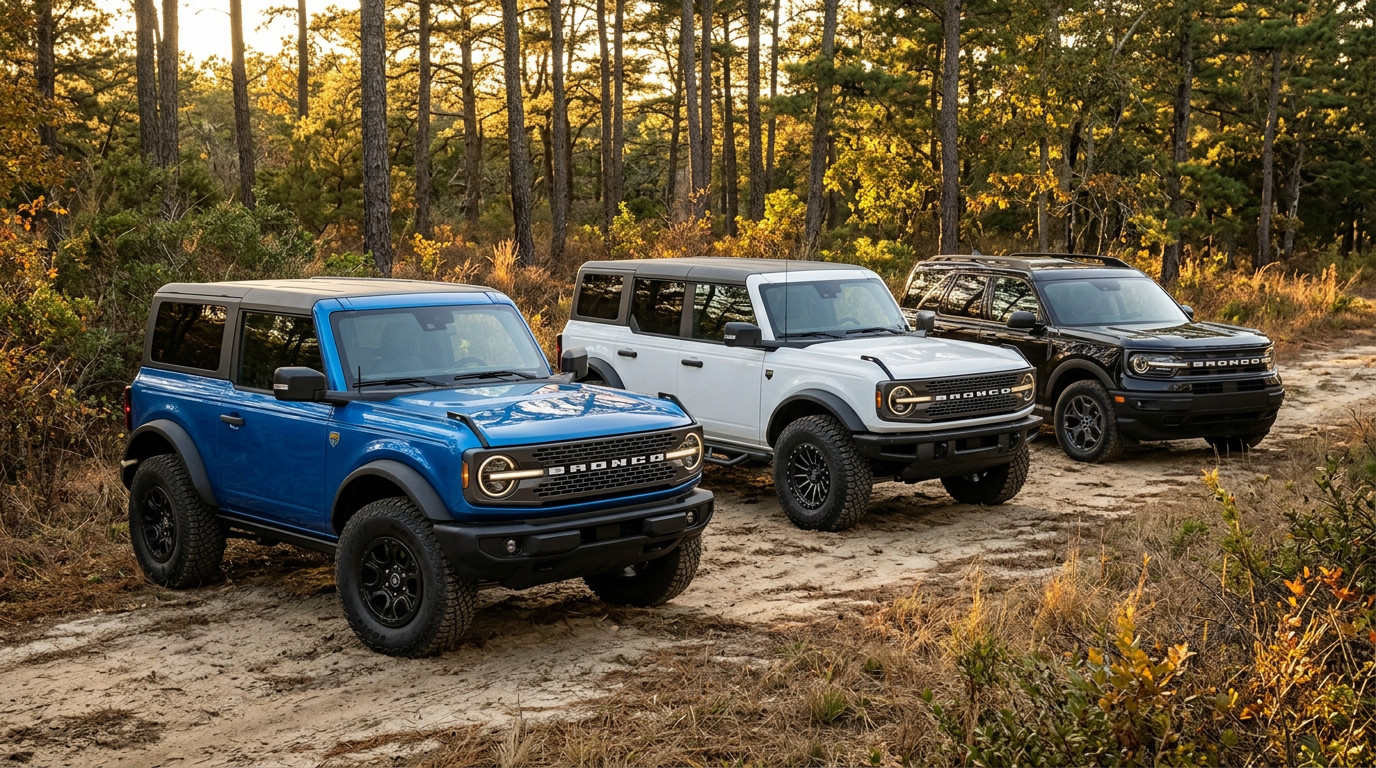
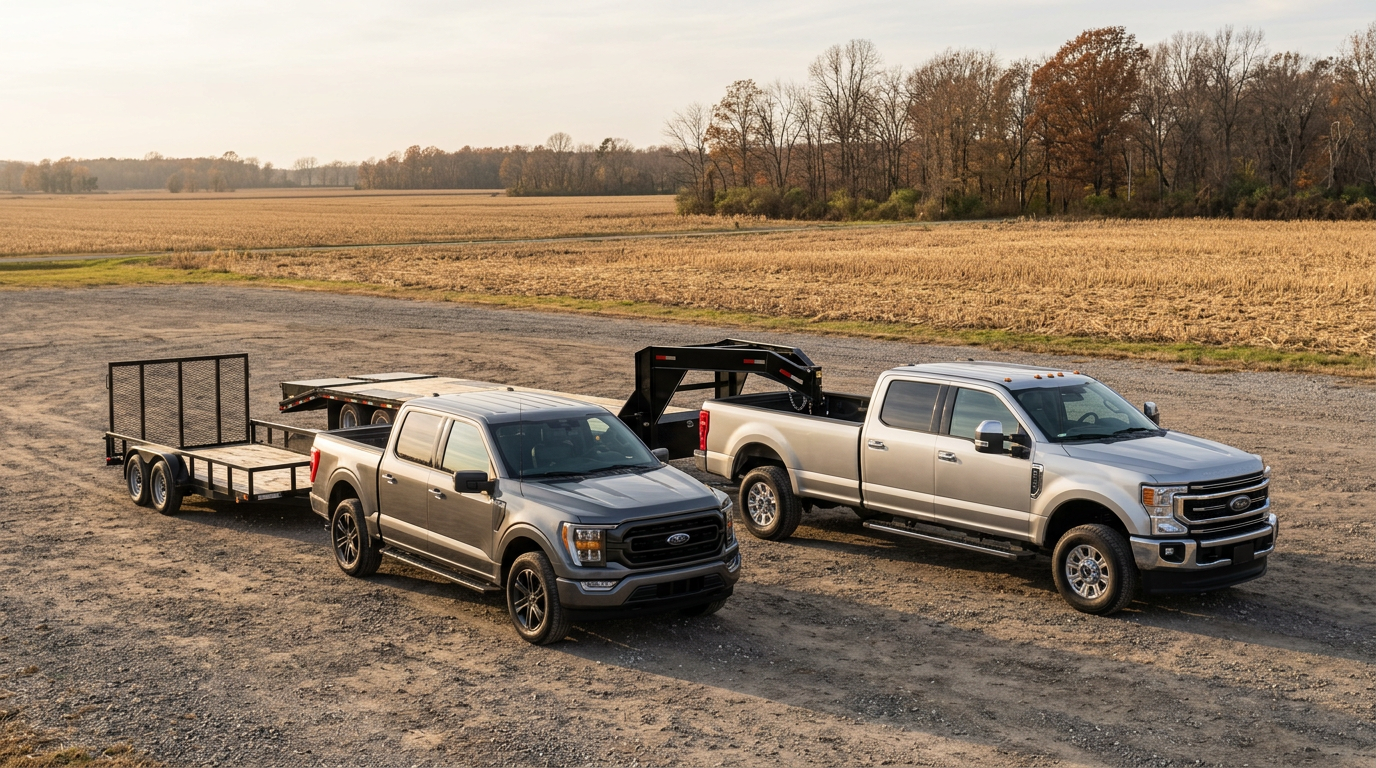
F150 Towing

2026 Ford F-150 vs Ram 1500 and Toyota Tundra

The 2026 Ford F-150 wins this full-size pickup comparison by delivering an unmatched combination of 400 hp and 500 lb-ft of torque from its standard 3.5L EcoBoost® V6 engine, up to 2,000 lbs of payload capacity, and up to 10,800 lbs of towing capability. While the 2026 Ram 1500 and 2026 Toyota Tundra present notable features, neither matches the F-150's balance of work-ready capability, advanced technology, and high resale value. Dependable Performance Meets Modern Technology. It makes the Ford F-150 a strong choice for both work and daily driving. Table of Contents Which Pickup Is Best for Middletown Families and Small Business Owners in 2026? Pricing and Trim Value for Buyers Comparing the 2026 Ford F-150, Ram 1500, and Toyota Tundra Cargo Capacity and Passenger Comfort for Commuters and Weekend Adventurers Performance and Fuel Efficiency Tailored to Smyrna's Rolling Hills and Outdoor Lifestyle Technology Features That Enhance Commuting and Recreation Experience Safety Systems Designed to Protect Families and Workers Warranty, Maintenance, and Service Options Supporting Long-Term Ownership Frequently Asked Questions from Truck Buyers Final Verdict: Why the 2026 Ford F-150 Is the Smartest Choice Which Pickup Is Best for Middletown Families and Small Business Owners in 2026? The 2026 Ford F-150 is the strong choice for truck buyers needing a versatile half-ton pickup that transitions seamlessly from weekday job-site demands to weekend family adventures. Engineered with a high-strength aluminum-alloy body and a fully boxed steel frame, the F-150 provides the structural integrity required for heavy hauling while maintaining responsive driving dynamics. For local business owners and families navigating the rolling hills and river valleys around Middletown, having a truck that effortlessly handles heavy equipment trailers on Friday and a family boat on Saturday is essential. Under the hood, the standard 3.5L EcoBoost® V6 engine produces a commanding 400 hp and 500 lb-ft of torque, paired with a 10-speed SelectShift® automatic transmission. This powertrain provides immediate low-end grunt for towing heavy loads up steep inclines. By comparison, the standard 3.6L eTorque V6 engine in the 2026 Ram 1500 Big Horn/Lone Star generates just 305 hp and 271 lb-ft of torque, leaving drivers short on passing power when carrying full passenger loads or cargo. The 2026 Toyota Tundra 1794 Edition offers a 3.4L twin-turbo V6 producing 389 hp and 479 lb-ft of torque, but its lower payload rating of 1,665 lbs restricts its utility for serious work applications compared to the F-150's 2,000-lb payload rating. Beyond raw power, the F-150 excels as a family vehicle. The SuperCrew cab configuration provides generous interior dimensions, including 43.9 inches of front legroom and 43.6 inches of rear legroom. Whether loading car seats or carrying adult crew members, the cab offers ample space for all occupants. Furthermore, buyers who want to explore pre-owned full-size options can check our selection of pre-owned inventory to evaluate how Ford's long-term durability and value hold up over time. Pricing and Trim Value for Buyers Comparing the 2026 Ford F-150, Ram 1500, and Toyota Tundra The 2026 Ford F-150 King Ranch lineup delivers premium luxury equipment and severe-duty capability at manufacturer-listed MSRP pricing. The F-150 King Ranch SuperCrew 5-1/2’ Box with rear-wheel drive starts at a base MSRP of $65,825. Step up to four-wheel drive, and the King Ranch 4x4 SuperCrew 5-1/2’ Box starts at $69,625 base MSRP, while the longer King Ranch 4x4 SuperCrew 6-1/2’ Box starts at $69,930 base MSRP. All F-150 configurations share a standard $2,795 destination charge. When evaluating competing models in this executive luxury segment, the 2026 Toyota Tundra 1794 Edition CrewMax 5.5' Bed carries a base MSRP of $64,380, while the 4WD version starts at $67,380, and the 4WD 6.5' Bed trim starts at $67,710. The 2026 Ram 1500 Big Horn/Lone Star trims start lower at $50,680 for the 4x4 Quad Cab 6'4", $53,430 for the 4x4 Crew Cab 5'7", and $56,570 for the 4x4 Crew Cab 6'4" (all with a $2,795 destination charge), but achieving similar executive convenience features requires adding thousands of dollars in option packages. Ford packs immense standard value into every King Ranch trim level. Standard equipment includes Norias/Mesa leather bucket seats with active massage functionality, heated and ventilated front seating, heated rear seats, dual-zone automatic climate control, a 12-inch central display screen, and a premium 14-speaker Bang & Olufsen sound system with subwoofer. Furthermore, Ford offers the available 3.5L PowerBoost™ Hybrid V6 engine option (producing 430 hp and 570 lb-ft of torque) and the Pro Power Onboard 7.2 kW generator system, turning the truck into a mobile power station. Shoppers interested in exploring standard features and optional packages across the lineup can view our complete new-vehicle inventory. To assist with budgeting, buyers can value your trade-in online before visiting our showroom, or submit a credit application to secure personalized financing options. Pricing Manufacturer-listed pricing per trim, across compared vehicles. 2026 Ford F-150 Trim MSRP 2026 Ram 1500 Trim MSRP 2026 Toyota Tundra Trim MSRP King Ranch SuperCrew 5-1/2’ Box $65,825 Big Horn/Lone Star 4x4 Quad Cab 6'4" $50,680 1794 Edition CrewMax 5.5' Bed $64,380 King Ranch 4x4 SuperCrew 5-1/2’ Box $69,625 Big Horn/Lone Star 4x4 Crew Cab 5'7" $53,430 1794 Edition 4WD CrewMax 5.5' Bed $67,380 King Ranch 4x4 SuperCrew 6-1/2’ Box $69,930 Big Horn/Lone Star 4x4 Crew Cab 6'4" $56,570 1794 Edition 4WD CrewMax 6.5' Bed $67,710 Cargo Capacity and Passenger Comfort for Commuters and Weekend Adventurers The 2026 Ford F-150 delivers standard-setting interior comfort and bed utility, providing class-leading flexibility for daily commuting and weekend trips. In the cabin, passengers enjoy 40.8 inches of front headroom, 40.4 inches of rear headroom, 62.5 inches of front hip room, and 62.6 inches of rear hip room. Combined with shoulder room measurements of 66.7 inches up front and 66.0 inches in the rear, the SuperCrew cab easily accommodates five adults without feeling cramped. When it comes to truck bed capacity, bed length choices directly impact cargo volume and hauling efficiency: The F-150 King Ranch 4x4 SuperCrew 6-1/2’ Box provides a spacious about 62 cu ft of cargo volume, paired with a maximum payload allowance of 2,000 lbs and a curb weight of 5,143 lbs. The F-150 King Ranch 4x4 SuperCrew 5-1/2’ Box offers about 53 cu ft of cargo volume, a 1,945-lb payload allowance, and a curb weight of 5,096 lbs. The Ram 1500 Crew Cab 5'7" provides about 54 cu ft of cargo bed volume with a 1,734-lb payload capacity and a curb weight of 5,166 lbs, while its 6'4" bed yields about 61 cu ft of cargo space and a 1,727-lb payload limit. The Toyota Tundra 1794 Edition features a heavier curb weight of 5,730 lbs, which restricts its payload capacity to 1,665 lbs. Interior storage in the F-150 is equally thoughtful, featuring a full floor console, overhead storage, large door pockets, and a fold-flat rear floor with under-seat storage for securing valuable tools and sports gear. Owners looking to customize their truck's cargo bed with drop-in bedliners, tonneau box covers, or heavy-duty floor mats can consult our genuine Ford parts department for OEM accessories engineered specifically for their model. Dimensions & Capacity Capacity and dimensions by trim Specification 2026 Ford F-150 2026 Ram 1500 2026 Toyota Tundra Seating 5 5 5 Cargo 52.8 cu ft 53.8 cu ft — Curb weight 5,096 lbs 5,166 lbs 5,730 lbs Towing 10,400 lbs 6,370 lbs 11,050 lbs Payload 1,945 lbs 1,734 lbs 1,665 lbs Performance and Fuel Efficiency Tailored to Smyrna's Rolling Hills and Outdoor Lifestyle The 2026 Ford F-150 delivers strong towing strength and passing power without sacrificing everyday fuel economy, making it ideal for the commuting patterns and recreational demands around Smyrna. Powered by the standard 3.5L EcoBoost® V6 engine, the F-150 produces 400 hp at 5,000 rpm and 500 lb-ft of torque at 3,500 rpm. This broad torque curve enables smooth acceleration under heavy loads, allowing the F-150 King Ranch 4x4 SuperCrew 6-1/2’ Box to achieve a maximum braked towing capacity of 10,800 lbs. In terms of fuel efficiency, the EPA rates the F-150 King Ranch 4x4 configurations at 17 city MPG, 23 highway MPG, and 19 combined MPG, with a calculated fuel tank range of 684 miles from its 36-gallon main fuel tank. The rear-wheel-drive F-150 King Ranch SuperCrew 5-1/2’ Box achieves an even higher 25 highway MPG and 20 combined MPG, extending its driving range to 720 miles per tank. Comparing powertrain performance across rival models highlights key capability gaps: The standard Ram 1500 Big Horn/Lone Star 3.6L eTorque V6 generates only 305 hp and 271 lb-ft of torque. While it achieves 19 city / 24 hwy / 21 combined MPG, its towing capacity is limited to just 6,370 lbs. Upgrading the Ram 1500 to the 3.0L Hurricane I6 Twin Turbo increases output to 420 hp and 469 lb-ft of torque, yielding 17 city / 24 hwy / 19 combined MPG and an 8,160-lb towing capacity—still well short of the F-150's 10,800-lb towing limit. The Toyota Tundra's 3.4L twin-turbo V6 generates 389 hp and 479 lb-ft of torque, delivering 17 city / 22 hwy / 19 combined MPG with an 11,050-lb towing capacity, but its higher 5,730-lb curb weight reduces fuel range and agility on suburban streets. For drivers needing maximum off-road traction, the F-150 offers the available FX4 Off-Road Package, which adds heavy-duty suspension tuning, electronic locking rear differentials (available in 3.31, 3.55, or 3.73 axle ratios), skid plates, Drive Crawl Control, and Hill Descent Control. Engine & Performance Powertrain specs by trim Specification 2026 Ford F-150 2026 Ram 1500 2026 Toyota Tundra Engine 3.5L 3.6L 3.4L Horsepower 400 hp 305 hp 389 hp Torque 500 lb-ft 271 lb-ft 479 lb-ft Transmission SelectShift® automatic 8-speed ECT-i Drivetrain Four-wheel drive Four-wheel drive Four-wheel drive Fuel Economy Fuel economy and range by trim Specification 2026 Ford F-150 2026 Ram 1500 2026 Toyota Tundra MPG 17 city / 23 hwy / 19 combined 19 city / 24 hwy / 21 combined 17 city / 22 hwy / 19 combined Technology Features That Enhance Commuting and Recreation Experience Ford equips the 2026 F-150 with a state-of-the-art digital cockpit designed to serve as both an entertainment center and a mobile office. Every King Ranch trim comes standard with a 12-inch digital instrument cluster and a matching 12-inch central LCD touchscreen display powered by SYNC 4. The system features voice-activated 3D navigation with internet data feeds, 12 months of included traffic updates, wireless Apple CarPlay®, and wireless Android Auto™ integration. A key advantage for active truck owners is Ford's available Pro Power Onboard generator system. Available in 7.2 kW output on hybrid models, Pro Power Onboard turns the bed of the F-150 into a usable power outlet array capable of running heavy power tools, air compressors, or outdoor camping equipment directly from the vehicle's battery system. Neither the Ram 1500 nor the Toyota Tundra offers an integrated generator system with this level of electrical output. Audio performance is top-tier thanks to the standard 14-speaker Bang & Olufsen sound system with an integrated subwoofer and surround sound processing. Connectivity is seamless across the cabin, featuring two front USB ports, two rear USB ports, 12V power outlets, a wireless charging pad, an embedded 5G Wi-Fi hotspot (with an 84-month subscription included via Connectivity Package OTP), and over-the-air (OTA) software update capability to keep infotainment software current. Safety Systems Designed to Protect Families and Workers The 2026 Ford F-150 prioritizes passenger protection by combining advanced structural engineering with an extensive suite of active driver-assist technologies. Standard safety equipment includes six airbags (driver and front passenger front airbags, front side-impact airbags, and full-length side curtain airbags for front and rear outboard seating positions), along with height-adjustable seatbelts, pre-tensioners, and rear ISOFIX child seat anchor preparations. In federal safety testing, the F-150 earns a 5-star overall crash test rating from the NHTSA, including 5 stars in frontal and side impact protection. Active collision avoidance is managed by Ford's Pre-Collision Assist with Pedestrian Detection system. Functioning at speeds above 5 mph, this system monitors the roadway ahead, issuing visual and acoustic warnings if a potential collision is detected, and automatically applying emergency braking if the driver does not react. Additional driver assistance tech includes: BLIS® (Blind Spot Information System): Provides radar coverage along the sides of the truck and extends coverage along the full length of a towed trailer. Lane-Keeping System: Monitors lane markings and provides subtle steering inputs to keep the truck centered in its lane. Reverse Sensing System & 360-Degree Camera: Delivers full perimeter visibility with overhead guidelines on the 12-inch display screen to simplify maneuvering in tight parking spaces. Pro Trailer Backup Assist: Allows drivers to guide a trailer in reverse simply by turning an intuitive control knob on the dashboard while the system manages automatic steering inputs. Multi-Collision Braking: Automatically applies brake pressure after an initial impact to prevent secondary collisions. Warranty, Maintenance, and Service Options Supporting Long-Term Ownership Ford protects every 2026 F-150 with a comprehensive factory warranty package designed to deliver total peace of mind. The vehicle is covered by a 3-year/36,000-mile bumper-to-bumper warranty, a 5-year/60,000-mile powertrain warranty, a 5-year/36,000-mile paint warranty, and a 5-year/unlimited-mileage corrosion protection warranty. Models equipped with the 3.5L PowerBoost™ Hybrid V6 engine receive additional warranty coverage on hybrid battery components and electric drive systems for 8 years or 100,000 miles. Every new F-150 owner also receives 5 years or 60,000 miles of 24/7 roadside coverage. If you ever encounter a flat tire or mechanical issue on the road, help is always a phone call away via Ford Roadside Assistance: 1-800-241-3673. Manufacturer-backed roadside assistance ensures that certified technicians using genuine OEM parts perform all recovery services, protecting your vehicle's warranty status and long-term reliability. Routine maintenance is straightforward and convenient. When it comes time for factory-scheduled oil changes, tire rotations, brake inspections, or multi-point vehicle checks, owners can schedule your service appointment online to reserve a time slot with our factory-trained service technicians. Frequently Asked Questions from Truck Buyers Q: Is the 2026 Ford F-150 worth the investment over the Ram 1500 and Toyota Tundra? A: Yes, the 2026 Ford F-150 delivers strong long-term value by offering higher standard performance (400 hp and 500 lb-ft of torque), greater payload capacity (up to 2,000 lbs), and higher maximum towing ratings (up to 10,800 lbs on King Ranch models). When combined with exclusive features like Pro Power Onboard and higher overall resale value, the F-150 provides a more capable package for work and family life. Q: Which truck offers better towing and payload capability for work and recreation? A: The 2026 Ford F-150 leads this competitive group in functional hauling capability. The F-150 King Ranch 4x4 SuperCrew 6-1/2’ Box provides a 10,800-lb towing capacity and a 2,000-lb payload rating. The Toyota Tundra offers 11,050 lbs of towing capability, but its payload is limited to 1,665 lbs. The Ram 1500 Big Horn/Lone Star 3.6L eTorque V6 trails significantly with a 6,370-lb towing limit and a 1,734-lb payload rating. Q: What is the real-world fuel economy difference between these three trucks? A: The F-150 King Ranch 4x4 achieves an EPA-estimated 17 city / 23 hwy / 19 combined MPG, while the rear-wheel-drive King Ranch delivers up to 25 hwy MPG. The Ram 1500 eTorque V6 yields 19 city / 24 hwy / 21 combined MPG but sacrifices significant horsepower and towing strength. The Toyota Tundra 4WD delivers 17 city / 22 hwy / 19 combined MPG, making the F-150 the best balance of fuel efficiency and raw power. Q: Where can I test drive the 2026 Ford F-150 near me? A: You can test drive the 2026 Ford F-150 at Winner Ford, conveniently located at 591 S Dupont Hwy, Dover, DE 19901. You can find turn-by-turn driving directions to our showroom address online or give our sales team a quick call at (302) 734-0444 to schedule your personalized test drive appointment today. Final Verdict: Why the 2026 Ford F-150 Is the Smartest Choice When comparing performance, interior comfort, safety ratings, and functional utility, the 2026 Ford F-150 clearly stands above the 2026 Ram 1500 Pickup and 2026 Toyota Tundra. With its standard 400-hp 3.5L EcoBoost® V6 engine, 10-speed SelectShift® automatic transmission, class-leading payload capacities, and innovative mobile generator tech, the F-150 remains the benchmark of the full-size pickup segment. Here at Winner Ford, our family-owned dealership delivers a transparent and pressure-free car-buying experience. Schedule your test drive today and see why local families trust Winner Ford for all their vehicle needs. Stop by our showroom or contact our friendly sales team today to experience the 2026 Ford F-150 firsthand. © 2026 Winner Ford. All rights reserved. Vehicle specification data © JATO Dynamics Limited.
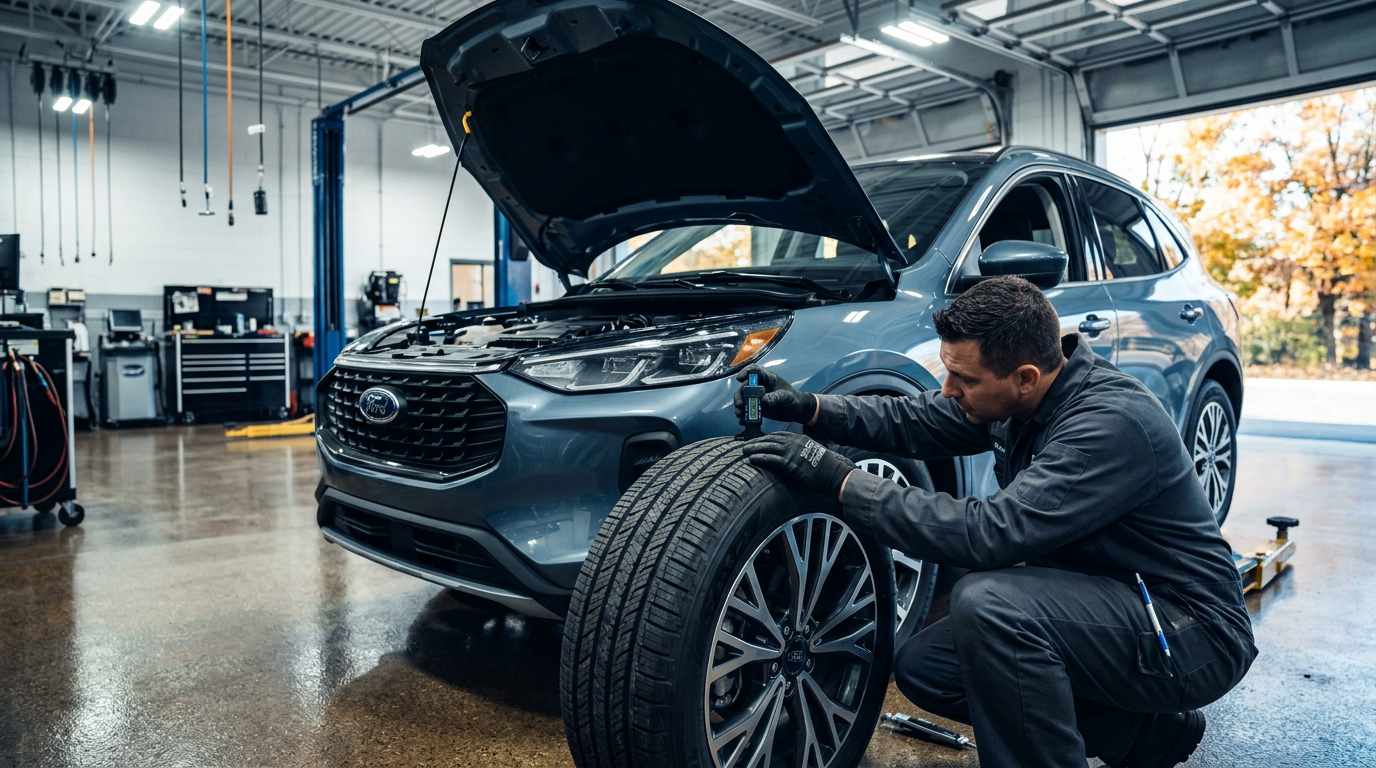
Ford Showrom

Unlock Massive Black Friday Ford Deals: 0% APR, Tax-Free Savings & More

The 2026 Ford F-150 wins this full-size pickup comparison by delivering an unmatched combination of 400 hp and 500 lb-ft of torque from its standard 3.5L EcoBoost® V6 engine, up to 2,000 lbs of payload capacity, and up to 10,800 lbs of towing capability. While the 2026 Ram Ram 1500 Pickup and 2026 Toyota Tundra present notable features, neither matches the F-150's balance of work-ready capability, advanced technology, and high resale value. Dependable Performance Meets Modern Technology. It makes the Ford F-150 the best choice for both work and daily driving. Table of Contents Which Pickup Is Best for Middletown Families and Small Business Owners in 2026? Pricing and Trim Value for Buyers Comparing the 2026 Ford F-150, Ram 1500, and Toyota Tundra Cargo Capacity and Passenger Comfort for Commuters and Weekend Adventurers Performance and Fuel Efficiency Tailored to Smyrna's Rolling Hills and Outdoor Lifestyle Technology Features That Enhance Commuting and Recreation Experience Safety Systems Designed to Protect Families and Workers Warranty, Maintenance, and Service Options Supporting Long-Term Ownership Frequently Asked Questions from Truck Buyers Final Verdict: Why the 2026 Ford F-150 Is the Smartest Choice Which Pickup Is Best for Middletown Families and Small Business Owners in 2026? The 2026 Ford F-150 is the superior choice for truck buyers needing a versatile half-ton pickup that transitions seamlessly from weekday job-site demands to weekend family adventures. Engineered with a high-strength aluminum-alloy body and a fully boxed steel frame, the F-150 provides the structural integrity required for heavy hauling while maintaining responsive driving dynamics. For local business owners and families navigating the rolling hills and river valleys around Middletown, having a truck that effortlessly handles heavy equipment trailers on Friday and a family boat on Saturday is essential. Under the hood, the standard 3.5L EcoBoost® V6 engine produces a commanding 400 hp and 500 lb-ft of torque, paired with a 10-speed SelectShift® automatic transmission. This powertrain provides immediate low-end grunt for towing heavy loads up steep inclines. By comparison, the standard 3.6L eTorque V6 engine in the 2026 Ram 1500 Big Horn/Lone Star generates just 305 hp and 271 lb-ft of torque, leaving drivers short on passing power when carrying full passenger loads or cargo. The 2026 Toyota Tundra 1794 Edition offers a 3.4L twin-turbo V6 producing 389 hp and 479 lb-ft of torque, but its lower payload rating of 1,665 lbs restricts its utility for serious work applications compared to the F-150's 2,000-lb payload rating. Beyond raw power, the F-150 excels as a family vehicle. The SuperCrew cab configuration provides generous interior dimensions, including 43.9 inches of front legroom and 43.6 inches of rear legroom. Whether loading car seats or carrying adult crew members, the cab offers ample space for all occupants. Furthermore, buyers who want to explore pre-owned full-size options can check our selection of pre-owned inventory to evaluate how Ford's long-term durability and value hold up over time. Pricing and Trim Value for Buyers Comparing the 2026 Ford F-150, Ram 1500, and Toyota Tundra The 2026 Ford F-150 King Ranch lineup delivers premium luxury equipment and severe-duty capability at competitive price points that maximize long-term ownership value. The F-150 King Ranch SuperCrew 5-1/2’ Box with rear-wheel drive starts at a base MSRP of $65,825. Step up to four-wheel drive, and the King Ranch 4x4 SuperCrew 5-1/2’ Box starts at $69,625 base MSRP, while the longer King Ranch 4x4 SuperCrew 6-1/2’ Box starts at $69,930 base MSRP. All F-150 configurations share a standard $2,795 destination charge. When evaluating competing models in this executive luxury segment, the 2026 Toyota Tundra 1794 Edition CrewMax 5.5' Bed carries a base MSRP of $64,380, while the 4WD version starts at $67,380, and the 4WD 6.5' Bed trim starts at $67,710. The 2026 Ram 1500 Big Horn/Lone Star trims start lower at $50,680 for the 4x4 Quad Cab 6'4", $53,430 for the 4x4 Crew Cab 5'7", and $56,570 for the 4x4 Crew Cab 6'4" (all with a $2,795 destination charge), but achieving similar executive convenience features requires adding thousands of dollars in option packages. Ford packs immense standard value into every King Ranch trim level. Standard equipment includes Norias/Mesa leather bucket seats with active massage functionality, heated and ventilated front seating, heated rear seats, dual-zone automatic climate control, a 12-inch central display screen, and a premium 14-speaker Bang & Olufsen sound system with subwoofer. Furthermore, Ford offers the available 3.5L PowerBoost™ Hybrid V6 engine option (producing 430 hp and 570 lb-ft of torque) and the Pro Power Onboard 7.2 kW generator system, turning the truck into a mobile power station. Shoppers interested in exploring standard features and optional packages across the lineup can view our complete new-vehicle inventory. To assist with budgeting, buyers can value your trade-in online before visiting our showroom, or submit a credit application to secure personalized financing options. Pricing Manufacturer-listed pricing per trim, across compared vehicles. 2026 Ford F-150 Trim MSRP 2026 Ram Ram 1500 Pickup Trim MSRP 2026 Toyota Tundra Trim MSRP King Ranch SuperCrew 5-1/2’ Box $65,825 Big Horn/Lone Star 4x4 Quad Cab 6'4" $50,680 1794 Edition CrewMax 5.5' Bed $64,380 King Ranch 4x4 SuperCrew 5-1/2’ Box $69,625 Big Horn/Lone Star 4x4 Crew Cab 5'7" $53,430 1794 Edition 4WD CrewMax 5.5' Bed $67,380 King Ranch 4x4 SuperCrew 6-1/2’ Box $69,930 Big Horn/Lone Star 4x4 Crew Cab 6'4" $56,570 1794 Edition 4WD CrewMax 6.5' Bed $67,710 Cargo Capacity and Passenger Comfort for Commuters and Weekend Adventurers The 2026 Ford F-150 delivers standard-setting interior comfort and bed utility, providing class-leading flexibility for daily commuting and weekend trips. In the cabin, passengers enjoy 40.8 inches of front headroom, 40.4 inches of rear headroom, 62.5 inches of front hip room, and 62.6 inches of rear hip room. Combined with shoulder room measurements of 66.7 inches up front and 66.0 inches in the rear, the SuperCrew cab easily accommodates five adults without feeling cramped. When it comes to truck bed capacity, bed length choices directly impact cargo volume and hauling efficiency: The F-150 King Ranch 4x4 SuperCrew 6-1/2’ Box provides a spacious about 62 cu ft of cargo volume, paired with a maximum payload allowance of 2,000 lbs and a curb weight of 5,143 lbs. The F-150 King Ranch 4x4 SuperCrew 5-1/2’ Box offers about 53 cu ft of cargo volume, a 1,945-lb payload allowance, and a curb weight of 5,096 lbs. The Ram 1500 Crew Cab 5'7" provides about 54 cu ft of cargo bed volume with a 1,734-lb payload capacity and a curb weight of 5,166 lbs, while its 6'4" bed yields about 61 cu ft of cargo space and a 1,727-lb payload limit. The Toyota Tundra 1794 Edition features a heavier curb weight of 5,730 lbs, which restricts its payload capacity to 1,665 lbs. Interior storage in the F-150 is equally thoughtful, featuring a full floor console, overhead storage, large door pockets, and a fold-flat rear floor with under-seat storage for securing valuable tools and sports gear. Owners looking to customize their truck's cargo bed with drop-in bedliners, tonneau box covers, or heavy-duty floor mats can consult our genuine Ford parts department for OEM accessories engineered specifically for their model. Dimensions & Capacity Capacity and dimensions by trim Specification 2026 Ford F-150 2026 Ram Ram 1500 Pickup 2026 Toyota Tundra Seating 5 5 5 Cargo 52.8 cu ft 53.8 cu ft — Curb weight 5,096 lbs 5,166 lbs 5,730 lbs Towing 10,400 lbs 6,370 lbs 11,050 lbs Payload 1,945 lbs 1,734 lbs 1,665 lbs Performance and Fuel Efficiency Tailored to Smyrna's Rolling Hills and Outdoor Lifestyle The 2026 Ford F-150 delivers superior towing strength and passing power without sacrificing everyday fuel economy, making it ideal for the commuting patterns and recreational demands around Smyrna. Powered by the standard 3.5L EcoBoost® V6 engine, the F-150 produces 400 hp at 5,000 rpm and 500 lb-ft of torque at 3,500 rpm. This broad torque curve enables smooth acceleration under heavy loads, allowing the F-150 King Ranch 4x4 SuperCrew 6-1/2’ Box to achieve a maximum braked towing capacity of 10,800 lbs. In terms of fuel efficiency, the EPA rates the F-150 King Ranch 4x4 configurations at 17 city MPG, 23 highway MPG, and 19 combined MPG, with a calculated fuel tank range of 684 miles from its 36-gallon main fuel tank. The rear-wheel-drive F-150 King Ranch SuperCrew 5-1/2’ Box achieves an even higher 25 highway MPG and 20 combined MPG, extending its driving range to 720 miles per tank. Comparing powertrain performance across rival models highlights key capability gaps: The standard Ram 1500 Big Horn/Lone Star 3.6L eTorque V6 generates only 305 hp and 271 lb-ft of torque. While it achieves 19 city / 24 hwy / 21 combined MPG, its towing capacity is limited to just 6,370 lbs. Upgrading the Ram 1500 to the 3.0L Hurricane I6 Twin Turbo increases output to 420 hp and 469 lb-ft of torque, yielding 17 city / 24 hwy / 19 combined MPG and an 8,160-lb towing capacity—still well short of the F-150's 10,800-lb towing limit. The Toyota Tundra's 3.4L twin-turbo V6 generates 389 hp and 479 lb-ft of torque, delivering 17 city / 22 hwy / 19 combined MPG with an 11,050-lb towing capacity, but its higher 5,730-lb curb weight reduces fuel range and agility on suburban streets. For drivers needing maximum off-road traction, the F-150 offers the available FX4 Off-Road Package, which adds heavy-duty suspension tuning, electronic locking rear differentials (available in 3.31, 3.55, or 3.73 axle ratios), skid plates, Drive Crawl Control, and Hill Descent Control. Engine & Performance Powertrain specs by trim Specification 2026 Ford F-150 2026 Ram Ram 1500 Pickup 2026 Toyota Tundra Engine 3.5L 3.6L 3.4L Horsepower 400 hp 305 hp 389 hp Torque 500 lb-ft 271 lb-ft 479 lb-ft Transmission SelectShift® automatic 8-speed ECT-i Drivetrain Four-wheel drive Four-wheel drive Four-wheel drive Fuel Economy Fuel economy and range by trim Specification 2026 Ford F-150 2026 Ram Ram 1500 Pickup 2026 Toyota Tundra MPG 17 city / 23 hwy / 19 combined 19 city / 24 hwy / 21 combined 17 city / 22 hwy / 19 combined Technology Features That Enhance Commuting and Recreation Experience Ford equips the 2026 F-150 with a state-of-the-art digital cockpit designed to serve as both an entertainment center and a mobile office. Every King Ranch trim comes standard with a 12-inch digital instrument cluster and a matching 12-inch central LCD touchscreen display powered by SYNC 4. The system features voice-activated 3D navigation with internet data feeds, 12 months of included traffic updates, wireless Apple CarPlay®, and wireless Android Auto™ integration. A key advantage for active truck owners is Ford's available Pro Power Onboard generator system. Available in 7.2 kW output on hybrid models, Pro Power Onboard turns the bed of the F-150 into a usable power outlet array capable of running heavy power tools, air compressors, or outdoor camping equipment directly from the vehicle's battery system. Neither the Ram 1500 nor the Toyota Tundra offers an integrated generator system with this level of electrical output. Audio performance is top-tier thanks to the standard 14-speaker Bang & Olufsen sound system with an integrated subwoofer and surround sound processing. Connectivity is seamless across the cabin, featuring two front USB ports, two rear USB ports, 12V power outlets, a wireless charging pad, an embedded 5G Wi-Fi hotspot (with an 84-month subscription included via Connectivity Package OTP), and over-the-air (OTA) software update capability to keep infotainment software current. Safety Systems Designed to Protect Families and Workers The 2026 Ford F-150 prioritizes passenger protection by combining advanced structural engineering with an extensive suite of active driver-assist technologies. Standard safety equipment includes six airbags (driver and front passenger front airbags, front side-impact airbags, and full-length side curtain airbags for front and rear outboard seating positions), along with height-adjustable seatbelts, pre-tensioners, and rear ISOFIX child seat anchor preparations. In federal safety testing, the F-150 earns a 5-star overall crash test rating from the NHTSA, including 5 stars in frontal and side impact protection. Active collision avoidance is managed by Ford's Pre-Collision Assist with Pedestrian Detection system. Functioning at speeds above 5 mph, this system monitors the roadway ahead, issuing visual and acoustic warnings if a potential collision is detected, and automatically applying emergency braking if the driver does not react. Additional driver assistance tech includes: BLIS® (Blind Spot Information System): Provides radar coverage along the sides of the truck and extends coverage along the full length of a towed trailer. Lane-Keeping System: Monitors lane markings and provides subtle steering inputs to keep the truck centered in its lane. Reverse Sensing System & 360-Degree Camera: Delivers full perimeter visibility with overhead guidelines on the 12-inch display screen to simplify maneuvering in tight parking spaces. Pro Trailer Backup Assist: Allows drivers to guide a trailer in reverse simply by turning an intuitive control knob on the dashboard while the system manages automatic steering inputs. Multi-Collision Braking: Automatically applies brake pressure after an initial impact to prevent secondary collisions. Warranty, Maintenance, and Service Options Supporting Long-Term Ownership Ford protects every 2026 F-150 with a comprehensive factory warranty package designed to deliver total peace of mind. The vehicle is covered by a 3-year/36,000-mile bumper-to-bumper warranty, a 5-year/60,000-mile powertrain warranty, a 5-year/36,000-mile paint warranty, and a 5-year/unlimited-mileage corrosion protection warranty. Models equipped with the 3.5L PowerBoost™ Hybrid V6 engine receive additional warranty coverage on hybrid battery components and electric drive systems for 8 years or 100,000 miles. Every new F-150 owner also receives 5 years or 60,000 miles of 24/7 roadside coverage. If you ever encounter a flat tire or mechanical issue on the road, help is always a phone call away via Ford Roadside Assistance: 1-800-241-3673. Manufacturer-backed roadside assistance ensures that certified technicians using genuine OEM parts perform all recovery services, protecting your vehicle's warranty status and long-term reliability. Routine maintenance is straightforward and convenient. When it comes time for factory-scheduled oil changes, tire rotations, brake inspections, or multi-point vehicle checks, owners can schedule your service appointment online to reserve a time slot with our factory-trained service technicians. Frequently Asked Questions from Truck Buyers Q: Is the 2026 Ford F-150 worth the investment over the Ram 1500 and Toyota Tundra? A: Yes, the 2026 Ford F-150 delivers superior long-term value by offering higher standard performance (400 hp and 500 lb-ft of torque), greater payload capacity (up to 2,000 lbs), and higher maximum towing ratings (up to 10,800 lbs on King Ranch models). When combined with exclusive features like Pro Power Onboard and higher overall resale value, the F-150 provides a more capable package for work and family life. Q: Which truck offers better towing and payload capability for work and recreation? A: The 2026 Ford F-150 leads this competitive group in functional hauling capability. The F-150 King Ranch 4x4 SuperCrew 6-1/2’ Box provides a 10,800-lb towing capacity and a 2,000-lb payload rating. The Toyota Tundra offers 11,050 lbs of towing capability, but its payload is limited to 1,665 lbs. The Ram 1500 Big Horn/Lone Star 3.6L eTorque V6 trails significantly with a 6,370-lb towing limit and a 1,734-lb payload rating. Q: What is the real-world fuel economy difference between these three trucks? A: The F-150 King Ranch 4x4 achieves an EPA-estimated 17 city / 23 hwy / 19 combined MPG, while the rear-wheel-drive King Ranch delivers up to 25 hwy MPG. The Ram 1500 eTorque V6 yields 19 city / 24 hwy / 21 combined MPG but sacrifices significant horsepower and towing strength. The Toyota Tundra 4WD delivers 17 city / 22 hwy / 19 combined MPG, making the F-150 the best balance of fuel efficiency and raw power. Q: Where can I test drive the 2026 Ford F-150 near me? A: You can test drive the 2026 Ford F-150 at Winner Ford, conveniently located at 591 S Dupont Hwy, Dover, DE 19901. You can find turn-by-turn driving directions to our showroom address online or give our sales team a quick call at (302) 734-0444 to schedule your personalized test drive appointment today. Final Verdict: Why the 2026 Ford F-150 Is the Smartest Choice When comparing performance, interior comfort, safety ratings, and functional utility, the 2026 Ford F-150 clearly stands above the 2026 Ram 1500 Pickup and 2026 Toyota Tundra. With its standard 400-hp 3.5L EcoBoost® V6 engine, 10-speed SelectShift® automatic transmission, class-leading payload capacities, and innovative mobile generator tech, the F-150 remains the benchmark of the full-size pickup segment. Here at Winner Ford, our family-owned dealership delivers a transparent and pressure-free car-buying experience. Schedule your test drive today and see why local families trust Winner Ford for all their vehicle needs. Stop by our showroom or contact our friendly sales team today to experience the 2026 Ford F-150 firsthand. © 2026 Winner Ford. All rights reserved. Vehicle specification data © JATO Dynamics Limited.
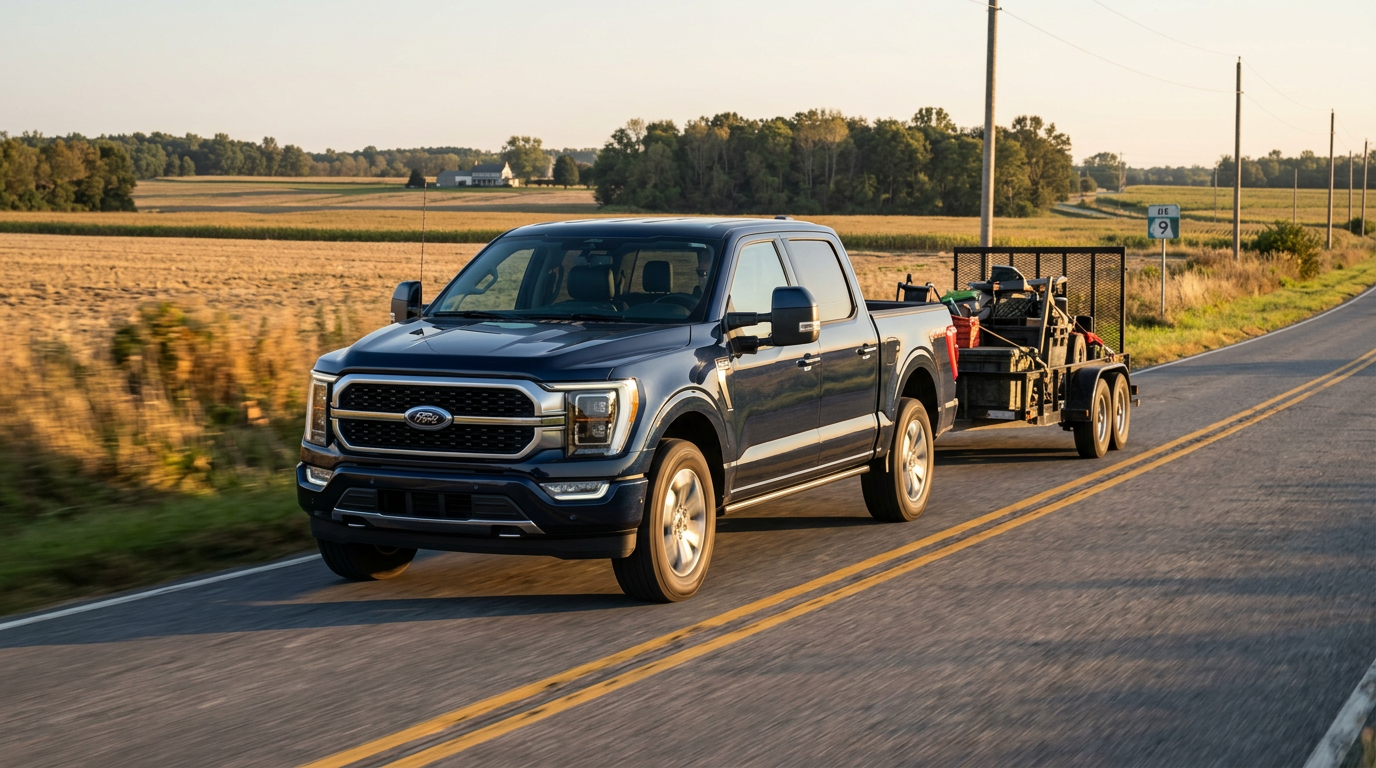
Ford Maverick and Escape hybrids

Which Ford Hybrid Is Best for Daily Commuting: Maverick Hybrid or Escape Hybrid?

The Ford Escape Hybrid is the better choice for daily commuters who prioritize a quiet, smooth ride and enclosed SUV cargo space, while the Ford Maverick Hybrid is ideal for drivers who need open-bed pickup versatility alongside exceptional fuel economy. Both vehicles deliver outstanding city and highway efficiency, but the Escape Hybrid excels in passenger refinement, whereas the Maverick Hybrid offers unmatched utility for hauling equipment and recreational gear. Selecting between these two efficient Ford vehicles comes down to how you balance daily passenger comfort against cargo capability. Commuters who frequently carry luggage, groceries, or family members appreciate the Escape Hybrid for its insulated cabin and refined crossover driving dynamics. Conversely, drivers who require a truck bed for DIY supplies, outdoor gear, or work tools find that the Maverick Hybrid delivers true pickup capability without sacrificing fuel economy. At Winner Ford, our team helps commuters find the ideal vehicle for their daily routine. You can explore both models in person at our showroom on Dupont Highway or give us a quick call at (302) 734-0444 to learn more about current availability and specs. Table of Contents What Powertrain and Engine Specs Drive the Maverick Hybrid and Escape Hybrid? What Are the Fuel Economy Ratings and Total Driving Range for Commuters? How Do Passenger Dimensions, Cargo Capacity, and Bed Utility Compare? Is the Maverick Hybrid or Escape Hybrid Better for Delaware Route 1 and US-13 Drives? What Is the Starting Price Difference and Are State Incentives Available? What Questions Do Drivers Ask Most About Ford Hybrids at Winner Ford? Finding Your Ideal Ford Hybrid at Winner Ford What Powertrain and Engine Specs Drive the Maverick Hybrid and Escape Hybrid? Both the Ford Maverick Hybrid and Ford Escape Hybrid are powered by a 2.5L Atkinson-cycle inline four-cylinder engine paired with a permanent-magnet electric motor and a smooth power-split electronic CVT ( eCVT). This hybrid architecture seamlessly blends gas and electric propulsion to optimize fuel efficiency during stop-and-go driving and high-speed cruising. In the Maverick Hybrid, the powertrain generates a combined 184 hp to 191 hp depending on configuration, delivering prompt acceleration for highway merging and city transit. The engine is paired with a compact lithium-ion battery pack mounted beneath the cabin floor, ensuring that hybrid components do not intrude upon passenger or cargo space. Standard on trims like the XL and Lariat, this system is engineered for long-term durability and low routine maintenance requirements. The Escape Hybrid utilizes a similar 2.5L hybrid powertrain setup that produces 192 hp combined. All Escape Hybrid models feature standard all-wheel drive ( AWD), providing added traction during rainy morning drives and winter weather conditions. The electronic control system continuously monitors throttle input and road conditions, switching between pure electric mode and combined gas-electric power without harsh shifts or mechanical shudder. Commuters comparing these models on a test drive usually note how imperceptible the transition between electric and gas power feels when accelerating onto highway traffic. To explore our latest lineup of hybrid vehicles, browse our selection of new Ford models online today. What Are the Fuel Economy Ratings and Total Driving Range for Commuters? The Ford Maverick Hybrid FWD achieves an EPA-estimated fuel economy rating of 42 mpg city / 35 mpg highway / 38 mpg combined, while the Ford Escape Hybrid AWD earns up to 39 mpg combined. With a 13.8-gallon fuel tank, the Maverick Hybrid offers an estimated driving range of roughly 510 miles per tank, while the Escape Hybrid's 14.3-gallon tank expands its total range to over 550 miles. Smyrna commuters traveling along suburban arterials and connecting routes benefit significantly from Ford's regenerative braking technology, which captures energy during deceleration to recharge the onboard battery. On high-speed stretches, both vehicles maintain impressive efficiency by relying on tuned gear ratios within the eCVT. Key efficiency benchmarks for both hybrid models include: Maverick Hybrid FWD: 42 mpg city / 35 mpg highway / 38 mpg combined Maverick Hybrid AWD: 40 mpg city / 34 mpg highway / 37 mpg combined Escape Hybrid AWD: up to 42 mpg city / 36 mpg highway / 39 mpg combined Maverick Fuel Tank Capacity: about 14 gallons Escape Fuel Tank Capacity: about 14 gallons During colder Mid-Atlantic winter months, hybrid vehicle drivers may observe a temporary 10% to 20% reduction in overall fuel efficiency. This occurs because the engine runs more frequently to generate cabin heat and warm the propulsion battery to optimal operating temperature. If you are shopping for a pre-owned efficient vehicle, take a look at our pre-owned vehicle inventory to compare high-efficiency options. How Do Passenger Dimensions, Cargo Capacity, and Bed Utility Compare? The Ford Escape Hybrid offers 104 cubic feet of total passenger volume with 38 cubic feet of rear enclosed cargo space, whereas the Ford Maverick Hybrid features 100 cubic feet of cabin space alongside a 4.5-foot open pickup bed with 33 cubic feet of volume. Choosing between them depends on whether your daily cargo requires weatherproof interior storage or open-air bed versatility. Inside the cabin, the Escape Hybrid accommodates up to five passengers with generous rear legroom and reclining second-row seats. Folding the 60/40 split-bench rear seat flat expands cargo capacity to 65 cubic feet, making it easy to carry large boxes, luggage, or sports equipment inside a secure, climate-controlled environment. The Maverick Hybrid comes exclusively as a four-door crew cab, offering comfortable seating for four adult passengers. Its primary advantage lies in the FLEXBED storage system, which features built-in slots to divide the bed, a multi-position tailgate, and optional 110V outlets. Standard payload capacity reaches 1,500 pounds, and when equipped with the available 4k Tow Package, the Maverick Hybrid can tow up to 4,000 pounds, compared to the Escape Hybrid's 1,500-pound tow rating. To maintain your hybrid vehicle's brake performance, tires, and cooling systems over time, you can easily schedule service online with our certified maintenance team. Is the Maverick Hybrid or Escape Hybrid Better for Delaware Route 1 and US-13 Drives? Delaware Route 1’s long highway stretches highlight the Ford Escape Hybrid’s quiet ride, whereas US-13’s mixed roads showcase the Maverick Hybrid’s stability and utility. Both vehicles excel on major commuter corridors, but their structural designs create distinct driving experiences. The Escape Hybrid is constructed with acoustic windshield glass and extra sound insulation, creating a serene cabin environment during high-speed highway travel. Standard all-wheel drive and driver-assist technologies—including lane-keeping assist, blind-spot monitoring, and available adaptive cruise control —help keep your family safe on busy multi-lane highways. Middletown drivers navigating suburban side streets and regional arterial routes find that the Maverick Hybrid handles more like a crossover than a conventional truck. Its compact footprint makes parking in crowded shopping centers effortless, while its stiffened suspension handles heavy bed payloads without compromising stability. Key highway commuting advantages include: Escape Hybrid: Quiet acoustic cabin, compliant ride quality, standard AWD, and standard Ford Co-Pilot360 safety tech. Maverick Hybrid: High seating visibility, durable interior materials, open-bed hauling capability, and responsive steering. If you are looking to upgrade your current commute, our team can help you value your trade-in vehicle to apply its market equity toward a new hybrid. What Is the Starting Price Difference and Are State Incentives Available? The Ford Maverick Hybrid starts at an entry-level MSRP of approximately $26,500 (subject to change) for the base XL trim, while the Ford Escape Hybrid starts around $33,500 (subject to change) for the well-equipped ST-Line Hybrid trim. This price difference reflects the Escape's higher level of standard interior amenities, enhanced sound dampening, and standard AWD. In terms of incentives, standard non-plug-in hybrid vehicles like the Maverick Hybrid and standard Escape Hybrid do not qualify for federal EV tax credits or state-level direct purchase rebates. However, buyers considering the plug-in hybrid (PHEV) variant of the Ford Escape may be eligible for rebates up to $1,000 through the Delaware Clean Transportation Incentive Program, depending on current state funding allocations. Every new Ford hybrid comes backed by comprehensive factory warranty protection: Bumper-to-Bumper Limited Warranty: 3 years / 36,000 miles Powertrain Limited Warranty: 5 years / 60,000 miles Hybrid Component Coverage: 8 years / 100,000 miles Corrosion Warranty: 5 years / unlimited miles To explore current financing information, you can prequalify for financing through our secure online portal before visiting us. What Questions Do Drivers Ask Most About Ford Hybrids at Winner Ford? Q: Does the Ford Maverick Hybrid require a plug-in charging station? No, the Ford Maverick Hybrid is a standard full hybrid vehicle that does not plug in. Its lithium-ion battery recharges automatically through internal generator power and regenerative braking while you drive. You simply fill the gas tank at any standard filling station and enjoy high fuel efficiency without needing home charging equipment. Q: How does the Ford Escape Hybrid perform during winter weather? The Ford Escape Hybrid performs exceptionally well in winter conditions thanks to its standard all-wheel drive system and electronic traction controls. The hybrid battery power distribution adjusts automatically to deliver power to the wheels with the most grip. While cold temperatures can temporarily reduce fuel economy by 10% to 20%, traction and road stability remain strong on snow and slush. Q: What is the maximum towing capacity of the Ford Maverick Hybrid? The Ford Maverick Hybrid comes standard with a 2,000-pound towing capacity, which is sufficient for small utility trailers, jet skis, or lightweight campers. When equipped with the optional 4k Tow Package, the Maverick Hybrid's maximum towing capacity increases to 4,000 pounds, providing substantial pulling power for larger recreational gear. Q: Which Ford hybrid trim offers the best value for daily commuters? For truck enthusiasts, the Maverick XLT trim represents an outstanding value by adding 17-inch aluminum wheels, power mirrors, cruise control, and keyless entry over the base XL. For crossover buyers, the Escape ST-Line Hybrid delivers excellent baseline comfort, including standard AWD, digital instrument displays, and advanced driver-assist features. Q: What routine maintenance is required for a Ford hybrid system? Ford hybrid powertrains require standard maintenance similar to gas vehicles, including tire rotations, cabin air filter replacements, and regular engine oil changes. Because regenerative braking performs much of the stopping work, hybrid brake pads and rotors often experience significantly less wear and last longer than those on traditional gasoline vehicles. Finding Your Ideal Ford Hybrid at Winner Ford Choosing between the Ford Maverick Hybrid and Ford Escape Hybrid comes down to your individual lifestyle, daily commute, and cargo needs. Whether you prefer the versatile open-bed utility of the Maverick or the smooth, enclosed refinement of the Escape, both vehicles represent dependable performance meets modern technology. Our team at Winner Ford is dedicated to helping you find the perfect Ford vehicle for your family. We invite you to visit our dealership in Dover to compare both hybrid models side by side, take a test drive, and explore our competitive financing options. You can also call our sales team directly or contact our genuine Ford parts department for accessories to customize your new hybrid vehicle today. © 2026 Winner Ford. All rights reserved.

Bronco over 4runner

How Does the Ford Bronco Compare to the Toyota 4Runner?

The Ford Bronco delivers superior off-road geometry, open-air modularity, and advanced trail hardware like hydraulic sway-bar disconnects, while the Toyota 4Runner focuses on higher maximum towing capacity and traditional closed-cabin utility. For drivers seeking removable doors, standard four-wheel drive across every model, and high-clearance factory suspension setups, the Bronco represents the more versatile choice for both extreme trail crawling and weekend family outings. Choosing between these two legendary body-on-frame midsize SUVs comes down to how you plan to explore. The Ford Bronco is engineered from the ground up to offer modular customization, allowing drivers to remove roof panels and doors within minutes for an immersive outdoor experience. In contrast, the Toyota 4Runner retains a fixed-roof structure with a power rear window. While the 4Runner provides strong overall utility, the Bronco combines modern turbocharged EcoBoost engine performance with tailored suspension packages that adapt effortlessly to both highway commutes and unpaved terrain. At Winner Ford, we make research straightforward and stress-free. Whether you are evaluating overall cabin volume, off-road equipment packages, or daily driving ergonomics, our sales team is here to guide you through every feature. Visit our showroom location on South Dupont Highway to explore the lineup in person, or reach out directly by calling our team for personalized assistance. Table of Contents Which Is Better Off-Road, the Ford Bronco or Toyota 4Runner? How Do Engine Options and Towing Capacity Compare Between the Bronco and 4Runner? What Are the Interior Dimensions and Cargo Flexibility of the Ford Bronco 4-Door? Ford Bronco vs Toyota 4Runner: Which Is Better for Daily Driving and Highway Comfort? What Special Financing Deals and Lease Offers Are Available for the Ford Bronco? Common Questions About the Ford Bronco vs Toyota 4Runner Test Drive Your New Ford Bronco at Winner Ford Which Is Better Off-Road, the Ford Bronco or Toyota 4Runner? The Ford Bronco offers superior off-road performance over the Toyota 4Runner thanks to steeper approach and departure angles, greater ground clearance, and an active hydraulic front sway-bar disconnect that operates under load. Equipped with the available Sasquatch Package, the Bronco provides up to 11.6 inches of ground clearance and 35-inch tires directly from the factory, out-specifying the 4Runner's peak factory clearance of 9.6 inches. Mechanical trail hardware defines how these vehicles handle technical obstacles. The Ford Bronco features an available semi-active hydraulic front sway-bar disconnect on trims like the Badlands, allowing maximum front axle articulation over uneven boulders even when the suspension is under tension. The Toyota 4Runner uses an electronic Stabilizer Disconnect Mechanism on select off-road grades, but the Bronco pairs its articulation system with available front and rear electronic locking front and rear axles for immediate traction distribution. Furthermore, the Bronco includes the Terrain Management System with up to 7 G.O.A.T. Modes (Goes Over Any Type of Terrain), optimizing throttle response, steering weight, and transfer case engagement for mud, sand, rocks, and slippery paths. Feature / Spec Ford Bronco (Sasquatch / Badlands) Toyota 4Runner (TRD Pro / Peak) Maximum Ground Clearance Up to 11.6 inches Up to 9.6 inches Maximum Water Fording Up to 33.5 inches Approx. 30 inches Front Sway-Bar Disconnect Hydraulic (disconnects under load) Electronic SDM Standard Modularity Removable Doors & Roof Fixed Roof & Power Rear Glass Front & Rear Differential Lockers Electronic Front & Rear Available Rear Locking Differential Standard Outdoor enthusiasts exploring wooded access routes and unpaved park trails around Middletown frequently appreciate the Bronco's tight turning radius enabled by Trail Turn Assist. By braking the inside rear wheel during low-speed maneuvers, the Bronco rotates effortlessly around narrow tree lines and tight switchbacks where longer SUVs struggle. When buyers compare trail-ready pre-owned options alongside new models, our selection of pre-owned vehicles gives Dover families flexible ways to step into a capable 4x4 built for weekend adventure. How Do Engine Options and Towing Capacity Compare Between the Bronco and 4Runner? With engine options ranging from a turbocharged four-cylinder to a high-output V6, the Ford Bronco caters to diverse driving needs, contrasting with the 4Runner's emphasis on towing capacity. The Bronco starts with a responsive 2.3L EcoBoost four-cylinder producing 300 horsepower and 325 lb-ft of torque, with an available 2.7L EcoBoost V6 pushing output to 330 horsepower and 415 lb-ft of torque. For drivers seeking maximum performance, the Bronco Raptor features an exclusive 3.0L EcoBoost V6 generating 418 horsepower and 440 lb-ft of torque. Transmission choices include a rock-crawling seven-speed manual with a crawler gear ratio or a smooth-shifting 10-speed automatic transmission. The Toyota 4Runner offers a standard i-FORCE 2.4L turbocharged four-cylinder with 278 horsepower and an available i-FORCE MAX hybrid producing 326 horsepower, paired exclusively with an 8-speed automatic. Ford Bronco 2.3L EcoBoost I-4: 300 hp / 325 lb-ft torque; 3,500 lb max towing capacity. Ford Bronco 2.7L EcoBoost V6: 330 hp / 415 lb-ft torque; 3,500 lb max towing capacity. Ford Bronco Raptor 3.0L EcoBoost V6: 418 hp / 440 lb-ft torque; 4,500 pounds max towing capacity. Toyota 4Runner i-FORCE 2.4L Turbo: 278 hp / 317 lb-ft torque; up to 6,000 lb towing capacity. Toyota 4Runner i-FORCE MAX Hybrid: 326 hp / 465 lb-ft torque; 5,800 to 6,000 lb towing capacity. While the 4Runner carries a higher maximum tow rating for heavy box trailers, the Bronco's EcoBoost engines deliver punchier acceleration for passing and merging, paired with chassis setups ideal for pulling midsize utility trailers, small boats, and camper rigs. Maintaining your vehicle's engine and drivetrain is simple with our certified technicians, and scheduling service online ensures your SUV remains operating at peak efficiency season after season. What Are the Interior Dimensions and Cargo Flexibility of the Ford Bronco 4-Door? The Ford Bronco 4-Door maximizes passenger headroom and versatile cargo utility with quick-release roof panels and washable interior materials. Front passengers enjoy up to 43.3 inches of headroom and 43.1 inches of legroom, while the second row provides 36.3 inches of legroom for comfortable family seating. Interior Dimension / Feature 4-Door Ford Bronco Specification Front Headroom (Soft Top) Up to 43.3 inches Front Legroom 43.1 inches Second-Row Legroom 36.3 inches Cabin Flooring Rubberized with Integrated Drains Seating Material Options Washable Marine-Grade Vinyl Cargo flexibility is where the Bronco stands out for active families. Available rubberized flooring with integrated drain plugs means you can hose out sand, mud, and trail debris after outdoor trips without harming the cabin. Optional marine-grade vinyl seating resists moisture and mildew, making it easy to maintain clean surfaces after weekend excursions. When driver advisors walk buyers through the vehicle on our showroom floor, families frequently examine the door removal process, noting how easily the frameless doors lift off and stow safely in dedicated storage bags. If you are thinking about upgrading your current vehicle for a trail-ready SUV, taking a moment to value your trade online provides an instant estimate you can apply toward your purchase. Ford Bronco vs Toyota 4Runner: Which Is Better for Daily Driving and Highway Comfort? The Ford Bronco delivers precise on-road steering and refined ride quality due to its independent front suspension paired with advanced dampening systems. Ford's High-Performance Off-Road Stability Suspension ( HOSS System) controls body roll on paved roads while absorbing harsh potholes, giving the Bronco a planted feel during daily highway travel. Inside the cabin, SYNC 4 technology centers around an available 12-inch touchscreen display with standard wireless Apple CarPlay and Android Auto integration. Drivers commuting daily along Route 1 from Smyrna appreciate how intuitive voice controls and clear digital graphics minimize distractions during morning traffic. Furthermore, Ford Co-Pilot360 driver-assist features—such as blind-spot monitoring and adaptive cruise control —help keep your family safe on long interstate drives and busy suburban corridors. Comfort & Tech Attribute Ford Bronco Toyota 4Runner Front Suspension Architecture Independent Front Suspension (IFS) Independent Front Suspension (IFS) Off-Road Stability Tuning HOSS Systems (1.0 through 4.0) Standard / Bilstein / FOX / OME Central Infotainment Display Standard 12-inch SYNC 4 Standard 8-inch / Available 14-in Wireless Smartphone Integration Standard Apple CarPlay & Android Standard Apple CarPlay & Android Driver-Assist Suite Ford Co-Pilot360 Technology Toyota Safety Sense 3.0 Whether you need all-weather floor liners, custom roof carriers for kayaks, or heavy-duty step bars for easier passenger entry, our dedicated Ford parts center stocks genuine Ford accessories designed specifically for your vehicle. What Special Financing Deals and Lease Offers Are Available for the Ford Bronco? Winner Ford offers competitive purchasing and leasing options through Ford Credit to fit the financial goals of Dover families. Options may vary based on current Ford Credit programs and lease offers; contact us for current financing and payment information. Our finance specialists work directly with you to structure transparent payment plans. Whether you plan to put down a cash deposit or leverage trade-in equity, we outline every option clearly. You can begin the process from the comfort of home by submitting an online credit application to secure pre-approval before visiting our dealership. Common Questions About the Ford Bronco vs Toyota 4Runner Q: Can the Ford Bronco doors and roof sections be stored inside the vehicle when removed? Yes, the 4-Door Ford Bronco is designed so that all four removed doors can be stored securely in the rear cargo area using available protective storage bags. Unlike competitors with bulky door hinges, the Bronco features frameless door glass and lightweight aluminum construction, making door removal and onboard storage manageable for one person. Q: Does the Ford Bronco require premium fuel to reach its maximum horsepower ratings? The Ford Bronco EcoBoost engines are engineered to run safely on regular 87-octane fuel. However, peak output figures—such as 300 horsepower on the 2.3L EcoBoost four-cylinder and 330 horsepower on the 2.7L EcoBoost V6 —are achieved using 91-octane or higher premium fuel. Using regular fuel results in a slight reduction in peak power without harming engine longevity. Q: What is the difference between Ford G.O.A.T. Modes and Toyota Multi-Terrain Select? Ford's Terrain Management System with G.O.A.T. Modes automatically adjusts multiple vehicle parameters—including throttle mapping, transmission shift points, steering effort, traction control sensitivity, and four-wheel-drive engagement—with a single dial rotation. While Toyota's Multi-Terrain Select focuses primarily on wheel slip regulation, G.O.A.T. Modes tailor the entire vehicle chassis behavior for specific terrains like Sand, Slippery, Rock Crawl, or Mud/Ruts. Q: Is the Ford Bronco front stabilizer bar disconnect electronic or hydraulic? The Ford Bronco utilizes a semi-active hydraulic front stabilizer bar disconnect on Badlands and Raptor trims. This hydraulic design allows the system to disconnect under full load when the vehicle suspension is articulation-bound, enabling immediate axle flex on steep inclines where electronic mechanical disconnects can bind up. Q: How does the Ford Bronco Trail Turn Assist feature function on tight off-road trails? Trail Turn Assist engages during low-speed, high-steering-angle maneuvers in four-wheel-drive modes. By automatically applying the inside rear brake, the system holds that tire static, allowing the Bronco to pivot around it. This reduces the turning radius significantly on narrow trails, preventing the need for multi-point turns in tight off-road environments. Test Drive Your New Ford Bronco at Winner Ford The best way to evaluate the Ford Bronco against the competition is from behind the wheel. Our local sales team at Winner Ford is ready to walk you through trim details, demonstrate door and roof removal, and set up a personalized test drive. Visit our showroom conveniently located at 591 S Dupont Hwy, Dover, DE 19901, or call us directly at (302) 734-0444 to speak with a representative. You can also browse our current inventory of new Ford Bronco models online right now to find the exact trim, color, and option package for your next journey. © 2026 Winner Ford. All rights reserved.

Winner_Ford_2026_Selldown_Event

How Can You Save During the Winner Ford of Dover 2026 Selldown Event?

You save during the Winner Ford of Dover 2026 Selldown Event by combining direct factory retail rebates, dealer invoice discounts, promotional financing rates down to 0% APR through Ford Credit, and enhanced trade-in allowances on remaining 2026 model-year vehicles. These stackable incentives reduce total acquisition costs on in-stock trucks, SUVs, and crossovers while current inventory remains available. Our annual 2026 Selldown Event represents the final dealership clearance period for 2026 Ford models. Factory incentives are structured to clear remaining allocation, offering maximum value across popular trim levels. Whether you need a work-ready truck or a spacious vehicle for daily driving, these factory-backed programs deliver substantial savings before incoming model-year inventory replaces current stock. To secure these limited-time clearance offers, drivers can visit our showroom on South Dupont Highway or speak directly with our sales team by calling (302) 734-0444. Early participation guarantees the broadest selection of vehicle trims, exterior colors, and optional equipment packages. Table of Contents What Financing Rates and Rebates Are Offered During 2026 Ford Clearance Events? How Does Winner Ford Help You Estimate Trade-In Value Online? What Are the Listed Prices and Offers for In-Stock 2026 Ford Models? Where Is Winner Ford Located and What Are the Hours? How Do You Qualify for Ford Credit Financing and Stackable Incentives? Quick Answers for 2026 Ford Clearance Shoppers Schedule Your 2026 Ford Clearance Test Drive Today What Financing Rates and Rebates Are Offered During 2026 Ford Clearance Events? Ford Credit delivers promotional interest rates as low as 0% APR for 60 months on select 2026 models, including qualifying configurations of the 2026 Ford F-150, 2026 Ford Explorer, and 2026 Ford Super Duty regular cab and supercab trucks. Customer cash rebates ranging from $1,000 retail customer cash to $2,000 retail customer cash are available on select trims, alongside additional $500 retail bonus cash allowances on targeted inventory. Customer incentives during end-of-year clearance events vary by vehicle model line and buyer qualification. Standard customer cash rebates provide direct price reductions off the manufacturer's suggested retail price ( MSRP), while special financing programs lock in low interest charges over traditional loan terms. For shoppers considering pre-owned alternatives alongside new clearance stock, exploring our pre-owned vehicle inventory offers additional choices with transparent value. Incentive packages are designed around key buyer priorities, pairing rugged durability with practical everyday tech: Promotional Financing: 0% APR financing options for up to 60 months on high-demand trucks and three-row SUVs for qualified buyers through Ford Credit. Direct Customer Cash: Stackable retail cash allowances applied at purchase to reduce overall principal balances. Specialized Rebates: First responder and military appreciation bonuses that can be applied to qualifying purchases. Trade-In Support: Supplementary trade allowances that increase the total credit applied toward a new 2026 model. How Does Winner Ford Help You Estimate Trade-In Value Online? Our online appraisal framework delivers an immediate vehicle valuation by aggregating regional market transactions through industry appraisal databases including Black Book, TradePending, J.D. Power, and Kelley Blue Book. Entering your vehicle's VIN, mileage, condition details, and option packages generates an accurate market trade estimate within minutes. Using our online trade-in appraisal tool allows shoppers to establish realistic equity expectations before stepping onto the lot. The appraisal engine evaluates historical sales figures, local supply levels, and current market demand across central Delaware to ensure competitive valuations. To maximize your vehicle appraisal figure during the clearance event, consider these preparation steps: Gather key documentation, including your vehicle title, current registration, maintenance records, and all spare key fobs. Complete a quick interior and exterior cleaning to present the vehicle in its best physical condition. Review mechanical components, ensuring minor maintenance items are up to date and no dashboard warning lights are active. Finalize an in-person physical verification with our appraisal team, who confirm option packages and issue a firm written trade offer. What Are the Listed Prices and Offers for In-Stock 2026 Ford Models? In-stock 2026 models feature reduced clearance pricing below standard MSRP, reflecting combined retail customer cash and dealer discounts. For example, an in-stock 2026 Ford Bronco Base with an MSRP of $55,185 is listed at a final clearance price of $52,087, incorporating $2,000 retail customer cash and $500 retail bonus cash. Similarly, an in-stock 2026 Ford Maverick XLT listed at $37,345 MSRP features a final price of $36,178 after applying a $1,000 retail customer cash allowance. Our current inventory highlights dependable performance meets modern technology across every vehicle category. Busy commuters and growing households can explore our complete new Ford inventory to compare feature packages, driver-assist systems, and powertrain options. Vehicle Model Standard MSRP Clearance Price Applied Rebates & Bonuses Key Capability Specs 2026 Ford Bronco Base $55,185 MSRP $52,087 $2,000 customer cash + $500 bonus cash 2.3L EcoBoost engine, 4x4 drivetrain, 10-speed automatic transmission 2026 Ford Maverick XLT $37,345 MSRP $36,178 $1,000 customer cash 2.0L EcoBoost engine, FWD drivetrain, 1,500 lb payload capacity 2026 Ford Escape ST-Line Clearance Pricing View Online Model-Specific Retail Cash 1.5L EcoBoost engine, SYNC 4 infotainment, Ford Co-Pilot360 2026 Ford Explorer XLT Clearance Pricing View Online 0% APR or Retail Cash 2.3L EcoBoost engine, 3.58 rear axle ratio, 3-row seating Vehicle feature highlights across our selldown lineup include advanced safety tech like blind-spot monitoring, pre-collision assist with automatic emergency braking, and adaptive cruise control, all engineered to help keep your family safe on daily trips. Where Is Winner Ford of Dover Located and What Are the Hours? Winner Ford is situated at 591 S Dupont Hwy, Dover, DE 19901, conveniently positioned along US Route 13 in central Delaware. Located near major state government offices and First State Heritage Park, our showroom offers accessible access for state employees, coastal highway travelers, and regional residents seeking clearance pricing. Our sales showroom operates Monday through Saturday from 9:00 AM to 8:00 PM, providing broad evening availability for working professionals and families. Drivers coming from Middletown via US Route 301 or Delaware Route 1 can reach our central showroom in approximately 30 minutes, allowing ample time for a thorough walk-around and test drive. Visitors entering our showroom experience a welcoming sales environment where experienced product specialists assist with vehicle feature demonstrations, spec walk-throughs, and option comparisons. The showroom features comfortable consultation lounges, accessible vehicle displays, and dedicated finance offices designed for comfortable, low-stress discussions. How Do You Qualify for Ford Credit Financing and Stackable Incentives? Qualifying for Ford Credit's lowest promotional rates, such as 0% APR financing, typically requires a Tier 1 credit profile with a FICO score of 720 or higher and a balanced debt-to-income ratio. Tier 2 and Tier 3 credit profiles may also qualify for competitive clearance rates, variable term arrangements, and structured incentive combinations based on underwriting review. Stacking incentives allows eligible buyers to combine standard retail cash allowances with specialized programs, such as trade-in bonuses or military appreciation cash. Program guidelines dictate which offers can be combined; for instance, certain promotional 0% APR finance terms may replace base retail customer cash, while specific trade allowances remain stackable across both options. Completing an online credit application ahead of your visit streamlines the approval process and establishes clear purchasing boundaries. When you prepare for your showroom consultation, bring these required underwriting documents: Recent pay stubs or verified income documentation covering the last 30 days. A current utility bill or bank statement confirming your physical residential address. Valid government-issued identification and current driver's license. Current auto insurance policy details and provider contacts. Shoppers seeking personalized assistance can give our finance team a call or visit our dealership address to review credit pre-qualification options tailored to individual financial goals. Quick Answers for 2026 Ford Clearance Shoppers Q: How long do clearance incentives last during the selldown event? Incentives during the 2026 Selldown Event run through the official promotional period or until remaining 2026 inventory is sold out. Factory rebates and promotional APR programs through Ford Credit are updated on fixed monthly schedules. Securing an in-stock vehicle early ensures maximum vehicle selection and guarantees current program pricing. Q: Can I combine trade-in bonus cash with 0% APR financing? Certain trade-in customer cash offers can be stacked with promotional APR rates, depending on specific Ford Credit program rules for each model line. While some standalone cash-back offers are mutually exclusive with 0% APR financing, trade equity and specialized bonus cash programs frequently apply alongside special interest rates. Q: What documentation do I need to complete a trade-in and purchase in one visit? Completing a trade-in and purchase on the same day requires bringing the physical title for your trade vehicle (or lienholder payoff information), current registration, valid driver's license, auto insurance card, and all sets of original vehicle keys. Having these documents ready allows our team to finalize paperwork efficiently. Q: Are commercial trucks like the Super Duty included in clearance event rates? Yes, select 2026 Super Duty regular cab and supercab models qualify for promotional financing rates and commercial buyer incentives during the clearance event. Commercial purchasers may also take advantage of Section 179 tax deduction eligibility for vehicles with a GVWR over 6,000 lbs placed in service for business use during the current tax year. Q: Does Winner Ford of Dover assist buyers with lower credit scores during clearance events? Winner Ford works with buyers across diverse credit backgrounds by partnering with Ford Credit and regional financial institutions. Buyers with FICO scores below Tier 1 thresholds can access tailored financing solutions, flexible down payment options, and term structures designed to fit individual budget requirements. Schedule Your 2026 Ford Selldown Event Test Drive Today The 2026 Selldown Event offers a limited opportunity to secure leftover 2026 Ford inventory with substantial factory rebates, promotional interest rates, and enhanced trade allowances. Inventory levels change daily as buyers take advantage of end-of-year pricing structures. Taking the next step is straightforward and convenient. Browse our current clearance selection online, calculate your estimated trade equity, and complete a secure finance application from home. When you are ready to experience dependable performance and modern interior comfort firsthand, visit our team for a personalized test drive. Flexible Financing Designed for Dover Families makes acquiring your next Ford vehicle straightforward and transparent. Keep Your Vehicle Running Strong Keep your vehicle performing at its best with our service team: Schedule Service Parts Department © 2026 Winner Ford. All rights reserved.

Winner_Ford_of_Dover_Ford_Dealership

Where Can You Find Ford Dealerships in Delaware?

Delaware features authorized Ford dealerships positioned along major highway corridors, with central retail operations anchored directly in Dover along South Dupont Highway to serve capital-region and statewide drivers. Finding a full-service Ford dealer in central Delaware provides immediate access to the entire lineup of new Ford trucks, SUVs, and cars, alongside comprehensive pre-owned vehicle sales, factory-certified service, and OEM replacement parts. For drivers searching for reliable transportation and specialized automotive care, our centrally located showroom at our Dover showroom location delivers complete vehicle purchasing and ownership support. Positioned along the major commercial arterial of central Delaware, our dealership connects local government workers, daily commuters, and active families with dependable American engineering. Whether you require a durable work truck for regional job sites or a fuel-efficient SUV for everyday travel, our dealership serves as a single source for vehicle sales, trade-in valuations, and authorized vehicle care. To confirm vehicle availability, inquire about specific trim configurations, or speak with an experienced automotive advisor, you can give our team a direct call. Our dedicated staff provides transparent information and straightforward guidance to make every step of your vehicle search straightforward and rewarding. Table of Contents What Ford Dealership Operates Directly in Dover and How Do You Contact Sales? Can Out-of-State Residents Buy a Vehicle in Delaware and What Are the Tax Rules? How Does the Ford F-150 Compare to the Chevrolet Silverado 1500 in Towing and Capability? How Do the Ford Explorer 4WD Options and Mustang Mach-E Fast Charging Capability Perform? Frequently Asked Questions About Ford Vehicles and Delaware Dealership Purchases Start Your Next Journey at Winner Ford What Ford Dealership Operates Directly in Dover and How Do You Contact Sales? Winner Ford of Dover operates directly in Dover at 591 S Dupont Hwy, providing complete access to the full Ford lineup, certified automotive service, genuine parts, and personalized sales assistance. Located in the heart of central Delaware near major state government facilities and commercial districts, our dealership offers a welcoming environment where shoppers can explore new and pre-owned vehicles without purchase pressure. Our sales department is structured to assist buyers at every stage of their research and purchase process. Whether you are looking for a brand-new Ford F-150, a versatile Explorer, or a high-quality pre-owned car from various manufacturers, our showroom floor features a diverse selection tailored to diverse driving needs. For shoppers interested in pre-owned value, our quality pre-owned inventory includes thoroughly inspected vehicles and Certified Pre-Owned Ford models that come with extended warranty protection and detailed vehicle history reports. Contacting our sales team is direct and convenient. Visitors can stop by our Dover showroom during regular business hours to browse available vehicles, take a test drive on local roads, or speak directly with our friendly product specialists. You can also reach our sales department by phone at (302) 734-0444 to check current inventory stock, verify model options, or arrange a personal vehicle demonstration tailored to your schedule. Can Out-of-State Residents Buy a Vehicle in Delaware and What Are the Tax Rules? Out-of-state residents can purchase a vehicle at a Delaware Ford dealership, but their home state's vehicle sales tax, titling fees, and registration rules apply when registering the car back home. While Delaware does not charge a state sales tax on vehicle purchases, out-of-state buyers do not avoid their home state's sales tax obligations simply by purchasing across state lines. When an out-of-state resident buys a vehicle at Winner Ford, our administrative team coordinates with the buyer's home state DMV to calculate the exact sales tax, title, and registration fees required for proper titling. Our dealership collects those home-state taxes and fees at the time of sale and manages the official documentation transfer so the vehicle is legally registered where the owner resides. Temporary transit tags are issued to allow buyers to drive their new vehicle home legally while permanent license plates and registration paperwork are processed. For Delaware residents, vehicle purchases are subject to the Delaware motor vehicle documentation fee of 4.25% of the vehicle purchase price or NADA value, rather than a traditional state sales tax. Buyers trading in a vehicle receive a taxable base reduction, meaning the trade-in allowance is subtracted from the purchase price before the document fee is computed. Whether you live locally or commute from surrounding states, our finance department handles all registration logistics efficiently so you can explore our new Ford lineup with total peace of mind. Out-of-state buyers visiting our lot often ask how state tax collection works before completing their paperwork, and our team ensures full transparency on every line item. Should your vehicle ever require routine maintenance or warranty repairs down the road, you can easily schedule certified maintenance at our state-of-the-art service center. How Does the Ford F-150 Compare to the Chevrolet Silverado 1500 in Towing and Capability? The Ford F-150 and the Chevrolet Silverado 1500 differ in towing capability with a maximum conventional towing capacity of up to 13,500 pounds when properly configured, compared to the Silverado 1500's maximum towing rating of 13,300 pounds. Built with a high-strength, military-grade aluminum-alloy body on a fully boxed steel frame, the F-150 delivers class-leading strength while optimizing overall weight for maximum towing efficiency and payload capability. Engine versatility represents another clear advantage for the Ford F-150. While the Chevrolet Silverado 1500 offers gas engines and a small turbodiesel option, the F-150 lineup features the advanced 3.5L PowerBoost Full Hybrid V6, generating 420 horsepower and 578 lb-ft of torque with a maximum conventional towing capacity of 12,400 pounds. For maximum payload performance, the F-150 equipped with the 5.0L Ti-VCT V8 engine supports a maximum payload rating of up to 2,445 pounds, helping contractors and heavy-duty haulers move gear and materials across job sites efficiently. Towing technology further sets the F-150 apart during daily work and recreational trailering: Pro Trailer Backup Assist: Allows drivers to steer a trailer turned in reverse using a simple dashboard knob. Pro Trailer Hitch Assist: Automatically aligns the truck's hitch ball with the trailer coupler at the touch of a button. SYNC 4 Infotainment: Features a standard 12-inch center display with intuitive smartphone integration for seamless route navigation. Truck buyers cross-shopping half-ton pickups routinely compare maximum conventional tow ratings before taking a test drive, and the F-150 offers competitive engineering and capability. If you are considering upgrading your current pickup, you can easily value your current vehicle online to see how your trade-in allowance can lower your initial purchase cost. How Do the Ford Explorer 4WD Options and Mustang Mach-E Fast Charging Capability Perform? The Ford Explorer comes available with Intelligent 4WD and the Terrain Management System, featuring up to six selectable drive modes—including Slippery and Trail modes—to maximize traction across changing road conditions and light-duty trail driving. Powered by a standard 2.3L EcoBoost four-cylinder engine producing 300 horsepower and 311 lb-ft of torque, the Explorer includes a standard Class III Trailer Tow Package capable of towing up to 5,000 pounds when properly equipped. For drivers seeking enhanced trail capability, the Explorer Tremor comes standard with Intelligent 4WD, an increased ride height, specially tuned suspension components, and Hill Descent Control. Off-road capability is matched by safety-focused design; driver-assist innovations like blind-spot monitoring and adaptive cruise control help keep your family safe on every commute. For electric vehicle enthusiasts, the all-electric Ford Mustang Mach-E delivers remarkable efficiency and rapid DC fast charging performance. Operating on a 150 kW DC fast charger, the Mustang Mach-E extended-range battery recharges from a 10% to 80% state-of-charge in approximately 36 minutes. Home charging is equally convenient; using a 240-volt charging outlet or home wall station allows owners to fully replenish battery range overnight. Key capability and performance highlights across both models include: Ford Explorer Towing: Standard 5,000-pound tow capacity with standard Class III towing hardware. Drive Modes: Up to six drive modes tailored for snow, rain, gravel, and highway cruising. Mach-E Charging: Rapid 10% to 80% DC fast charge capability in roughly 36 minutes. Mach-E Range: EPA-estimated driving ranges stretching between 280 and 320 miles depending on battery configuration. Whether maintaining an Explorer's four-wheel-drive system or adding utility accessories to a Mustang Mach-E, our certified technicians in our genuine OEM parts department supply authentic Ford components engineered specifically for your vehicle. Frequently Asked Questions About Ford Vehicles and Delaware Dealership Purchases Q: Does Delaware charge sales tax on new and used car purchases? Delaware does not assess a statewide sales tax on motor vehicle purchases. Instead, Delaware residents pay a mandatory motor vehicle documentation fee of 4.25% based on the vehicle purchase price or NADA book value, whichever is higher. Trading in a vehicle reduces the taxable amount before the document fee is calculated. Out-of-state buyers pay the sales tax and registration fees required by their home state where the vehicle will be registered. Q: Is Intelligent Four-Wheel Drive standard or optional on the Ford Explorer? Intelligent 4WD with the Terrain Management System is optional on rear-wheel-drive Explorer models equipped with the 2.3L EcoBoost engine and comes standard on select off-road configurations like the Explorer Tremor. Rear-wheel drive comes standard on entry-level models, providing responsive handling and balanced weight distribution for daily highway driving. Q: How fast can the Mustang Mach-E charge on a DC fast charger? When connected to a 150 kW DC fast-charging station, the Ford Mustang Mach-E equipped with an extended-range battery charges from a 10% to an 80% state-of-charge in approximately 36 minutes. On a standard Level 2 240-volt charger, the vehicle safely recovers its full driving range overnight while parked at home. Q: What towing assistance technology comes on the Ford F-150? The Ford F-150 offers advanced towing driver-assist technologies including Pro Trailer Backup Assist and Pro Trailer Hitch Assist. Pro Trailer Backup Assist allows the driver to guide trailer direction using a turn knob on the dashboard, while Pro Trailer Hitch Assist automatically controls steering, throttle, and braking to position the hitch ball under the trailer coupler. Q: What documents should out-of-state buyers bring to complete a purchase? Out-of-state vehicle buyers should bring a valid government-issued driver's license, current auto insurance documentation, and payment for the down payment or vehicle balance. If financing through the dealership, bringing recent pay stubs or proof of income helps streamline approval. When you are ready to explore payment solutions, you can complete our secure online credit application before visiting our showroom. Start Your Next Journey at Winner Ford of Dover Finding the ideal vehicle requires trusted advice, clear answers, and a dedicated local team committed to your long-term driving satisfaction. At Winner Ford, our family-owned dealership provides a welcoming, pressure-free showroom environment where you can explore the newest Ford trucks, rugged SUVs, and efficient electric vehicles at your own pace. Positioned conveniently in central Delaware, we serve working professionals, small businesses, and growing families across the capital region with complete sales, finance, and maintenance support. From evaluating the best-in-class towing of the Ford F-150 to discovering the spacious comfort and advanced safety technology of the Ford Explorer, our experienced product specialists are here to guide you toward the right model for your lifestyle. We offer financing options tailored to your needs, transparent trade-in valuations, and expert care from factory-trained service technicians using genuine OEM parts. Take the next step in your automotive journey today. You can get directions to visit our Dover dealership located at 591 S Dupont Hwy, or speak directly with a sales team member by giving us a call at (302) 734-0444. Let our team deliver the straightforward service and dependable quality you deserve. © 2026 Winner Ford. All rights reserved.

Winner_Ford_of_Dover_Used_Car_Buying_Guide

What Should You Check Before Buying a Used Car in Dover, DE?

Before buying a pre-owned vehicle, you should review a vehicle history report, inspect the frame and body, check tire wear and brake condition, verify service records, evaluate cabin electronics, and conduct a thorough road test. Confirming that the car passes state safety and emissions standards ensures dependable operation on every drive. Evaluating a pre-owned vehicle requires a methodical walk-around to confirm its safety and overall mechanical condition. Start by examining exterior body panels for inconsistent paint textures, misaligned gaps, or undercarriage rust that could signal past collision damage. Check fluid levels under the hood, noting the color and condition of engine oil, transmission fluid, and coolant. Inspect the tread depth and wear patterns on all four tires, as uneven wear often points to alignment or suspension issues. When you get inside the cabin, verify that electronic features operate properly. Test the climate control system, touchscreens, power windows, seat adjustments, and active safety systems like blind-spot monitoring and adaptive cruise control. During your road test, pay attention to engine responsiveness, transmission shift smoothness, brake pedal firmness, and steering feedback over varied pavement surfaces. State government employees and daily commuters in Dover need a vehicle that delivers steady fuel efficiency and complete comfort on everyday drives. Our team recommends verifying all maintenance records to ensure previous oil changes, fluid flushes, and scheduled services occurred on time. You can visit our showroom on South Dupont Highway to inspect high-quality pre-owned options, or reach out directly by giving our team a call at (302) 734-0444 to schedule a personalized consultation. Table of Contents What Is Considered Good Mileage for a Used Car? Is It Better to Buy a Used Car from a Dealer or a Private Seller in Delaware? How Can Buyers Determine Fair Market Value and Negotiate Used Car Pricing? How Do Delaware Document Fees, Registration Costs, and Taxes Impact Used Car Buyers? Are Factory Certified Pre-Owned Warranties Transferable to Subsequent Buyers? Common Questions About Buying a Used Car Drive Away with Confidence at Winner Ford What Is Considered Good Mileage for a Used Car? A standard benchmark for a used car is an average of 12,000 to 15,000 miles per year of age. Under this rule of thumb, a five-year-old pre-owned vehicle with 60,000 to 75,000 miles on the odometer is considered to have normal, acceptable mileage. While odometer numbers provide a starting point, vehicle condition, maintenance history, and driving conditions matter just as much as total mileage. A vehicle driven 80,000 miles mostly on open highways often experiences less engine and brake wear than a vehicle driven 50,000 miles in constant stop-and-go city traffic. Highway driving lets engines operate at consistent temperatures with fewer gear changes, preserving critical components over time. Modern engineering standards allow well-maintained vehicles to comfortably reach 150,000 to 200,000 miles without major mechanical failures. When evaluating pre-owned vehicles, look for models equipped with durable engine options like Ford EcoBoost technology, which balances responsive acceleration with engine longevity. Regular maintenance—such as timely oil changes, filter replacements, and transmission services—plays a far greater role in long-term reliability than the initial number on the dash. Low Mileage (Under 30,000 miles): Often commands higher pricing but comes with minimal component wear and remaining factory warranty coverage. Moderate Mileage (30,000 to 75,000 miles): Strikes a strong balance between initial cost savings, reliable performance, and remaining service life. Higher Mileage (75,000+ miles): Offers maximum affordability, making it ideal for budget-conscious buyers who prioritize consistent service records over low odometer readings. Exploring our pre-owned vehicle lineup gives you access to thoroughly inspected options across various mileage bands and price points. Is It Better to Buy a Used Car from a Dealer or a Private Seller in Delaware? Purchasing a used car from an established dealership offers vehicle reconditioning, structured consumer protections, flexible financing options, and trade-in convenience that private sales cannot match. While private sellers might list lower asking prices, those vehicles are sold strictly as-is, leaving buyers with no warranty protection or legal recourse. Dealerships perform detailed multi-point inspections on every vehicle before placing it on the lot. Factory-trained technicians inspect mechanical systems, replace worn brake pads or tires, recondition interior surfaces, and ensure all safety equipment meets strict standards. Dealerships also handle complex legal paperwork—including title transfers, lien payoffs, and registration processing—saving you time and preventing title defects. Private transactions carry inherent risks for buyers. Private sellers generally do not provide vehicle history reports, detailed repair records, or post-purchase protection. If a mechanical issue develops immediately after money changes hands, the buyer bears the full repair cost. Furthermore, private transactions require cash payments or securing independent personal loans, whereas dealerships partner with multiple financial institutions to craft payment structures customized for your family's budget. Families taking weekend trips to community parks around Middletown benefit from the added peace of mind that comes with a dealership-inspected vehicle. If you are comparing pre-owned value against updated technology, taking a look at our latest new vehicle selection helps clarify feature differences across model years. How Can Buyers Determine Fair Market Value and Negotiate Used Car Pricing? Determining a fair market price requires checking independent valuation tools like Kelley Blue Book, Edmunds, and NADA Guides against local market listings while factoring in vehicle condition, trim level, and total mileage. Buyers can typically negotiate between 3% and 7% off a dealer's listing price depending on market demand, vehicle condition, and inventory age. Automotive market benchmarks provide valuable context during your research phase. Kelley Blue Book reported that the average U.S. used-vehicle listing price reached $27,235 in September 2026, with models priced at $15,000 or less remaining in particularly tight supply. Reviewing market benchmarks helps you identify competitive asking prices for specific trim levels, such as a Ford F-150 equipped with FX4 Off-Road Package upgrades or a Ford Explorer featuring luxury King Ranch trim finishes. Effective negotiation relies on objective data rather than emotional back-and-forth. When negotiating, bring printed or digital market comparisons showing similar models with comparable mileage. Point out practical factors that justify price adjustments, such as upcoming maintenance needs or minor exterior scratches. Valuation Factor Impact on Asking Price Key Consideration Vehicle History Report High Impact Clean title vs. past accidents Service & Maintenance Records Moderate to High Impact Documented timely oil/fluid shifts Overall Mechanical & Body Condition High Impact Wear on tires, brakes, paint finish Local Market Supply & Demand Moderate Impact Regional demand for AWD or trucks Factoring your existing vehicle into the purchase structure can further optimize your final cost. You can value your trade-in online to establish an accurate vehicle equity estimate before finalizing your contract negotiations. How Do Delaware Document Fees, Registration Costs, and Taxes Impact Used Car Buyers? Delaware does not levy a general state sales tax on vehicle purchases, but the state assesses a 5.25% motor-vehicle document fee based on the vehicle purchase price or official valuation upon titling. Factoring in a standard $35 title fee (plus a $20 lien-recording charge when applicable) and an annual $40 registration fee helps buyers calculate their total purchase obligation accurately. Delaware Fee Item Standard Fee Amount Details & Rules Motor Vehicle Document Fee 5.25% of purchase price or valuation Assessed upon titling in Delaware Vehicle Sales Tax 0% (No state sales tax) Delaware levies no general sales tax Certificate of Title Fee $35 standard ($55 with active lien) Mandatory state titling fee Annual Passenger Registration $40 per year Base vehicle registration cost DMV Safety & Emissions Inspection Free at state DMV facilities Conducted at state lanes like Dover Understanding how trade-in vehicles affect document fee calculations offers substantial financial savings. Delaware law allows the agreed trade-in value of your current car to be subtracted from the purchase price of your replacement vehicle before calculating the 5.25% motor-vehicle document fee. For example, if you purchase a pre-owned vehicle for $25,000 and trade in your current vehicle for $10,000, the 5.25% document fee applies only to the net $15,000 difference. Out-of-state buyers purchasing a vehicle in Delaware do not pay Delaware's document fee. Instead, out-of-state buyers pay applicable sales taxes, document fees, and registration costs in their home state when registering the car locally. In addition, Delaware conducts safety and emissions testing at state DMV facilities—including the Dover station—free of charge, helping buyers verify compliance before completing official paperwork. Preparing your budget is easier when you map out terms early. Take a few minutes to get pre-approved by submitting an online credit application with our finance department. Are Factory Certified Pre-Owned Warranties Transferable to Subsequent Buyers? Most factory Certified Pre-Owned (CPO) warranties transfer directly to subsequent private buyers during the active coverage period. Program structures like Ford Blue Advantage allow coverage to pass to a new owner, sometimes requiring a minor administrative processing fee. Factory CPO programs offer layered protection that mimics new-vehicle peace of mind. Under the Ford Blue Advantage system, vehicles earn certification under specific tiers based on age and mileage: Gold Certified: Covers Ford models up to 6 model years old with less than 80,000 miles. Includes a 12-month/12,000-mile comprehensive limited warranty, a 7-year/100,000-mile powertrain limited warranty, and 24/7 Ford Roadside Assistance. Blue Certified: Covers any make and model up to 10 model years old with less than 120,000 miles. Includes a 90-day/4,000-mile comprehensive limited warranty and roadside support. Transferable warranty coverage preserves resale value over time. If you decide to sell your certified vehicle privately after a few years, transferring the remaining factory powertrain warranty gives prospective buyers heightened confidence, helping your listing stand out in a competitive market. If you ever require towing, battery jump-starts, or fuel delivery during an active roadside coverage period, you can reach manufacturer support directly via Ford Roadside Assistance: 1-800-241-3673. Common Questions About Buying a Used Car Q: Do out-of-state buyers pay Delaware document fees when purchasing a used car? Out-of-state buyers do not pay Delaware's 5.25% motor-vehicle document fee when purchasing a used vehicle in Delaware. Instead, the dealership coordinates out-of-state titling paperwork so you pay your home state's required sales taxes, titling charges, and registration fees when the vehicle is registered in your home state. Q: How does trading in a car lower the taxable total in Delaware? Delaware allows the agreed trade-in value of your current vehicle to be deducted directly from the purchase price of the replacement vehicle prior to fee calculation. The 5.25% motor-vehicle document fee is then calculated solely on the remaining net balance, saving you money on your total transaction. Q: Are vehicle inspections mandatory before registering a pre-owned car in Delaware? Yes, Delaware requires all pre-owned vehicles to pass a safety inspection and emissions test at a state DMV facility before issuing official registration tags. Delaware DMV locations, including the facility in Dover, perform these inspections free of charge to vehicle owners. Q: What paperwork should buyers bring to the dealership when financing a used car? Buyers applying for financing should bring a valid driver's license, current proof of auto insurance, your most recent pay stubs or proof of income, proof of residence (such as a utility bill), and title/registration documents for any vehicle you plan to trade in. Bringing these complete documents speeds up credit approval processing. Q: Can a used vehicle warranty be extended past its initial term? Yes, buyers can opt to purchase extended service plans at the time of purchase to protect critical mechanical components after factory or CPO warranties expire. Extended protection coverage can be tailored for specific term lengths and mileage limits, giving your family long-term financial predictability. For personalized answers to specific inventory questions or to arrange a walk-around, visit our dealership address in Dover or call our team directly at (302) 734-0444. Drive Away with Confidence at Winner Ford Finding the ideal pre-owned car, truck, or SUV requires balancing reliable performance, transparent market pricing, and flexible payment plans tailored to your budget. Whether you need a fuel-efficient Ford Escape for daily work travel or a rugged Ford F-150 equipped for weekend towing projects, choosing a vehicle backed by comprehensive inspections gives you complete confidence on the road. Our team believes in delivering an easygoing car-buying experience focused entirely on your needs. As a second-generation family-owned business, we strive to build lifelong relationships across our local community by providing honest advice, reliable vehicles, and straightforward financing options. Explore our current pre-owned inventory online, schedule a convenient test drive, or stop by to speak with our knowledgeable team today. Your next adventure begins with a reliable vehicle built to keep your family safe on every mile of the journey ahead. Keep Your Vehicle Running Strong Keep your vehicle performing at its best with our service team: Schedule Service Parts Department © 2026 Winner Ford. All rights reserved.

Winner_Ford_of_Dover_Used_Car_Inspection

What Should You Check Under the Hood When Inspecting a Used Car?

To thoroughly inspect under the hood of a used car, check the engine oil, coolant level and color, brake and power steering fluids, battery terminals, serpentine belts, radiator hoses, and visible gaskets for active leaks or dark sludge. Look closely at the oil cap for milky residue, inspect hose rubber for swelling or cracks, and check for frame damage or fresh fluid drips beneath the engine bay. Inspection Component Key Warning Signs to Watch For Engine Oil & Filler Cap Low oil level, dark sludge, or milky residue Cooling System & Reservoir Rust-colored fluid, low coolant, or bulging hoses Battery & Electrical Terminals White or green corrosion, loose cables, cracks Drive Belts & Hoses Fraying, rib cracks, squealing, or soft rubber Engine Bay & Undercarriage Active drips, burning fluid smell, body filler Popping the hood provides an immediate window into how well a previous owner maintained the vehicle. Engine components should look weathered from normal driving, but excessive oil grime baked onto the cylinder heads or exhaust manifold points to unaddressed valve cover or head gasket leaks. A spotless, freshly steam-cleaned engine bay can sometimes conceal recent leaks, making a test drive and secondary post-drive visual review essential. Drivers commuting daily near the St. Jones River corridor put consistent mileage on their powertrains, making detailed mechanical inspections critical for overall vehicle longevity. When examining a pre-owned truck or crossover, check the inner fender wells, strut towers, and front crossmembers for severe rust or frame pull marks that suggest prior structural repairs. Connecting a handheld OBD-II scanner to the diagnostic port under the dash reveals whether computer readiness monitors are complete or if trouble codes were recently cleared. Our team at Winner Ford conducts rigorous multi-point mechanical inspections on every pre-owned model entering our lot to ensure complete reliability. If you want expert help reviewing pre-owned inventory or scheduling a professional lift inspection, contact our sales desk at (302) 734-0444 or drop by our showroom address at 591 S Dupont Hwy. Table of Contents How Do You Inspect Engine Fluids, Batteries, and Belts for Hidden Wear? How Do You Verify a Clean Title and Accident History in Delaware? How Can You Estimate Out-the-Door Used Car Prices? Do Used Cars in Delaware Require Safety Inspections or Emissions Testing? Can You Start Trade-In and Financing Online for Pre-Owned Vehicles? What Questions Do Buyers Ask Most About Used Car Inspections in Delaware? How Do You Inspect Engine Fluids, Batteries, and Belts for Hidden Wear? Evaluating fluid health, battery terminals, and rubber belt condition requires checking fluid colors, measuring battery resting voltage, and feeling rubber hoses for soft spots or cracks. Clean engine oil shows a transparent amber hue, while dark, thick sludge indicates extended drain intervals and internal wear. Engine Oil Level and Quality: Pull the dipstick with the vehicle parked on level ground and the engine off. Wipe it clean, reinsert it fully, and pull it out to verify the oil falls between the minimum and maximum indicator marks. Dark, tar-like oil or heavy sludge on the dipstick indicates deferred maintenance. Cooling System and Overflow Tank: Inspect the translucent coolant expansion tank when the engine is completely cold. Coolant should reach the indicated fill line and feature a clean bright green, orange, or pink color. Rust-colored water, oily film floating on top, or white powder near radiator hose clamps signals internal corrosion or blown gaskets. Brake, Transmission, and Steering Fluids: Brake fluid should appear light amber in a clear reservoir. Power steering fluid and transmission fluid—where dipsticks are accessible—should carry a reddish or translucent shade without a burnt odor. Serpentine Belts and Hoses: Inspect accessible belts for rib cracking, fraying along the edges, or uneven wear. AAA recommends evaluating belts and hoses twice a year or alongside routine oil services. Squeeze upper and lower radiator hoses cold; they should feel firm yet flexible rather than rock-hard, brittle, or mushy. Battery Terminals and Connections: Inspect battery posts for white or greenish corrosion crust. A multimeter connected across the terminals should show a resting charge around 12.6 volts. Replacing worn belts, air filters, or aged batteries before trouble starts helps preserve long-term engine performance. If you need replacement filters, factory-specified fluids, or fresh battery connections, our parts center stocks genuine OEM components built for your exact make and model. How Do You Verify a Clean Title and Accident History in Delaware? Verifying a clean vehicle history in Delaware requires matching the 17-digit vehicle identification number (VIN) across digital history reports while physically examining the Delaware paper title for salvage, rebuilt, or flood brandings. Digital vehicle history providers aggregate official police crash reports, insurance total-loss filings, and state titling transfers. A clean digital vehicle history report provides valuable insight into prior ownership count, registration history, and reported collision damage. However, private out-of-pocket body repairs or minor cosmetic incidents are not always reported to national databases. Combining a digital history search with a physical inspection ensures no hidden structural issues slip past. Inspect body panel gaps along the hood, doors, and front fenders. Uneven spacing or misaligned panels point to prior body repairs. Check factory paint depth across metal panels; inconsistent thickness or overspray on rubber door seals indicates repainted sections. Looking under the hood at the inner fender aprons and frame rails reveals whether factory spot welds remain intact or if aftermarket pull marks exist. How Can You Estimate Out-the-Door Used Car Prices? Estimating the true out-the-door price for a pre-owned car requires combining the agreed-upon vehicle price with Delaware's mandatory 4.25% motor vehicle document fee, state title and registration charges, and dealer processing fees. Delaware does not charge a general state sales tax on vehicle purchases, but the document fee applies to almost every vehicle transfer. Calculated on the net purchase price after trade-in allowances, the state document fee rewards buyers who trade in a vehicle. For instance, purchasing a pre-owned SUV at $22,000 without a trade-in incurs an $935 state document fee ($22,000 multiplied by 0.0425). Adding Delaware's standard $55 certificate of title fee (for vehicles with a lien) and the $40 annual registration fee brings total state government fees to $1,030. Expense Line Item Estimated Amount / Calculation Basis Negotiated Vehicle Price Base selling price of the pre-owned vehicle Net Trade-In Deduction Subtracts trade-in value from taxable baseline DE Motor Vehicle Document Fee 4.25% of net price difference after trade-in Delaware Title Fee $55 (standard rate for active lien issuance) Delaware Annual Registration Fee $40 (standard annual passenger vehicle rate) Dealer Processing Fee Administrative fee for titling and paperwork When commuters driving south along Route 13 from Middletown calculate their buying power, factoring in trade-in credit delivers immediate savings on state fees. Trading in a vehicle valued at $8,000 against a $22,000 purchase price drops the taxable baseline to $14,000, lowering the 4.25% motor vehicle document fee down to $595 and saving $340 in state charges. Reviewing transparent itemized figures ensures complete clarity before signing purchase agreements. You can explore our extensive inventory of quality pre-owned inventory online to compare models and review detailed pricing breakdowns before visiting. Do Used Cars in Delaware Require Safety Inspections or Emissions Testing? Every used vehicle being titled or renewed in Delaware must pass a comprehensive safety inspection and emissions test at an official Division of Motor Vehicles facility before permanent license plates are issued. State inspection lanes evaluate critical mechanical systems at no cost to the driver. The safety portion of the inspection covers functional checks on headlights, brake lights, turn signals, horn operation, windshield wiper blades, and emergency brake holding capacity. DMV technicians also measure tire tread depth and check underbody frame components, exhaust hangers, and suspension linkages for severe rust or damage. Emissions testing depends on the vehicle's model year and engine type: 1996 and Newer Gasoline Vehicles: Tested using an OBD-II computer diagnostic scan that verifies readiness monitors and ensures no active check engine codes are stored. Pre-1996 Gasoline Models: Evaluated using a curb-idle exhaust pipe analyzer and gas cap pressure test. Diesel Models (1997 and Newer up to 8,500 lbs GVWR): Subject to OBD-II diagnostic scans to confirm proper emissions system function. Purchasing a vehicle through Winner Ford removes the stress of state testing, as our pre-owned inventory is thoroughly inspected to satisfy Delaware requirements prior to sale. If your current vehicle needs preventive care or brake service, you can easily schedule a service appointment with our certified technicians. Can You Start Trade-In and Financing Online for Pre-Owned Vehicles? Starting the used car purchasing process online allows buyers to evaluate trade-in values, explore financing options, and submit credit applications from home. Modern digital shopping tools streamline paperwork, reducing time spent at the dealership while providing clear financial visibility. Online trade-in valuation tools calculate real-time market estimates based on vehicle year, mileage, trim level, and physical condition. Submitting accurate details regarding tire wear, interior cleanliness, and service records yields precise trade valuations that apply directly toward your pre-owned purchase, reducing your taxable baseline under Delaware law. Completing a digital pre-qualification or full credit application allows finance specialists to secure competitive interest rates tailored to your budget. Online shoppers can compare financing options across multiple pre-owned models, evaluate optional extended protection plans, and reserve vehicles for an in-person test drive. Whether you are looking at pre-owned crossovers or browsing our new vehicle inventory for comparison, our digital tools make planning effortless. You can start right now to value your trade-in online or submit a secure form to apply for financing before stepping onto the lot. What Questions Do Buyers Ask Most About Used Car Inspections in Delaware? Q: What does a milky appearance under the oil cap mean during an under-hood inspection? A: A milky, yellowish sludge beneath the engine oil cap usually indicates coolant mixing with engine oil, which points to a blown head gasket, cracked cylinder head, or damaged engine block. While short winter drives can sometimes cause harmless condensation under the cap, persistent milky residue on the oil dipstick indicates serious internal engine damage that requires immediate professional evaluation. Q: How long do you have to register a newly purchased used car in Delaware before facing penalties? A: Delaware law requires buyers to title and register newly acquired pre-owned vehicles within 30 days of the purchase date to avoid late penalty fees. New Delaware residents transferring out-of-state titles have up to 60 days from establishing residency to complete registration. Licensed dealerships issue 30-day temporary registration tags at the point of sale while handling permanent titling paperwork with the state. Q: Does Delaware's Lemon Law cover pre-owned vehicles purchased as-is? A: Delaware's Lemon Law applies almost exclusively to new vehicle purchases, meaning pre-owned cars bought without an active factory warranty receive no statutory lemon law protections. Used vehicles purchased with an "as-is" FTC Buyer's Guide window sticker place full financial responsibility for post-sale repairs on the buyer. Buyers seeking long-term coverage should choose manufacturer-backed certified pre-owned vehicles or option written extended service contracts. Q: How do you test if a serpentine belt needs immediate replacement on a used car? A: Inspect the ribbed side of the belt using a flashlight with the engine turned off. If you observe three or more cracks within a one-inch segment, visible fraying along the outer fabric edges, missing rib chunks, or notice loud squealing noises during engine startup, the belt requires immediate replacement. AAA recommends inspecting drive belts during routine twice-yearly maintenance visits. Q: What documents should you bring to the dealership when completing a pre-owned vehicle purchase? A: Buyers should bring a valid driver's license, proof of active Delaware auto insurance, payment for down payment or state fees, and the title or registration for any trade-in vehicle. Buyers applying for auto financing should also bring recent pay stubs for income verification, a recent utility bill for proof of residency, and contact information for personal references. Planning your next pre-owned vehicle purchase is simple when you partner with a trusted dealership. For personalized guidance or to schedule a test drive, visit our dealership on Dupont Highway or give our team (302) 734-0444 to explore our complete used car inventory today. © 2026 Winner Ford. All rights reserved.

Contact Us

Fill out this form below and we'll contact you shortly
*Required Fields