

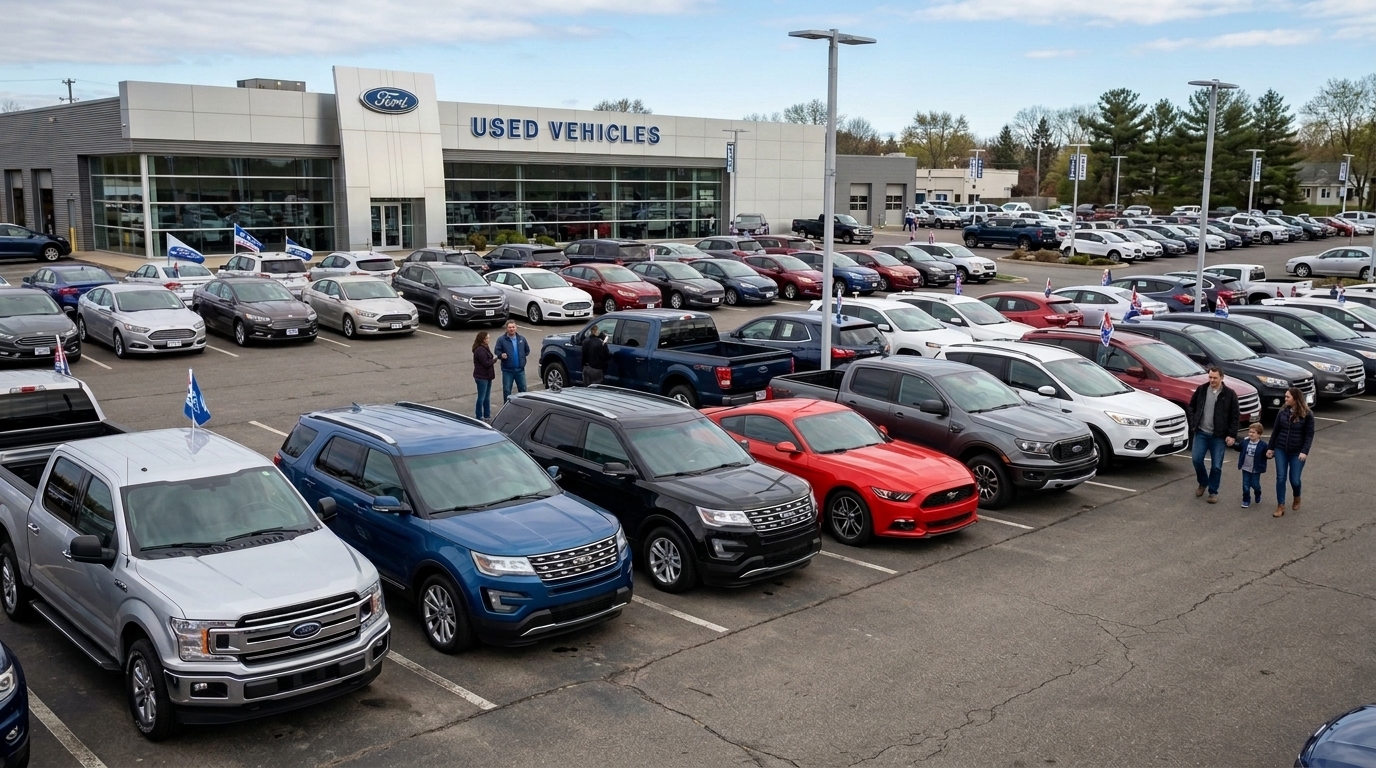
Buying a used car in Dover requires selecting a vehicle, verifying its history report, passing state safety and emissions inspections, and completing titling within 30 days. Delaware charges no state sales tax on pre-owned auto purchases, but buyers must pay a mandatory 4.25% motor vehicle document fee on the net purchase price, along with a $55 certificate of title fee, an annual $40 vehicle registration fee, and a dealer documentation fee.
Understanding the exact breakdown of Delaware state charges prevents unexpected expenses when finalizing a purchase contract. The document fee applies to almost all used vehicle transfers within the state. For example, a pre-owned vehicle purchase may include state document, title, and registration fees based on the transaction details. Trading in a vehicle during the transaction provides substantial savings because Delaware calculates the 4.25% motor vehicle document fee strictly on the net price difference after deducting your trade-in allowance.
Navigating the pre-owned market starts with selecting a vehicle that matches your daily routine. Drivers commuting near government offices along the St. Jones River corridor or traveling to Dover Air Force Base frequently put 15 to 30 miles per day on their odometers, making long-term durability and verified maintenance records essential. Running a vehicle identification number through established history services confirms ownership transfers and accident records, while a hands-on physical inspection evaluates mechanical health, tire tread depth, and frame integrity.
Completing your transaction at a established dealership streamlines the entire process by combining state inspection compliance, titling paperwork, and financing into a single visit. At Winner Ford, our team maintains a wide inventory of pre-owned trucks, SUVs, and sedans. Beyond our lineup of Ford models equipped with EcoBoost engines and Ford Co-Pilot360 safety systems, we offer pre-owned vehicles from various manufacturers.
Starting your purchase research online allows you to compare models, begin an online credit application, and browse our current pre-owned inventory before stepping onto the lot. If you decide a factory-fresh model fits your driving style better, you can also explore our new vehicle options. Stop by our showroom on Dupont Highway for a test drive, or reach our sales team directly at (302) 734-0444 to confirm vehicle availability.
Table of Contents
- What Is the Best Way to Shop for Used Cars in Central Delaware?
- How Can You Find a Reliable Used Car and Inspect It Under the Hood?
- How Do You Tell If a Used Car Price Is Fair Compared to Market Value?
- How Does a Certified Pre-Owned Vehicle Compare to a Standard Used Car?
- What Is the Difference Between a Salvage Title and a Rebuilt Title in Delaware?
- What Is an Efficient Step-by-Step Approach to Shopping Used Cars?
- Quick Answers Before You Visit Winner Ford for a Pre-Owned Vehicle
What Is the Best Way to Shop for Used Cars in Central Delaware?
The best way to shop for used cars in central Delaware is to combine online market research with hands-on physical evaluations and transparent dealer financing. Comparing regional market pricing digital listings helps establish realistic budget expectations before visiting showroom lots in person.
Seasonal weather patterns in central Delaware directly influence pre-owned vehicle inventory and pricing. As autumn approaches, demand increases for crossover models and full-size trucks equipped with all-wheel drive, higher ground clearance, and heated seating. Conversely, fuel-efficient compact sedans and hybrid models experience peak demand during late spring when daily highway commuting increases. Shoppers traveling from nearby coastal communities like Milford often prioritize versatile cargo configurations and towing capabilities for weekend recreational trips along the waterfront.
| Shopping Stage | Key Action Items | Primary Benefit |
|---|---|---|
| Initial Research | Filter online inventories by price, mileage, and vehicle history | Narrows choices to matching budgets |
| Market Valuation | Compare listing prices against regional wholesale data | Ensures competitive baseline pricing |
| Physical Inspection | Review fluid conditions, tire tread, and body panels | Verifies mechanical health before purchase |
| Paperwork Review | Confirm state inspection status and itemized fee line items | Prevents surprise costs at signing |
Timing your purchase strategy offers a distinct market advantage. End-of-month sales windows and late December bring competitive buying opportunities as dealerships work to achieve monthly and annual volume goals. For more insights on evaluating vehicle history and ownership considerations, explore our automotive blog to help guide your research.
How Can You Find a Reliable Used Car and Inspect It Under the Hood?
Identifying a reliable pre-owned vehicle requires pairing a digital vehicle history report with a detailed mechanical inspection under the hood and beneath the chassis. While history reports log insurance claims, title transfers, and reported accidents, physical checks uncover unreported body repairs, deferred maintenance, and hidden component wear.
When evaluating a vehicle under the hood, begin with fundamental engine fluids and electrical components:
- Check engine oil clarity and level; dark, thick, or sludgy oil points to extended drain intervals and potential internal engine wear.
- Inspect engine coolant inside the overflow reservoir to ensure clear coloration without rust particles or oil contamination.
- Examine brake fluid levels and clarity, ensuring the reservoir appears clean and free of dark moisture buildup.
- Test battery terminals for heavy corrosion or oxidation, and check battery charge voltage using a digital multimeter.
- Inspect drive belts and rubber radiator hoses for fine cracks, fraying, soft spots, or glazing.
- Look closely around valve covers, oil pan gaskets, and timing covers for wet oil residue or active fluid drips.
After completing under-hood checks, start the engine and let it idle until it reaches normal operating temperature. Look under the engine and transmission housing with a flashlight to confirm no fluid is actively dripping onto the pavement. Evaluating exhaust smoke, checking frame rails for repair pull marks, and scanning computer modules for stored diagnostic trouble codes ensures total confidence in the vehicle’s long-term mechanical condition.
How Do You Tell If a Used Car Price Is Fair Compared to Market Value?
A used car price is fair when it aligns with local market value estimates derived from recent regional sales, vehicle mileage, physical condition, and option packages. In central Delaware, standard dealer retail pricing typically reflects a minor markup of roughly 3% to 5% over wholesale acquisition costs.
To evaluate whether a price reflects true market value, compare the listing price against independent valuation tools and factor in total out-the-door expenses. Dealership processing fees represent administrative costs for submitting title applications to the Delaware Division of Motor Vehicles and verifying lien status. Because Delaware has no statutory ceiling on dealer documentation fees, buyers should request a complete itemized quote that clearly separates the mandatory state fee from dealer administrative charges.
Utilizing a trade-in vehicle serves as one of the most effective ways to lower your final purchase expenditure. Because Delaware levies its 4.25% motor vehicle document fee exclusively on the net purchase price after trade credit is applied, trading in a vehicle valued at $10,000 on a $25,000 purchase reduces the taxable baseline to $15,000. This net calculation can reduce state document fees. Before visiting the lot, shoppers can easily value your trade-in online to establish an accurate baseline for purchase negotiations.
How Does a Certified Pre-Owned Vehicle Compare to a Standard Used Car?
A Certified Pre-Owned (CPO) vehicle differs from a standard used car by undergoing a mandatory factory-backed multi-point inspection, meeting strict age and mileage thresholds, and including extended manufacturer warranty protection. Standard used vehicles are typically sold as-is or with limited short-term dealer warranties.
The Ford Blue Advantage program provides pre-owned buyers with two distinct levels of certification based on vehicle age and mileage:
- Gold Certified: Reserved for vehicles up to 6 model years old with less than 80,000 miles. Includes a 172-point inspection, a 12-month/12,000-mile comprehensive limited warranty, and a 7-year/100,000-mile powertrain limited warranty.
- EV Certified: Designed specifically for all-electric pre-owned models up to 6 model years old with less than 80,000 miles. Features a 127-point inspection, comprehensive limited warranty coverage, and an 8-year/100,000-mile component warranty.
- Blue Certified: Covers vehicles up to 10 model years old with less than 120,000 miles. Includes a 139-point inspection and a 90-day/4,000-mile comprehensive limited warranty.
| Feature Comparison | Standard Pre-Owned Vehicle | Ford Gold Certified Pre-Owned |
|---|---|---|
| Mechanical Inspection | Standard Safety Check | 172-Point Factory Inspection |
| Powertrain Warranty | Optional / Remaining Factory | 7-Year/100,000-Mile Coverage |
| Roadside Assistance | Varies by Seller | 24/7 Included During Warranty |
| Vehicle History Report | Optional | Comprehensive CARFAX Included |
| Component Replacement | Standard Aftermarket Parts | Genuine OEM Parts Only |
Choosing a Certified Pre-Owned model offers long-term financial predictability and manufacturer-backed quality standards that generic used cars cannot match.
What Is the Difference Between a Salvage Title and a Rebuilt Title in Delaware?
A salvage title indicates that an insurance company declared the vehicle a total loss due to severe accident damage, flooding, or severe structural compromise, making it illegal to drive on public roads. A rebuilt title signifies a former salvage vehicle that has undergone extensive repairs and successfully passed a rigorous physical inspection by the Delaware Division of Motor Vehicles.
Purchasing a vehicle with a rebuilt title carries substantial financial and operational risks:
- Traditional auto lenders rarely approve financing contracts for vehicles carrying rebuilt or salvage branding.
- Insurance companies often restrict policy options, offering only basic liability coverage while denying comprehensive and collision protection.
- Future resale value drops significantly, as most franchised dealerships do not accept rebuilt-title vehicles on trade.
- Hidden structural damage or compromised airbag deployment systems may remain undetected despite state inspection clearance.
Sticking with clean-title vehicles or Certified Pre-Owned models ensures complete safety, straightforward financing options, and reliable long-term vehicle performance.
What Is an Efficient Step-by-Step Approach to Shopping Used Cars?
Following an efficient step-by-step shopping approach eliminates guesswork, protects your budget, and ensures you select a reliable pre-owned vehicle tailored to your needs.
- Establish a Complete Budget: Calculate your maximum expenditure, incorporating Delaware’s mandatory 4.25% motor vehicle document fee, the $55 certificate of title fee, the $40 vehicle registration fee, and dealer documentation costs.
- Secure Pre-Approved Financing: Complete an online credit application to establish clear loan terms, interest rates, and monthly payment parameters before visiting physical showrooms.
- Narrow Inventory Online: Filter pre-owned vehicle listings by year, mileage, seating capacity, and powertrain options to create a focused list of top contenders.
- Conduct a Thorough Inspection and Test Drive: Examine under-hood fluid conditions, test electronic features, check tire tread, and evaluate transmission shift quality on local roads.
- Review Out-the-Door Paperwork: Examine the itemized buyer’s order to verify net purchase pricing, trade-in allowances, and state titling fee allocations before signing final agreements.
Organizing your purchase journey through these steps keeps your priorities clear and guarantees a transparent transaction from initial research to delivery.
Quick Answers Before You Visit Winner Ford for a Pre-Owned Vehicle
Q: What documents do I need to bring when buying a pre-owned vehicle in Delaware?
A: Buyers must bring a valid driver’s license, proof of active Delaware auto insurance, payment for the vehicle purchase or down payment, and current registration documents if transferring license plates. When financing a pre-owned vehicle, lenders also require recent income verification documents, such as pay stubs, along with proof of physical residency.
Q: Does Delaware’s Lemon Law cover pre-owned car purchases?
A: Delaware’s Lemon Law applies almost exclusively to new vehicle purchases within their first year or 12,000 miles of operation. Pre-owned vehicles sold as-is carry no state lemon law protections, which is why choosing a Certified Pre-Owned vehicle with factory warranty coverage or verifying remaining original manufacturer warranties is strongly recommended.
Q: How long do I have to register my newly purchased used car in Delaware?
A: Buyers have exactly 30 days from the purchase date to title and register a newly acquired pre-owned vehicle with the Delaware Division of Motor Vehicles. Purchasing through a licensed dealership simplifies this process, as temporary registration tags are issued at the point of sale while original title applications are processed.
Q: How does a trade-in affect Delaware motor vehicle document fees?
A: Delaware calculates its mandatory 4.25% motor vehicle document fee strictly on the net purchase price after subtracting your trade-in allowance. If you purchase a used car and apply a trade-in allowance, your taxable baseline may be reduced, which can lower the applicable state document fee.
Q: What is included with Ford Roadside Assistance for pre-owned buyers?
A: Pre-owned Ford vehicles covered under remaining factory warranties or the Ford Blue Advantage CPO program receive 24/7 Roadside Assistance. Coverage includes emergency towing to authorized service centers, flat tire changes, battery jump-starts, lockout assistance, and fuel delivery. For emergency roadside dispatch support, drivers can contact Ford Roadside Assistance: 1-800-241-3673.
Ready to take the next step toward your next pre-owned truck, SUV, or sedan? Stop by our showroom at 591 S Dupont Hwy to explore our complete inventory in person, or give our friendly sales team a call today at (302) 734-0444 to schedule a personalized test drive.
Keep Your Vehicle Running Strong
Keep your vehicle performing at its best with our service team:
© 2026 Winner Ford. All rights reserved.
Connect with us


- August 2026
- July 2026
- June 2026
- April 2026
- March 2026
- February 2026
- January 2026
- December 2025
- November 2025
- October 2025
- September 2025
- August 2025
- July 2025
- June 2025
- May 2025
- April 2025
- March 2025
- February 2025
- January 2025
- December 2024
- November 2024
- October 2024
- September 2024
- July 2024
- June 2024
- April 2024
- March 2024
- February 2024
- January 2024
- November 2023
- September 2023
- August 2023
- July 2023
- June 2023
- May 2023
- April 2023
- March 2023
- February 2023
- January 2023
- December 2022
- November 2022
- October 2022
- September 2022
- August 2022
- July 2022
- June 2022
- May 2022
- April 2022
- March 2022
- February 2022
- January 2022
- December 2021
- November 2021
- October 2021
- September 2021
- August 2021
- July 2021
- June 2021
- May 2021
- April 2021
- March 2021
- February 2021
- January 2021
- December 2020
- November 2020
- October 2020
- September 2020
- August 2020
- July 2020
- June 2020
- May 2020
- April 2020
- March 2020
- February 2020
- January 2020
- December 2019
- November 2019
- October 2019
- September 2019
- August 2019
- July 2019
- June 2019
- May 2019
- April 2019
- March 2019
- February 2019
- January 2019
- December 2018
- November 2018
- October 2018
- September 2018
- August 2018
- July 2018
- June 2018
- May 2018
- April 2018
- March 2018
- February 2018
- December 2017
- November 2017
- October 2017
- September 2017
- August 2017
- July 2017
- June 2017
- May 2017
- April 2017
- March 2017
- February 2017
- January 2017
- December 2016
- November 2016
- August 2016
- June 2016
- May 2016
Archives
- Buying Guides
- Certified Pre-Owned Program
- Community Events
- Dover Ford Dealer
- Finance
- Financing & Insurance
- Fleet
- Green
- Maintenance & Service
- Model Comparisons
- New Inventory
- New Vehicle Reviews
- News
- Off-Road & 4WD Features
- Parts
- Parts & Repairs
- Powertrain Care & Repair
- Pre-Owned Inventory
- Safety Features
- Seasonal Driving Tips
- Service
- Service Center Tips
- Social
- technology
- Technology & Innovation
- Used Vehicle Guides
- Vehicle Inventory Updates
- Vehicle Ownership & Protection
- Vehicle Trade-In Tips
- Video
- Warranty & Extended Coverage