

To properly inspect a used car before buying, systematically evaluate four core areas: verify the paperwork and 17-character VIN match, review the title and history report, perform a detailed visual check of fluids, tires, body panels, and electronics, and complete a 20-minute test drive with an OBD-II diagnostic scanner. Taking these structured steps ensures mechanical integrity, prevents hidden post-purchase repair costs, and confirms the vehicle will pass state safety and emissions requirements.
Evaluating a pre-owned automobile requires a methodical approach that looks past fresh detailing and glossy paint. Spending 45 to 60 minutes conducting a multi-point evaluation allows buyers to identify underlying mechanical wear, past collision repairs, or deferred maintenance before signing any purchase contract. A complete visual walk-around paired with a diagnostic electronic scan reveals how the vehicle was cared for by previous owners and whether key systems require immediate attention.
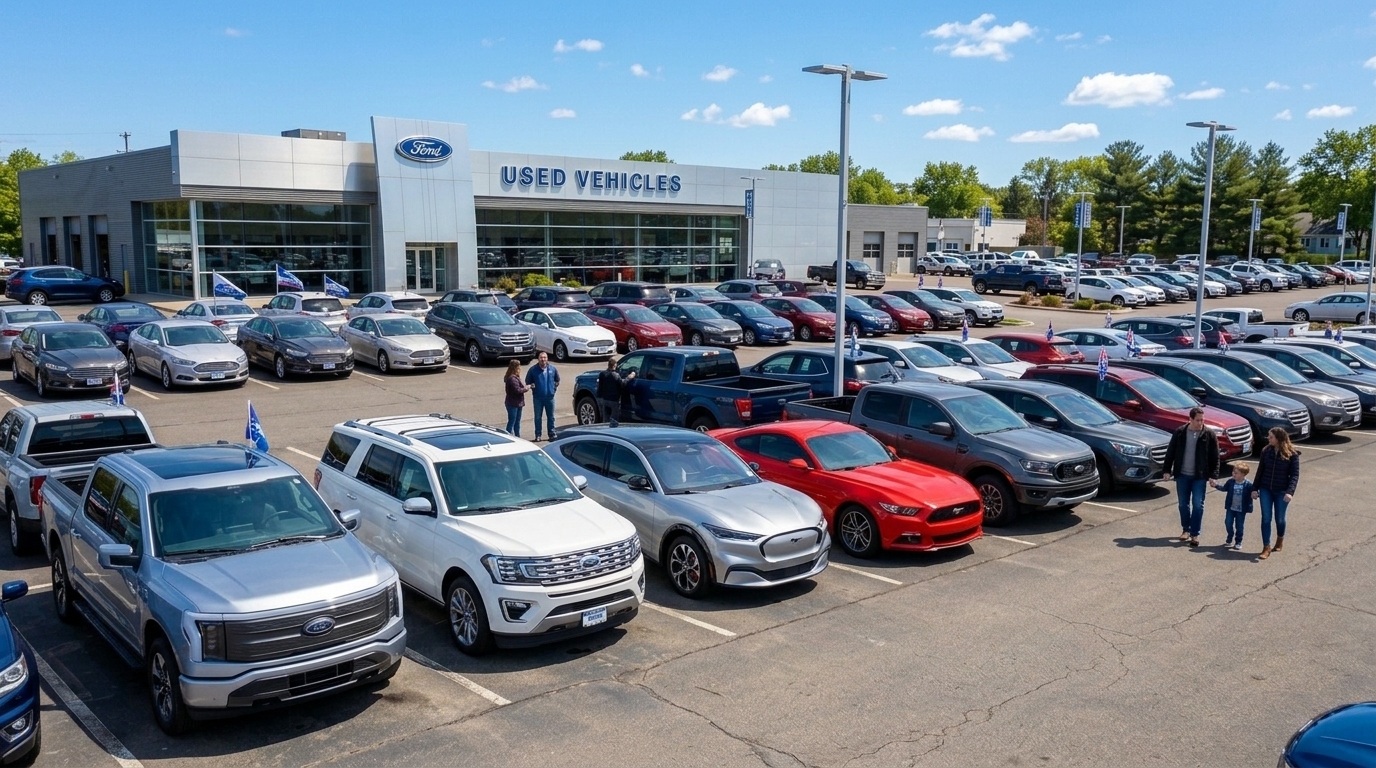
At Winner Ford, our team believes in full transparency during every stage of your pre-owned vehicle search. Every pre-owned truck, car, and SUV on our lot undergoes an intensive multi-point safety inspection conducted by factory-certified technicians before it is ever offered to the public. Drivers interested in comparing late-model options can browse our inventory of pre-owned vehicles online or explore our selection of new Ford models to find the ideal match for their lifestyle and budget.
If you are getting ready to make your next purchase, getting pre-approved through our online credit application streamlines the entire buying process. You can also give our team (302) 734-0444 a quick call or visit our showroom on South Dupont Highway to speak with our pre-owned sales experts directly.
Table of Contents
- What Paperwork, Title History, and Dealership Inspection Policies Should You Verify First?
- What Should Be Included in a Comprehensive Pre-Purchase Mechanical and Diagnostic Checklist?
- How Do You Identify Prior Accident Damage, Frame Issues, and Airbag Deployment Repairs?
- What Safety and Emissions Standards Are Checked at the DMV Inspection Lane?
- Common Questions About Pre-Owned Vehicle Inspections
- Take the Next Step Toward Your Inspected Pre-Owned Vehicle at Winner Ford
What Paperwork, Title History, and Dealership Inspection Policies Should You Verify First?
Before physically examining a pre-owned vehicle, buyers must verify that the 17-character VIN matches across the windshield plate, driver door jamb sticker, and vehicle title, while confirming the title is clean and free of active liens. Reviewing a CARFAX or AutoCheck report guarantees the mileage history is linear and reveals open safety recalls or prior accident documentation.
A clean title is essential when purchasing a pre-owned vehicle. Branded titles—such as salvage, rebuilt, flood, or lemon law buyback designations—can diminish a vehicle’s market value by 20 to 50 percent and frequently create difficulties when securing auto insurance or future trade-in value. Verifying that the current owner or selling dealer holds a clear, lien-free title protects buyers from legal complications.
Vehicle history reports provide critical insight into ownership longevity and service discipline. A record showing two long-term owners with consistent routine maintenance documentation is far preferable to a vehicle with five short-term owners over a brief period. Unrepaired safety recalls must also be checked through official federal database tools; while authorized dealerships perform recall repairs free of charge, knowing outstanding recall status before purchase prevents unexpected service visits.
Buyers commuting along the coastal routes near Milford need clear documentation that a pre-owned truck or SUV carries a clean title without hidden liens or outstanding safety recall work. Reputable dealerships encourage buyers to verify all vehicle documentation and welcome independent pre-purchase mechanical evaluations. If you plan on upgrading your current ride, you can value your trade-in online to see how much equity you can apply toward your purchase.
What Should Be Included in a Comprehensive Pre-Purchase Mechanical and Diagnostic Checklist?
A mechanical pre-purchase checklist requires inspecting underhood fluid quality, measuring tire tread depth and alignment wear, testing brake pedal firmness, and plugging an OBD-II diagnostic tool into the onboard computer. Connecting a scanner verifies that diagnostic trouble codes like misfires or catalyst errors are clear and confirms all internal monitor readiness statuses are active.
Under the hood, fluid condition offers an immediate snapshot of engine maintenance. Engine oil should sit at the correct dipstick level and appear amber to dark brown; milky oil indicates internal coolant leakage, while thick, pitch-black sludge points to missed oil changes. Engine coolant must be vibrant and free of rust particles or oil sheen. Transmission fluid should display a translucent pink or light brown tint without a burnt odor.
Tires and braking components require close physical measurement. Each tire must have at least 2/32 inch of remaining tread depth across all grooves, though replacement is advisable once tread wears down to 4/32 inch. Uneven tread wear—such as excessive inner edge smoothing—signals wheel misalignment or worn suspension bushings. During the road test, the brake pedal should feel firm and responsive without soft travel, vibration, shuddering, or steering wheel pull.
+------------------------+------------------------------------+-------------------------------------+
| Inspection Area        | Ideal Pre-Owned Condition          | Red Flag Warning Signs              |
+------------------------+------------------------------------+-------------------------------------+
| Engine Oil             | Amber/brown, correct level on stick| Milky appearance, black sludge      |
| Coolant System         | Bright color, clean reservoir      | Rust flakes, oil film floating      |
| Diagnostic System      | Zero active codes, monitors ready  | Active P0300/P0700 codes, light lit |
| Tire Wear              | Even tread depth above 4/32 inch   | Cupping, inner edge wear, cracks    |
| Brake Performance      | Firm pedal, straight stopping line | Pulsation, grinding, steering pull  |
+------------------------+------------------------------------+-------------------------------------+
Connecting a portable scanner into the diagnostic port beneath the dashboard takes seconds and prevents major mechanical surprises. Fault codes in the P0300 series reveal active engine misfires, while P0700 series codes point to internal transmission failures. Shoppers testing a pre-owned SUV usually connect an OBD-II reader to verify readiness monitors before taking the vehicle on a 20-minute highway test loop. For more car-buying advice and maintenance insights, check out our dealership blog.
How Do You Identify Prior Accident Damage, Frame Issues, and Airbag Deployment Repairs?
Identifying past structural damage requires inspecting exterior body panel gaps for uneven alignment, checking rubber door seals for paint overspray, and evaluating unibody frame rails for fresh weld marks or undercoating. Verifying proper airbag repairs involves confirming SRS indicator light sequences at startup, inspecting steering wheel seam integrity, and scanning the airbag control module for fault codes.
Walk around the vehicle in bright outdoor light, viewing body panels from a three-quarters angle to catch subtle ripples or variations in paint reflection. Factory body panels fit together with uniform alignment gaps along the hood, doors, and trunk lid. Uneven gaps or doors that require extra force to latch cleanly often point to past collision impacts that altered structural alignment. Look closely at rubber window trim and wheel arch moldings for rough paint edges or color overspray.
Unibody frame rails running along the underbody must be straight and free of clamping marks or fresh spot welds. While light surface oxidation on exhaust heat shields is normal, heavy flaking rust or freshly sprayed black undercoating designed to cover structural damage should raise immediate concern. In coastal regions, inspect lower rocker panels and floor pans for hidden corrosion or flood damage indicators like silt lines behind trunk lining.
Airbag system integrity is vital for passenger protection. When turning the ignition key to the run position, the SRS dashboard warning light must illuminate for a self-test and extinguish after a few seconds. If the light remains on or never turns on at all, the supplemental restraint system requires immediate professional service. Inspect the center steering wheel pad and passenger dashboard seam for original factory textures, ensuring no rough stitching, mismatched color covers, or glued cover seams remain from previous deployments.
What Safety and Emissions Standards Are Checked at the DMV Inspection Lane?
The Delaware safety and emissions inspection lane evaluates headlight aim, brake force balance, windshield glass integrity, horn operation, mirror condition, bumper alignment, and tailpipe or OBD-II emissions compliance. Vehicles registered in northern Kent County must meet current Department of Natural Resources and Environmental Control standards to receive official registration approval.
Emissions testing for gasoline-powered passenger vehicles produced from 1996 onward relies on automated computer diagnostics. The inspection computer interfaces directly with the vehicle’s onboard system to verify that the check-engine light operates correctly and that no active diagnostic trouble codes exist in the powertrain control system. The system also checks that internal readiness monitors for catalytic converter performance and evaporative emission controls have completed their self-diagnostic cycles.
Safety testing checks fundamental equipment required for daily road driving. Headlights are evaluated for proper aim and illumination intensity on high and low beams. The brake test lane measures stopping force balance between the left and right wheels to verify even stopping capability. Windshields must be free of cracks or bullseye chips in the driver’s direct field of vision, and windshield wipers must clear water effectively.
Drivers heading to the state inspection station in Dover benefit from choosing vehicles pre-inspected by factory-certified technicians to avoid re-inspection delays. Purchasing a pre-owned truck or car that has already completed a rigorous reconditioning process saves time and provides peace of mind on every commute.
Common Questions About Pre-Owned Vehicle Inspections
Q: How long does a thorough pre-purchase used car inspection typically take?
A comprehensive pre-purchase inspection typically takes 45 to 60 minutes to complete. This timeframe allows sufficient opportunity to review vehicle documentation, perform a complete underhood fluid check, inspect tires and underbody components, run an OBD-II diagnostic scan, and complete a 20-minute test drive across varied road speeds.
Q: What happens if a pre-owned vehicle shows a pending OBD-II trouble code during inspection?
A pending OBD-II trouble code indicates that the vehicle’s onboard computer has detected an active mechanical or electrical anomaly that has not yet triggered the dashboard check-engine light. Pending codes should be addressed before purchase, as unresolved issues like engine misfires or emission control failures can prevent the car from passing Delaware emissions testing.
Q: Can a used car with a history of minor cosmetic damage still be a safe purchase?
Yes, pre-owned vehicles with minor cosmetic damage such as bumper scrapes or light door dings remain structural and mechanically sound options. As long as a CARFAX history report confirms no unibody frame compromise or airbag deployment, cosmetic defects provide an excellent opportunity to negotiate pricing while securing a reliable, fully inspected automobile.
Q: Why is starting an engine cold an important step in pre-purchase evaluation?
Starting an engine when completely cold reveals mechanical issues that disappear once components reach operating temperature. Cold starts make it easier to detect timing chain rattles, valve train knocks, power steering pump noise, or initial exhaust smoke, providing an accurate assessment of internal engine health before committing to a purchase.
Q: What specific tire indicators reveal underlying alignment or suspension problems?
Uneven tread wear patterns, such as severe inner edge smooth wear or outer tread feathering, directly signal improper wheel alignment or worn suspension bushings. Measuring tread depth across the inner, center, and outer grooves ensures the tire has at least 2/32 inch of remaining tread and helps buyers identify hidden suspension repair needs.
Take the Next Step Toward Your Inspected Pre-Owned Vehicle at Winner Ford
Choosing a pre-owned truck, crossover, or sedan should be an exciting and stress-free experience. By following a thorough pre-purchase inspection guide—verifying title records, evaluating underhood fluids, testing diagnostic systems, and confirming frame and safety integrity—you can shop with absolute confidence.
At Winner Ford, we simplify your pre-owned vehicle purchase by holding every vehicle on our lot to rigorous quality standards. Our experienced pre-owned sales consultants are here to answer your questions, walk you through detailed vehicle history reports, and help you find a dependable vehicle tailored to your daily driving requirements.
Ready to find your next reliable pre-owned car or truck? Give our team (302) 734-0444 a call today or visit our Dover showroom to schedule a test drive and experience our straightforward car-buying process firsthand.
Keep Your Vehicle Running Strong
Keep your vehicle performing at its best with our service team:
© 2026 Winner Ford. All rights reserved.
Connect with us


- August 2026
- July 2026
- June 2026
- April 2026
- March 2026
- February 2026
- January 2026
- December 2025
- November 2025
- October 2025
- September 2025
- August 2025
- July 2025
- June 2025
- May 2025
- April 2025
- March 2025
- February 2025
- January 2025
- December 2024
- November 2024
- October 2024
- September 2024
- July 2024
- June 2024
- April 2024
- March 2024
- February 2024
- January 2024
- November 2023
- September 2023
- August 2023
- July 2023
- June 2023
- May 2023
- April 2023
- March 2023
- February 2023
- January 2023
- December 2022
- November 2022
- October 2022
- September 2022
- August 2022
- July 2022
- June 2022
- May 2022
- April 2022
- March 2022
- February 2022
- January 2022
- December 2021
- November 2021
- October 2021
- September 2021
- August 2021
- July 2021
- June 2021
- May 2021
- April 2021
- March 2021
- February 2021
- January 2021
- December 2020
- November 2020
- October 2020
- September 2020
- August 2020
- July 2020
- June 2020
- May 2020
- April 2020
- March 2020
- February 2020
- January 2020
- December 2019
- November 2019
- October 2019
- September 2019
- August 2019
- July 2019
- June 2019
- May 2019
- April 2019
- March 2019
- February 2019
- January 2019
- December 2018
- November 2018
- October 2018
- September 2018
- August 2018
- July 2018
- June 2018
- May 2018
- April 2018
- March 2018
- February 2018
- December 2017
- November 2017
- October 2017
- September 2017
- August 2017
- July 2017
- June 2017
- May 2017
- April 2017
- March 2017
- February 2017
- January 2017
- December 2016
- November 2016
- August 2016
- June 2016
- May 2016
Archives
- Automotive News
- Buying Guides
- Certified Pre-Owned Program
- Community Events
- Dover Ford Dealer
- Finance
- Financing & Insurance
- Fleet
- Green
- Maintenance & Service
- Model Comparisons
- New Inventory
- New Vehicle Reviews
- News
- Off-Road & 4WD Features
- Parts
- Parts & Repairs
- Powertrain Care & Repair
- Pre-Owned Inventory
- Pre-Owned Vehicle Sales
- Safety Features
- Seasonal Driving Tips
- Service
- Service Center Tips
- Social
- technology
- Technology & Innovation
- Used Vehicle Guides
- Vehicle Inspection & Certification
- Vehicle Inventory Updates
- Vehicle Ownership & Protection
- Vehicle Trade-In Tips
- Video
- Warranty & Extended Coverage